
Affiliate Disclosure
Some links on this page are affiliate links. As an Amazon Associate, we earn from qualifying purchases — at no extra cost to you. We do not buy, test, or physically handle the products we cover; our rankings come from aggregated owner reviews, ratings and expert consensus. Commissions never change our verdicts. How we rank & full disclosure.
Some links below are affiliate links. As an Amazon Associate we earn from qualifying purchases at no extra cost to you. We do not buy, test or physically handle these units — our rankings come from aggregated owner reviews and manufacturer documentation, and a commission never changes them.
An air purifier is the most direct lever you have on the particle side of your indoor climate — the dust, pollen, dander, smoke and everyday odor floating in the room. This guide suits most homes that just want cleaner air where they sleep, work or relax. The right pick is almost always a true-HEPA unit sized to the room.
It is not the tool for a humidity or ventilation problem. A purifier does nothing for a stuffy, damp or stale room. If that's your issue, a humidifier, dehumidifier or fresh air is the fix, not a filter.
What actually makes an air purifier good?
Genuine HEPA media plus enough airflow to clean your room several times an hour. Everything else — smart features, displays, styling — is secondary to true-HEPA filtration matched to the room size.
The core job is mechanical. A real HEPA filter physically traps fine particles. Adequate airflow, often quoted as CADR, determines how fast it clears the room. An activated-carbon layer adds odor control on top.
Be wary of units that lean on ionizers or "ozone" instead of a filter. Those don't remove particles the way HEPA does, and they can produce ozone you don't want indoors. Every unit above is built on real HEPA-grade media for that reason.
True HEPA and activated carbon filtration
True HEPA is the baseline for any purifier worth buying. It traps fine particles no ionizer can match. Pair it with activated carbon and the unit also pulls in odor and light VOC compounds.
What size air purifier do I need?
Match the unit to your room, then size up. Buy one rated for a space larger than yours so it can run four to five air changes an hour on a quieter, lower speed rather than flat-out.
Coverage ratings usually assume a low turnover rate and a sealed room. A unit rated exactly for your square footage will feel underpowered day to day. Sizing up is the single most reliable way to get a purifier that's both effective and quiet.
That's why the compact Levoit suits bedrooms, while the Vital 200S-P and MOOKA are reserved for large open rooms. Matching unit to room is what separates a happy owner from a disappointed one.
Square footage and air changes per hour
Coverage ratings are based on square footage at a set air changes per hour. Buy for a room bigger than yours, and the unit clears more air changes per hour on a quiet, lower speed.
Do air purifiers actually help with allergies and dust?
Yes, for what is airborne — pollen, dust and dander floating in the room drop measurably while a right-sized HEPA unit runs. They do not remove allergens already settled into carpet, bedding and upholstery.
Owners with allergies consistently report fewer symptoms in a room with a HEPA purifier running continuously, especially overnight in a bedroom. The honest limit: a filter only cleans air passing through it. It complements vacuuming and washing bedding, rather than replacing them.
Running the unit continuously on a low speed beats blasting it occasionally. Steady turnover is what keeps particle levels down.
Allergens, dust and smoke particles
A HEPA purifier pulls airborne allergens, dust and smoke particles out of the room air. It won't touch allergens already settled into carpet or bedding. Vacuuming and washing linens still matter.
What is a waste of money?
Ozone generators sold as purifiers, "permanent washable HEPA" claims, and tiny desktop units bought for large rooms. Each promises clean air but under-delivers on the physics that actually matters.
The recurring regret in reviews is buying on marketing rather than filter grade and coverage. An ozone device is the wrong tool indoors. A genuinely washable filter rarely matches true-HEPA performance, and an undersized unit can't clean a room it's too small for.
Spend on real HEPA media, honest coverage and reasonable filter costs. For how filtration fits alongside ventilation and source control, see our guide to improving indoor air quality.
What pollutants does an air purifier actually remove?
A true HEPA filter captures PM2.5, the fine particulate matter behind most dust, pollen, dander and smoke complaints. A separate activated carbon layer targets VOCs — gas-phase compounds behind chemical and cooking odors that HEPA can't trap. The two problems need two different filter media, which is why the strongest purifiers combine both.
A pre-filter sits in front of both stages and catches large debris — pet hair, lint, coarse dust — so the expensive true HEPA layer doesn't clog prematurely. This is also why filter replacement cost varies so much between brands. A unit with a washable pre-filter, like several LEVOIT, Coway and Winix models, stretches the life of the pricier HEPA cartridge. Units without one need full filter replacement more often.
Blueair units take a different approach, wrapping the filter media around an electrostatically charged core. The underlying job is the same across brands: pulling PM2.5 and allergens out of the air you breathe.
PM2.5, VOC and the pre-filter's role
True HEPA captures PM2.5, the fine particles behind most complaints. Activated carbon targets VOC, the gas-phase odors HEPA can't trap. A pre-filter catches large debris first, so the HEPA layer lasts longer.
What do CADR and AHAM certification actually mean?
CADR (Clean Air Delivery Rate) is a lab-measured number showing how quickly a purifier clears smoke, dust and pollen from a test chamber, and AHAM (the Association of Home Appliance Manufacturers) is the body that certifies those numbers so brands cannot simply claim whatever CADR they like. A higher CADR relative to your square footage means faster, quieter operation.
Use CADR alongside square footage to estimate air changes per hour. The EPA generally recommends enough CADR to turn a room's air over four to five times an hour for allergy relief — the same sizing logic covered above.
Auto mode, available on pricier models, uses a built-in sensor to raise fan speed when PM2.5 spikes, say from cooking, then drop back down once the air clears. That keeps the unit energy efficient without you touching a dial, and it's the easiest way to keep a purifier quiet most of the time while still handling occasional spikes.
Auto mode, quiet operation and energy efficient use
Auto mode uses a sensor to raise fan speed when air quality drops, then ease back once it clears. That keeps the unit quiet most of the time and energy efficient, without you touching a dial.
What do first-time air purifier buyers get wrong?
The most common mistake is buying an ionizer or "ozone-generating" purifier because it is quiet and cheap, without realizing it does not use true HEPA filtration at all — some of these devices actively produce ozone, a lung irritant the EPA specifically warns against for indoor use. Skip anything that markets ionization as a substitute for a real filter.
The second mistake is undersizing for the room, then blaming the purifier for feeling ineffective. A unit rated exactly to your square footage has to run at or near top speed constantly to keep up. That's both loud and hard on the motor over years of use. Sizing up so it can idle at a lower, quieter speed is what actually delivers the "set and forget" experience most buyers want.
The third mistake is ignoring filter replacement cost at purchase time. A cheap purifier with expensive, hard-to-find replacement filters often costs more over two years than a pricier unit with cheap, widely stocked ones. That's exactly the trade-off LEVOIT's compact and Vital-series models are built around.
Filter replacement cost and air quality upkeep
Filter replacement cost adds up over time, so check it before buying. A cheap unit with expensive filters often costs more over two years. Steady air quality depends on keeping filters fresh, not just the purchase price.

Best for the all-round pick for a bedroom or medium room
- H13 True HEPA plus an activated-carbon stage
- Sized for bedrooms and small-to-medium rooms
- Quiet sleep mode near 24 dB
- Cheap, widely stocked replacement filters
Why buy it: Owners consistently report it is the safe default: quiet, genuinely effective on dust, dander and odor, and cheap to keep running. A common complaint is only that it is too small for a large open room, which is a sizing choice rather than a flaw.

Best for a large living room you want cleaned automatically
- True HEPA plus carbon, rated up to roughly 1,875 sq ft
- Auto mode driven by an air-quality sensor
- App and voice control with scheduling
- Washable pre-filter extends HEPA life
Why buy it: The consensus favors this one for a big room where you would rather the purifier manage itself, ramping up when air worsens. Owners report the sensor and app are what make it worth the step up. A common complaint is the higher price and filter cost.

Best for a medium-large room on a budget
- High-efficiency HEPA-grade filtration with carbon
- Rated for rooms up to roughly 1,076 sq ft
- Low entry price and modest filter cost
- Simple timer and sleep-mode controls
Why buy it: Owners consistently report it delivers most of a name-brand unit performance for noticeably less money, which makes it the easy budget choice. A common complaint is a thinner carbon layer, so it is stronger on particles than on heavy odor.

Best for the largest open spaces
- Highest coverage here, up to roughly 2,200 sq ft
- PM2.5 sensor with a live on-unit display
- Washable pre-filter for dust, hair and lint
- High airflow for fast room turnover
Why buy it: Owners report this is the unit that keeps up in a genuinely large open area, and the live PM2.5 number is what confirms it. A common complaint is that reaching that coverage means a loud top fan speed, which is unavoidable at this size.

Best for a nursery, office or small bedroom
- HEPA-grade filtration in a small footprint
- Built for small rooms and personal spaces
- Very quiet on its lowest speed
- Inexpensive, easy-to-find filters
Why buy it: The consensus is that this is the right way to add clean air to a small space cheaply, or as a second unit the main purifier cannot reach. A common complaint is people over-buy it for a big room, where it simply cannot move enough air.
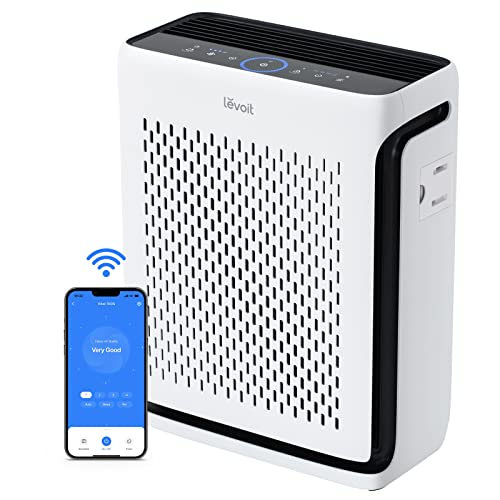
Best for homes with shedding pets
- HEPA-grade filtration with a carbon odor stage
- Washable pre-filter captures loose pet hair first
- Sized for bedrooms and personal spaces
- Quiet enough to run continuously
Why buy it: Owners with pets consistently report the rinseable pre-filter is what keeps the HEPA from clogging with hair, stretching filter life. A common complaint is that in a large open home you need more coverage than this compact unit provides.
How we picked
We did not buy or run these units ourselves. Energy Efficient HVAC System ranks products from aggregated owner reviews, manufacturer specifications and the recurring complaint patterns that surface in real homes — honest coverage, noise at usable speeds and filter cost. We favored true-HEPA units sized sensibly to their rooms, from quiet compacts for bedrooms to large-room models for open spaces.
Compare the full field on the air purifiers hub, or browse the air purification section for the whole-home picture. Read How We Rank for the method behind these picks.