



Affiliate Disclosure
Some links on this page are affiliate links. As an Amazon Associate, we earn from qualifying purchases — at no extra cost to you. We do not buy, test, or physically handle the products we cover; our rankings come from aggregated owner reviews, ratings and expert consensus. Commissions never change our verdicts. How we rank & full disclosure.
Oil-filled radiators are the quiet end of the portable heating market. They have no fan and no glowing element, which makes them the category people land on after a fan heater has kept them awake. The price of that quiet is patience — a column radiator is slow to warm a room and slow to stop.
How Does an Oil-Filled Radiator Make Radiant Heat Without Burning Oil?
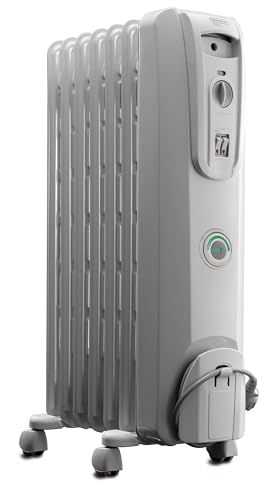
The oil is a sealed heat-transfer fluid, not a fuel. An electric element inside the base warms the oil, the oil circulates through the fins by convection, and the fin surfaces radiate heat into the room. Nothing is burned, consumed or refilled.
This is worth stating plainly, because the name misleads a lot of first-time buyers. There's no combustion, no exhaust and no carbon monoxide risk. An oil-filled radiator plugs into a wall outlet exactly like any other electric heater. The oil is sealed at the factory and never needs topping up over the life of the unit.
Fins, thermal mass and silent operation
What the oil buys is thermal mass. Several litres of warm fluid store real energy, so the fins keep radiating after the thermostat cuts power to the element. That storage is why the heat feels gentle and even. It's also why this category stays close to silent — there's no fan pushing air, just heat moving off the fins.
How Long Does an Oil-Filled Radiator Take to Warm a Whole Room?
Expect fifteen to thirty minutes before the room feels different, and up to an hour before it settles at temperature. All that thermal mass has to warm up first. The practical fix is a timer, so the room is ready when you arrive.
Once it's up to temperature, though, an oil-filled radiator holds a whole room steadier than a fan heater cycling on and off, because the stored heat in the fluid smooths out the swings.
1500 watts and BTU sizing
Sizing follows the same rule as the rest of the category: roughly ten watts per square foot as a starting point. That puts a 1500 watts radiator — a common rating from DeLonghi and PELONIS — at about 150 square feet in an averagely insulated room. It's the wattage on the label, not the column count, that sets the BTU output.
Space heater alternatives for faster heat
If waiting half an hour is unacceptable, this is the wrong category. A fan-driven ceramic heater or a general-purpose space heater warms a room faster, just less quietly. Many owners run both — something fast for the first ten minutes, then the radiator for the long, quiet hours.
Are Oil-Filled Radiators Safe to Leave Running Overnight?
They're among the better electric heaters for extended running — no fan, no exposed element, and a lower surface temperature than a bar heater. They're not risk-free, though: the fins do get hot enough to burn skin, and the standard three-foot clearance rule still applies.
There's no glowing element to ignite airborne lint, and no fan to blow dust across a hot surface. Combined with tip-over and overheat cutoffs, that makes an oil-filled radiator a reasonable choice for a bedroom used all night. It's exactly why owners recommend it for that job most often.
Tip-over and overheat protection
Any current model should include both tip-over and overheat protection as standard. Honeywell and Costway build these in across most of their radiator lines. Never drape clothing over a radiator to dry — blocked convection is how an otherwise safe heater becomes a hot one.
Portable design and electric safety
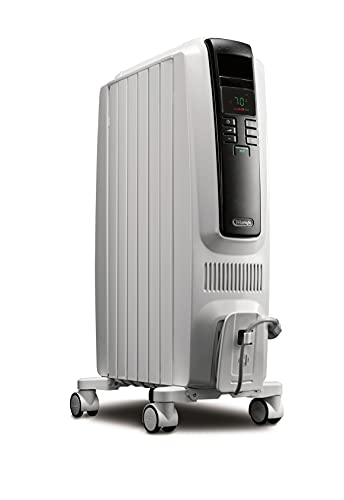
These are portable heaters, but heavy ones, and a 1500-watt radiator draws around 12.5 amps continuously. That current belongs in a wall outlet, not an extension cord. Look for sturdy casters if the unit needs to move between rooms, since column radiators run to a fair weight.
Are Oil-Filled Radiators Energy Efficient, and What's the Running Cost?
Not per hour of full output — 1500 watts costs the same regardless of what's inside the case, and all electric resistance heat is roughly equally energy efficient. Running cost can still be lower over an evening, because thermal mass lets the element spend more time switched off.
The corollary is that oil-filled radiators reward being left alone. Set a modest temperature, let the mass do its work, and let the thermostat cycle. Owners who report high running cost with this category usually describe running it on maximum with a window cracked, or in addition to unchanged central heat rather than instead of it.
Thermostat, eco mode and timer control
A numeric thermostat beats a vague dial, because it cycles the element instead of holding it at full power. An eco mode alternates between two output levels to hold a steadier average temperature at a lower running cost. A timer turns a slow-to-warm heater into one that's ready when you get home.
What Does an Oil-Filled Radiator Actually Cost to Run per Month?
A 1500-watt radiator run at full output for eight hours draws about 12 kWh. Multiply that by your utility's price per kWh to get a real daily figure, then multiply by the days you'll actually run it — not a marketing estimate.
The EPA and most utility guidance point to the same conclusion: an oil-filled radiator used for zone heating one occupied room, alongside a lower central thermostat setting elsewhere, is genuinely cheaper than heating the whole house to the same temperature. Running it on top of an unchanged central setting just adds a second bill on top of the first.
Because the thermostat cycles the element rather than holding it at full power constantly, actual running cost is almost always lower than the full-output number suggests. A well-controlled radiator in eco mode can spend a large share of the evening with the element off entirely, coasting on stored heat in the oil.
Do Oil-Filled Radiators Dry Out the Air?
No more than any other heater, and less noticeably than a fan heater. No heater removes moisture from a room — warming air just lowers its relative humidity, which is what feels dry. Without a fan, an oil-filled radiator at least avoids blowing dust around.
If a heated room starts to feel stuffy or dry-eyed by the end of winter, the fix usually isn't a different heater — it's the humidity side. See what the ideal indoor humidity level actually is before buying anything. For the broader picture of how heat and humidity interact, the heating pillar lays out where each piece fits.
What Should You Check Before Buying One?
Wattage and switchable power levels, a thermostat you can set to a number, a timer, and casters that genuinely roll. Weight and cord length matter more than any marketing claim, because these units get moved and they're heavy.
Look for a cord long enough to reach a wall outlet from where the heater will actually stand — an extension cord is not an acceptable substitute at this current draw. Some models add a small fan to speed up the initial warm-up, a reasonable compromise if silence only matters overnight, though it does reintroduce the noise this category exists to avoid.
Every guide below is ranked from aggregated real owner reviews and manufacturer documentation, never from us buying and running a heater ourselves — see How We Rank for the full methodology.