


Affiliate Disclosure
Some links on this page are affiliate links. As an Amazon Associate, we earn from qualifying purchases — at no extra cost to you. We do not buy, test, or physically handle the products we cover; our rankings come from aggregated owner reviews, ratings and expert consensus. Commissions never change our verdicts. How we rank & full disclosure.
Allergy relief is the single most common reason people buy an air purifier, and it is also the use case where expectations most often outrun the machine. The good news is that the particles most household allergy sufferers react to are, in filtration terms, relatively easy targets. The catch is that a purifier only helps with the fraction of those particles that are airborne and pass through the filter — which makes room size, placement and runtime matter far more than any premium feature on the box.
Which allergens can an air purifier actually capture?
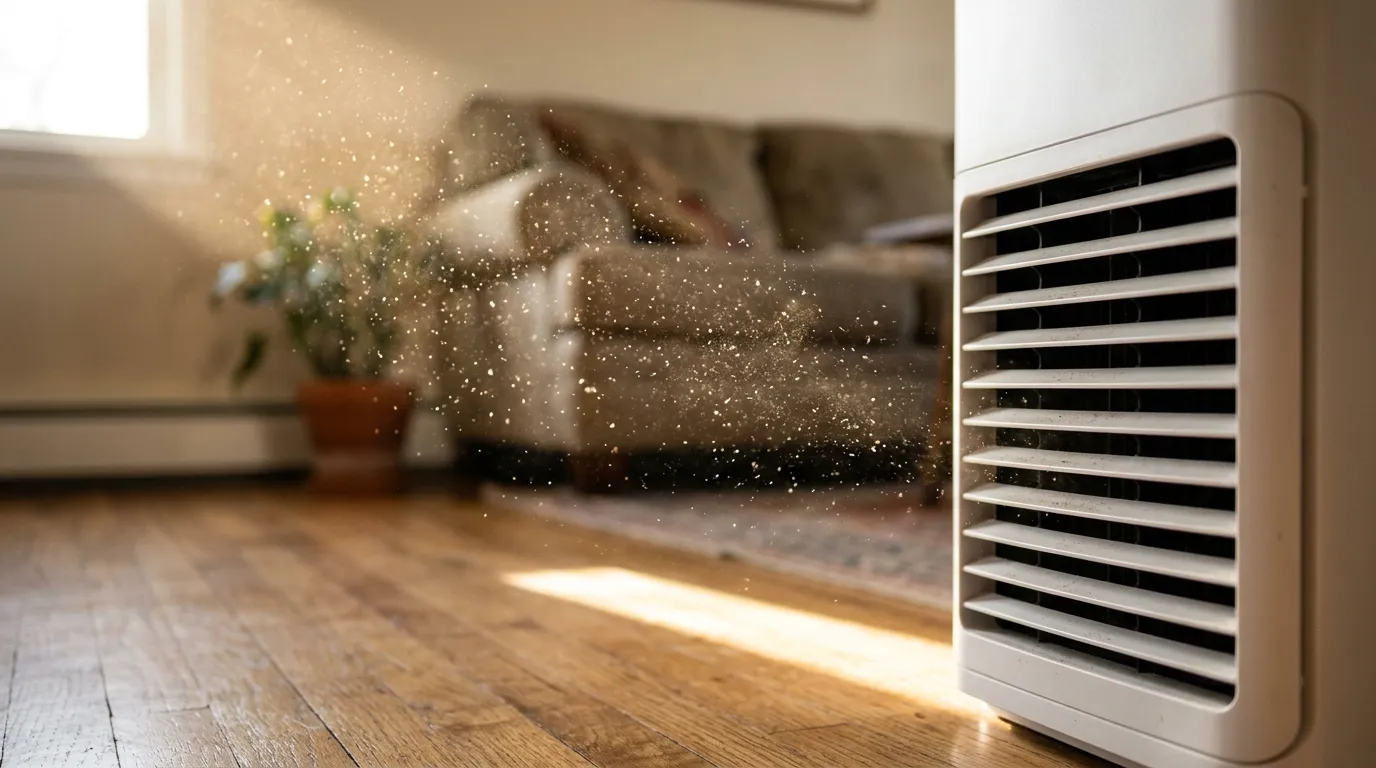
A true HEPA filter captures pollen, pet dander, dust mites' waste fragments and mold spores efficiently — these are all comfortably within the size range HEPA media is rated for. What it cannot do is remove allergens already embedded in carpet, upholstery and bedding, which is where the majority of dust mite allergen actually sits.
True HEPA filtration vs PM2.5 particle size
Rough particle sizes explain why this category works. Pollen grains typically run from around 10 to 100 microns, mold spores from roughly 2 to 30, and pet dander fragments from about 2.5 microns upward — right at the edge of the PM2.5 range that also covers smoke and fine dust. All of these are far larger than the 0.3-micron size at which HEPA filtration is rated at its worst. A genuine HEPA filter captures them at very high efficiency indeed. Dust mites are the awkward case: the mites themselves never become airborne, but their fecal particles do, mainly when a bed is disturbed or a carpet is walked on.
That last point sets the honest expectation for this category, and it matters most for anyone managing asthma alongside allergies. A purifier reduces the airborne allergen load in a room continuously, which is why the strongest owner satisfaction comes from bedroom placement — eight hours of breathing filtered air is the most valuable stretch of the day. It is not a substitute for washing bedding in hot water, using allergen-barrier covers, or vacuuming with a sealed HEPA vacuum. Those measures address the reservoir; the purifier addresses what gets stirred out of it.
Do you need activated carbon for allergies?
Not for the allergens themselves. Pollen, dander and mite debris are particles, and HEPA media handles them without help. Carbon matters if odors or chemical irritants also trigger your symptoms, or if the same unit will be doing double duty against cooking smells and smoke.
This is a genuinely useful place to save money. Carbon stages are consumable and typically need replacing more often than HEPA media, so an allergy-focused buyer with no odor problem is paying an ongoing cost for a layer that is doing very little. If irritation from fragrances, cleaning products or off-gassing furniture is part of your picture, the calculation flips — but at that point you want a substantial carbon bed measured in pounds, not a thin impregnated mesh, and that specification is much more common in the air purifiers for smoke category than in allergy-marketed models.
How big does an allergy purifier need to be?
Size it for four to five air changes per hour, not the one air change most coverage claims assume. In practice that means choosing a unit whose stated coverage area is roughly double your actual room size, or a smoke CADR around two-thirds of the room’s square footage.
Square footage, CADR and air changes per hour
The standard sizing shortcut is worth memorizing: a purifier's smoke CADR should be at least two-thirds of the room's floor area in square feet. A 150-square-foot bedroom therefore wants a CADR of about 100 as a floor, and comfortably more if you want the unit to achieve that on a quiet middle fan speed rather than flat out. Ceiling height matters too — coverage figures assume eight-foot ceilings, so vaulted rooms need proportionally more capacity.
Buying larger than the room strictly requires is the most reliable way to get an allergy purifier that people actually leave switched on. Running a higher-capacity unit on a low speed delivers the same clean air at a fraction of the noise, and noise is the single most common reason a bedroom purifier gets turned off at night — which reduces its usefulness to zero. If you are trying to cover an open-plan space rather than a single closed room, the sizing math changes enough that air purifiers for large rooms is the more relevant category.
How long before an allergy purifier makes a noticeable difference?
Airborne particle levels drop within the first hour of running a correctly sized unit, but symptom relief typically takes days to weeks. Settled allergen keeps re-entering the air every time the room is disturbed, so the benefit accumulates as the overall reservoir declines rather than arriving overnight.
Asthma symptoms and allergen reservoir buildup
For asthma sufferers specifically, the same gradual pattern applies, and doctors generally frame a purifier as one part of a broader trigger-reduction plan rather than a standalone fix.
Owners consistently report the same arc: no dramatic first-night transformation, then a gradual reduction in morning congestion over one to three weeks of continuous running. That pattern makes sense given the mechanics — the machine can only clean air that reaches it, and every night of filtered sleep removes a little more of what would otherwise settle back onto bedding and be re-aerosolized the following morning.
It also means the most common cause of a disappointing outcome is intermittent use. A purifier switched on for an hour when symptoms flare is chasing a problem that has already happened. Continuous operation on a low, quiet setting consistently outperforms occasional operation on maximum.
Where should you put an allergy purifier?
The bedroom, first and almost always. You spend the longest uninterrupted stretch of the day there, breathing deeply, close to bedding that holds dust-mite allergen. Place the unit within a few feet of the bed, clear of walls and furniture so intake and exhaust are not blocked.
Most purifiers draw air in from one or more sides and push it out of the top or front. Pushing a unit into a corner or against a curtain restricts intake and can cut effective clean-air delivery substantially, no matter how good the filter is. A gap of at least a foot on the intake sides is a reasonable minimum, and central placement beats a corner if the room layout allows it.
Keep windows and doors closed while it runs, particularly in pollen season — a purifier fighting a continuously open window is filtering the outdoors. And because humidity above roughly 50% actively encourages dust mites and mold to thrive, allergy control is partly a moisture problem too: the ideal indoor humidity level guide covers the band worth holding your home in.
Which features on an allergy purifier are worth paying for?
A genuinely quiet low speed, a dimmable or switchable display, and an easy-access filter door. Auto mode with a real particle sensor is useful; ionizers, mood lighting and app control add cost without adding clean-air delivery.
The features that matter are the ones that determine whether the machine stays running in a bedroom. Published decibel figures at the lowest speed tell you whether continuous overnight operation is realistic, and a display that cannot be turned off is a recurring reason purifiers get relegated out of bedrooms entirely. Neither of those shows up in a CADR rating, but both decide whether the CADR ever gets used.
Auto mode, pre-filter and filter replacement cost
Auto mode divides opinion for a reason. Units with a laser particle sensor genuinely respond to conditions, ramping up when a bed is made or a window is opened and settling back down afterwards, which is well suited to allergy use. Units that infer air quality from cheaper sensing tend to either sit on minimum or hunt noisily, and owners frequently end up overriding them onto a fixed low speed. If auto mode is a selling point, it is worth checking what is actually doing the sensing before paying extra for it.
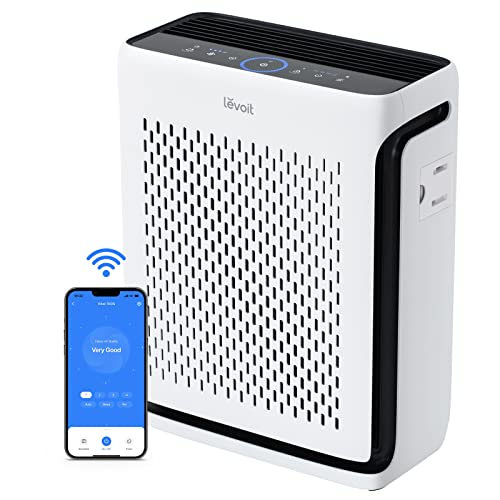
A washable pre-filter that catches hair and coarse dust before it reaches the HEPA stage is worth having on any allergy purifier, since it extends the interval between paying for filter replacement. Popular allergy-focused models from LEVOIT, Coway, Winix and Honeywell all include one, and checking the ongoing filter replacement cost before you buy is as important as checking the CADR number, per AHAM's own testing guidance.
Every recommendation in this category is built from aggregated real owner reviews and published manufacturer filtration specifications, never from buying and running units ourselves — see How We Rank for the full methodology.