


Affiliate Disclosure
Some links on this page are affiliate links. As an Amazon Associate, we earn from qualifying purchases — at no extra cost to you. We do not buy, test, or physically handle the products we cover; our rankings come from aggregated owner reviews, ratings and expert consensus. Commissions never change our verdicts. How we rank & full disclosure.
Dehumidifiers are bought in a hurry, usually after a musty smell forces the issue. Two decisions do almost all the work: getting the capacity right for the space, and deciding up front how the water is going to leave the machine.
What Does the Pints Per Day Rating Actually Mean?
Pints per day removed under a standardised test condition. It's a comparison figure, not a promise — your room is warmer, colder or damper than the test chamber, so real-world removal will differ.
In 2019 the US Department of Energy changed the test conditions for residential dehumidifiers, moving from a warmer chamber to a cooler one. A unit labelled 50-pint today is broadly comparable to one labelled 70-pint a decade ago — nothing shrank except the test.
Square footage and coverage
Standard sizing tables ladder capacity across square footage and how damp the space is, and coverage claims move as much with dampness as with room size. Undersizing is the most common buying mistake in the category.
What Capacity Does a Damp Basement Actually Need?
More than a bedroom or living room of the same square footage. A damp basement with a persistent smell and clammy surfaces needs a larger unit than "slightly damp" sizing tables suggest, and standing water or seepage is a building problem the appliance can only manage, not solve.
An undersized unit doesn't fail gracefully — it runs continuously, never reaches setpoint, and costs more than the larger unit would have. Frigidaire and hOmeLabs both publish sizing charts by square footage and dampness level worth checking against your actual basement.
Relative humidity and musty odor
A musty odor is usually the first sign relative humidity has crept above the comfortable range. Getting ahead of it with a correctly sized unit is cheaper than dealing with mold once it's established on a wall or in carpet.
Water Tank or Continuous Drainage — Which Do Owners Actually Use?
Anyone dehumidifying a genuinely damp space ends up on continuous drainage. Consumer water tanks hold roughly one to two gallons, and a unit pulling 30-plus pints a day fills that several times over.
Almost every unit has a hose port for gravity drainage, and it works on one condition: the drain point has to be lower than the outlet. Where the drain sits above the unit, a built-in condensate pump routes the water up and out instead.
Drain hose and auto shut-off
A kinked drain hose is one of the most common preventable failures in this category — check the run for dips that can trap water and back up. Auto shut-off protects the unit once the tank fills on models running without a hose, so it doesn't overflow while you're out.
Compressor or Desiccant: Which Dehumidifier Works in Cold Rooms?
Standard compressor dehumidifiers lose effectiveness as temperature falls and begin frosting their coils below roughly 65°F. In genuinely cold spaces, a desiccant dehumidifier is the design that keeps working, since it uses a moisture-absorbing rotor instead of a chilled coil.
Midea and Vremi both offer compressor units with auto-defrost, which pauses the compressor and runs the fan to melt ice — costing productive run time but keeping the machine working through a cold snap. For cold spaces specifically, the desiccant-vs-compressor specifics are covered on our dehumidifiers for garages hub.
Humidistat control and energy efficient running
Treat a built-in humidistat as approximate and verify with a separate hygrometer placed away from the unit, since a sensor sitting in the machine's own dry exhaust reads low. Chasing an unrealistically low target keeps the compressor running for no comfort benefit — an energy efficient setpoint is one that matches the sensible band described in our guide to the ideal indoor humidity level, not the lowest number on the dial.
Does Running a Dehumidifier Make a Room Warmer?
Yes, slightly. A compressor dehumidifier is a heat pump that dumps its waste heat straight back into the same room, and condensing water vapor releases heat as well. Expect a modest temperature rise, not a drop.
The room usually feels more comfortable anyway, because dry air at a slightly higher temperature feels better than clammy air at a lower one. In an already-hot upstairs bedroom in summer, though, the extra heat is real and noticeable, and it's one reason people end up preferring an air conditioner instead, which removes moisture as a side effect of cooling.
Does an ENERGY STAR Dehumidifier Actually Prevent Mold?
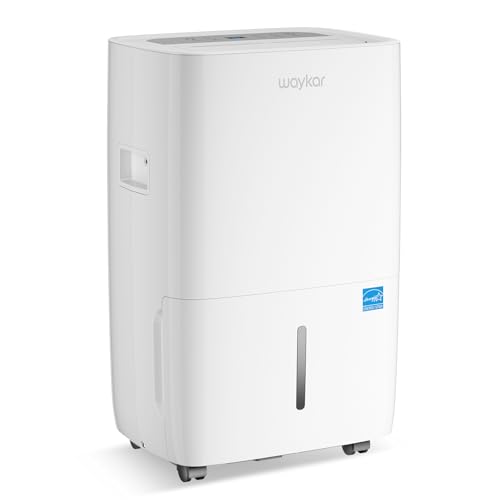
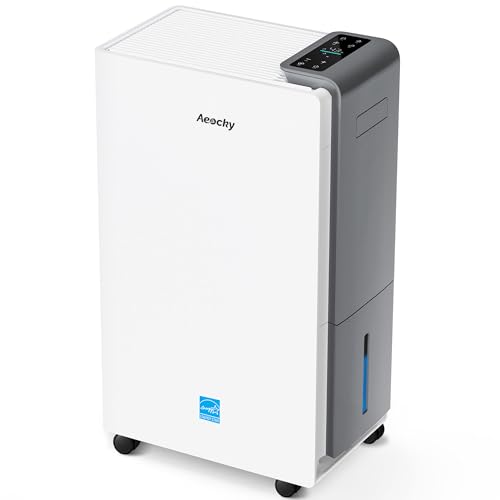
Not by itself, but it removes the moisture mold depends on. An ENERGY STAR-certified dehumidifier has been independently verified to remove water efficiently, which keeps relative humidity in the range where mold struggles to establish.
The EPA's guidance is consistent here: control moisture and you control mold, since mold needs sustained dampness on a surface to take hold. A correctly sized, continuously run dehumidifier in a basement is one of the more reliable ways to keep that from happening in the first place.
Rankings across this category come from aggregated real owner reviews, manufacturer specifications and the failure patterns that repeat across brands — never from us buying and running a unit ourselves. Our How We Rank page explains that methodology, and what we will not claim to know.