


Affiliate Disclosure
Some links on this page are affiliate links. As an Amazon Associate, we earn from qualifying purchases — at no extra cost to you. We do not buy, test, or physically handle the products we cover; our rankings come from aggregated owner reviews, ratings and expert consensus. Commissions never change our verdicts. How we rank & full disclosure.
An air purifier is one of the few appliances where the number that matters most is printed on the box and ignored by most buyers. Nearly every disappointing purifier purchase traces back to one of three things: a unit too small for the room it is running in, a filter that was never truly HEPA, or a filter that was never replaced. Everything on this page is about avoiding those three mistakes before you spend the money, rather than discovering them six months later.
What does an air purifier actually remove from the air?
A HEPA-based purifier removes airborne particles — dust, pollen, pet dander, mold spores, smoke particulate and dust-mite debris. It does not remove gases or odors unless it also carries a substantial activated carbon stage, and it does nothing about particles that have already settled onto floors, bedding and furniture.
That distinction matters more than most product listings admit. Particle filtration and gas adsorption are two entirely different jobs done by two different materials. Pleated HEPA media physically traps solid particles as air is forced through it; activated carbon adsorbs volatile organic compounds and odor molecules onto an enormous internal surface area. A purifier with a thin carbon-dusted pre-filter is technically carbon-equipped and practically useless against cooking smells or smoke odor. That is why smoke, pet and allergy purifiers exist as separate categories rather than as marketing labels stuck onto identical hardware.
It is equally worth being honest about what a purifier cannot do. It will not pull dust out of your carpet, it will not remove mold growing on a bathroom wall, and it will not fix a ventilation problem. It cleans the air that passes through it, over and over — which is genuinely useful, but only if enough air actually passes through it.
How do you size an air purifier for your room?
Match CADR to room size, not to price. A widely used rule of thumb is that a purifier’s smoke CADR should be roughly two-thirds of the room’s floor area in square feet — a 300-square-foot bedroom wants a CADR near 200 to clear the air about five times an hour.
CADR, or Clean Air Delivery Rate, is measured in cubic feet per minute and is published as three separate figures: smoke, dust and pollen. Smoke is the hardest of the three and therefore the most useful single number to compare across models. Manufacturers also publish a coverage-area claim in square feet, but read the fine print — that figure often assumes a single air change per hour, which is a very low bar. For allergy or smoke relief, most guidance points toward four to five air changes per hour, which effectively means buying a unit rated for roughly twice the room you intend to use it in.
Ceiling height is the other variable buyers forget. Coverage claims assume an eight-foot ceiling, so a vaulted or open-plan space needs proportionally more capacity. Undersizing is the single most common regret pattern in owner reviews: the unit runs continuously on high, is noisy at that speed, chews through filters faster, and still never quite keeps up. Sizing up and running the unit on a lower, quieter speed is almost always the better outcome. If your space is genuinely large or open-plan, the dedicated air purifiers for large rooms category is a better starting point than a general-purpose model.
Is a true HEPA filter worth paying for?
Yes — and the distinction is a certified one, not a marketing one. True HEPA is independently rated to capture at least 99.97% of particles at 0.3 microns. "HEPA-type", "HEPA-like" and "99% HEPA" carry no such certification and typically perform noticeably worse on exactly the particle sizes you care about.
The 0.3-micron figure is deliberately chosen because it is the most penetrating particle size — the hardest thing for a fibrous filter to catch. Particles both larger and smaller than that are captured more readily, which is why a true HEPA filter also performs well against very fine ultrafine particles despite the number sounding like a ceiling. Once you understand that, the marketing shorthand becomes easier to decode. Our full true HEPA filter explainer walks through the exact wording to look for on a listing and the phrases that quietly signal a lesser filter.
The practical warning is that "HEPA" appears in the marketing copy of units that do not contain a certified HEPA filter at all. If a listing avoids the words "True HEPA" or "H13" and instead says something vaguer, treat that as a deliberate choice by the seller rather than an oversight.
How often do filters actually need changing?
Most manufacturers specify HEPA replacement every six to twelve months and carbon replacement every three to six, but real intervals depend on load. Homes with pets, smokers, heavy dust or wildfire season run through filters considerably faster than the label suggests.
Filters are where an air purifier's true cost lives. A modestly priced unit with expensive proprietary filters can cost more over three years than a pricier machine with affordable, widely available replacements — so it is worth pricing a year of filters before you buy the machine, not after. Owners consistently report this as the thing they wish they had checked first.
The pre-filter is the cheapest maintenance win available. It is usually a washable mesh or foam screen that catches hair and large debris before it reaches the HEPA media, and vacuuming it monthly meaningfully extends the life of the expensive filter behind it. Ignoring the pre-filter is the fastest way to make a good purifier feel like a bad one: airflow drops, noise rises, and clean-air delivery quietly falls off well before the replacement indicator ever lights up.
What do owners complain about most after living with a purifier?
Noise on the highest fan speed, filter cost, and always-on indicator lights in bedrooms are the three recurring complaints. Almost none of them are about filtration quality — they are about living with a machine that has to run continuously to do its job.
This is worth taking seriously at the buying stage, because a purifier only works while it is running. A unit that is too loud on the setting it needs to run at gets turned down or turned off, and a purifier on a low setting in an oversized room is close to decorative. Decibel ratings at the lowest and highest speeds, whether the display can be dimmed or switched off, and how easily the filter door opens are all specification-sheet details that determine whether the machine stays on.
The praise pattern is more consistent: allergy sufferers and households with pets tend to notice a difference within a few days when the unit is correctly sized and left running. That is the whole equation — right size, real filter, running continuously.
Does a purifier alone fix indoor air quality?
No. A purifier is one layer alongside source control, ventilation and humidity management. Running a purifier in a room with an ongoing pollutant source treats the symptom while the cause keeps producing, which is why results can feel underwhelming despite a good machine.
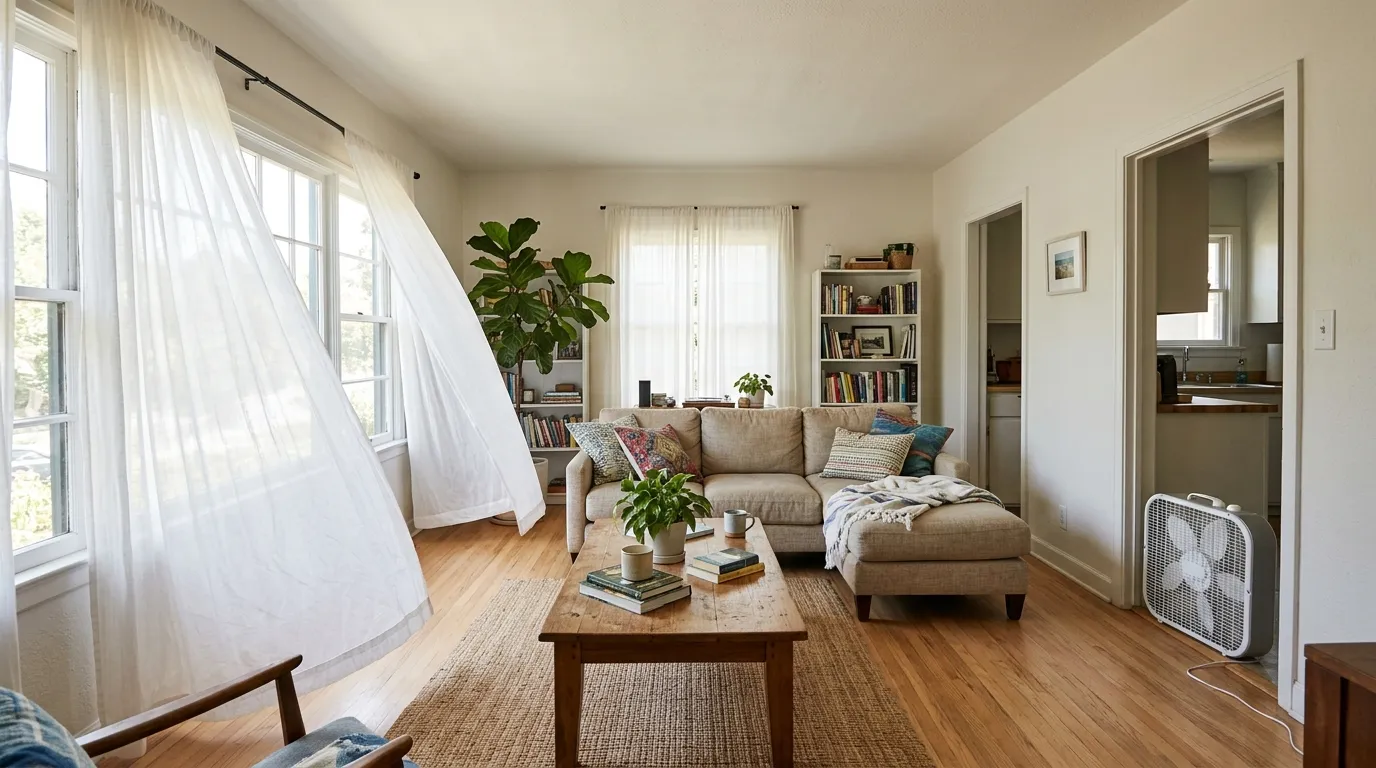
Filtration works best when the obvious sources are dealt with first: extractor fans that actually vent outside, shoes off at the door, dust-mite-resistant bedding, and humidity kept in a sensible band so mold and mites are discouraged rather than encouraged. Our guide to your home's indoor climate sets out the practical order of operations, and it is worth reading before you buy rather than after the first filter change.
What size and filter type do you actually need?
Two decisions matter more than any feature list: how big a room you're sizing for, and what the filter actually is.
Square footage and air changes per hour
Match a purifier's CADR to your room's square footage, not to the price tag. For real allergy relief, aim for four to five air changes per hour rather than the single change many coverage claims assume.
CADR for smoke, dust and allergens
CADR is published under AHAM's certification and reports three separate numbers: smoke, dust and pollen. Smoke is the hardest particle size to trap, so it's the best single figure for comparing allergens performance across models.
Activated carbon for VOC and odor
HEPA media stops particles; it does nothing for gases. Cooking odor, off-gassing and other VOC sources need a real activated carbon stage behind the HEPA filter, not a thin carbon-dusted mesh.
Pre-filter and filter replacement cost
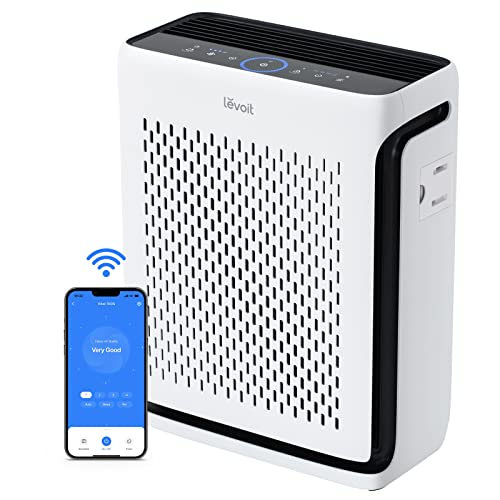
A washable pre-filter catches hair and large debris before it reaches the HEPA media, stretching out filter replacement intervals. Coway, Winix, Blueair and LEVOIT all price replacement filters differently — check a year of them before buying the machine.
What features affect daily use?
Sizing gets you the right machine. These features decide whether you actually leave it running.
Quiet operation and auto mode
Noise on the highest fan speed is the top bedroom complaint in owner reviews. Auto mode uses a built-in sensor to stay quiet most of the day and ramp up only when it detects a spike.
Energy efficient running cost
Most purifiers draw 30 to 100 watts on a normal setting, so an energy efficient unit left running continuously still costs only a few dollars a month — far less than switching it on and off.
PM2.5 and true HEPA certification
PM2.5 — the fine particulate the EPA tracks most closely for indoor air quality — is exactly what a true HEPA filter is built to catch. A certified true HEPA spec is the one claim on the box worth trusting without question.
Every product recommendation across this category is built from aggregated real owner reviews and published manufacturer specifications — never from buying and running a unit ourselves. See How We Rank for the full methodology.