


Affiliate Disclosure
Some links on this page are affiliate links. As an Amazon Associate, we earn from qualifying purchases — at no extra cost to you. We do not buy, test, or physically handle the products we cover; our rankings come from aggregated owner reviews, ratings and expert consensus. Commissions never change our verdicts. How we rank & full disclosure.
Infrared heaters solve a different problem from every other electric heater in the house. Instead of warming the air and waiting for it to circulate, they send radiant energy straight to whatever is in front of them — people, floors, workbenches, walls — which then re-radiate that heat back into the room. That single difference explains why owners either love them or find them baffling, and it is the thing to understand before you spend anything.
What makes infrared heat feel different from a fan heater?
You feel it almost immediately and only where it reaches. Infrared warms surfaces and skin directly in line of sight, the way sunshine does through a window, rather than raising the air temperature first. Step out of the beam and the warmth stops.
This is why an infrared heater can feel wonderful in a cold garage where a convection heater feels useless. Heating the air in a large, leaky, high-ceilinged space is a losing battle — the warm air rises and escapes faster than the heater can produce it. Heating the person standing at the bench sidesteps the problem entirely. The same logic makes infrared the default choice for outdoor and semi-outdoor use, which is why most patio heaters are radiant rather than fan-driven.
The flip side is that the effect is directional and does not linger. A room warmed by a radiant heater cools noticeably faster once the unit is off than one warmed by a convection heater, because the air itself was never the reservoir. Owners who expect the room to stay warm for an hour after shutdown consistently report disappointment. If you want heat that persists, that is a convection job, not a radiant one.
How much space will a 1,500-watt infrared heater actually warm?
The same 1,500 watts as any other plug-in heater — roughly 5,100 BTU per hour, or about 150 to 300 square feet of supplemental heat. Infrared does not create extra output; it delivers the same output where you are standing rather than into the whole room.
This is the single most misunderstood point in the category. Marketing copy for infrared cabinet heaters routinely quotes coverage figures well past 1,000 square feet, and those numbers describe the distance the radiant effect can be perceived, not a room the unit can raise to a comfortable temperature. A 1,500-watt appliance is a 1,500-watt appliance regardless of emitter technology, and no wiring trick gets more heat out of a standard 120-volt outlet.
What changes is the useful placement. Because line of sight matters, an infrared heater positioned behind a sofa or aimed at a wall is wasting most of its value, while the same unit angled at the seating area feels twice as effective. For a general-purpose room heater where placement is awkward or people move around, a conventional space heater is usually the more forgiving buy.
Are infrared heaters cheaper to run than other electric heaters?
Not per watt — every electric resistance heater converts essentially all its electricity into heat. Infrared can cost less in practice because it makes people comfortable at a lower air temperature, so you run it less and can leave the surrounding space cooler.
The efficiency claims attached to this category deserve scepticism. Electric resistance heating is close to one hundred percent efficient at the point of use no matter what the element is made of, so any advertisement implying an infrared unit produces more heat per kilowatt-hour than a ceramic one is selling physics that does not exist. What is real is the comfort effect: radiant warmth on skin lets most people feel comfortable at a lower ambient temperature, and lower ambient temperature is where the savings live.
That effect is strongest exactly where convection struggles. In an uninsulated garage, a workshop, or a room with a vaulted ceiling, an infrared heater run for the hour you are actually in the space will usually cost less than trying to bring the whole volume up to temperature. In a small, well-insulated bedroom, the advantage largely disappears.
Are infrared heaters safe around children, pets and furniture?
It depends on the style. Cabinet and wall-mounted models with a cool-touch housing are among the safer electric heaters for a family room. Exposed quartz-tube and open-element models get genuinely hot and need real clearance, especially the outdoor and shop types.
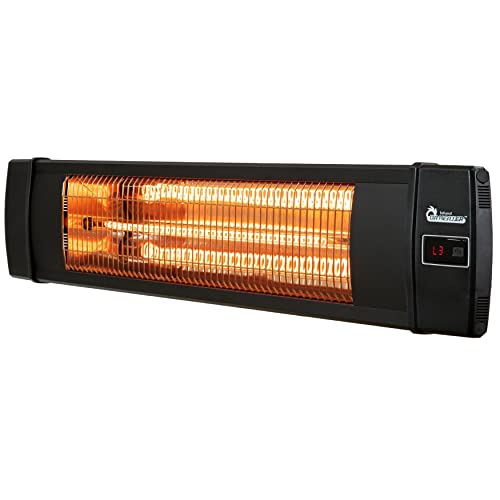
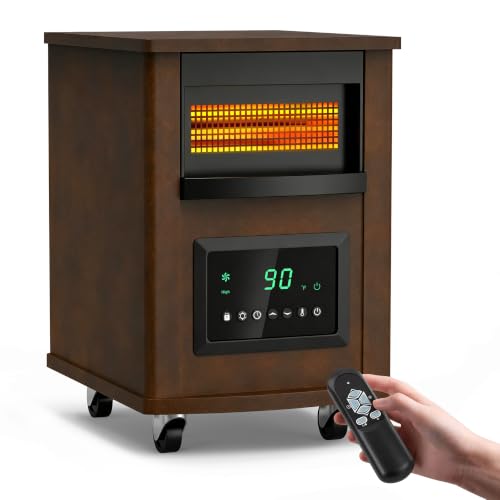
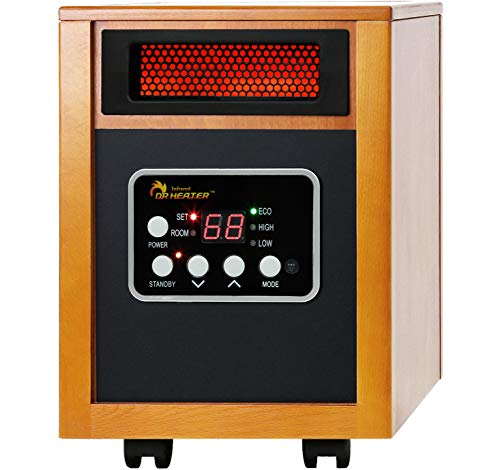
Look for tip-over shut-off and overheat protection first, as with any electric heater, then look at the housing itself. Enclosed cabinet units — the wood-cased models often marketed for living rooms — are designed so the exterior stays warm rather than hot, which is why they show up in homes with pets and small children. Bar and tube heaters, by contrast, put a visibly glowing element behind a wire grille and demand the standard three feet of clearance from furniture, curtains and anything combustible.
Directionality creates its own hazard that owners underestimate: the heater does not need to touch something to overheat it. A radiant unit aimed at a nearby sofa arm, a cardboard box or a stack of newspapers can heat that surface far more than the air temperature suggests. Clearance in front of an infrared heater matters more than clearance behind it, which is the opposite of the instinct most people bring from convection heaters.
What do infrared heater owners complain about most?
Fan noise on cabinet models, disappointment at how quickly the room cools after shutdown, and weight. Owners also consistently report that the advertised coverage area bears little resemblance to what the unit can actually heat in a real, imperfectly sealed room.
The noise complaint surprises people who assumed radiant meant silent. Most enclosed infrared cabinet heaters use a blower to move air across the emitters and out of the housing, and that blower is a real fan with real noise. Pure radiant designs — wall panels, tube heaters — are silent, but they also lose the mild convection assist that makes cabinet units workable as general room heaters.
Weight and bulk are the other recurring theme. Cabinet models built to look like furniture are heavy, and owners who expected to carry one between rooms often do not. Set against those complaints, the praise is remarkably consistent on one point: in cold garages, basements, shops and drafty older rooms where nothing else worked, infrared is the category people say finally made the space usable.
Where does an infrared heater make the least sense?
In a small, well-insulated bedroom you want warm all night. Nothing about radiant heat helps there — the room already holds heat well, the effect stops the moment the unit does, and a convection heater will keep the same space comfortable more evenly on identical wattage.
The rule that emerges from the review record is straightforward: infrared earns its keep as the volume of the space rises and the quality of the insulation falls. Garages, workshops, basements, sunrooms, screened porches and high-ceilinged great rooms are all places where warming the air is a losing proposition and warming the person is not. A closed 120-square-foot bedroom is the opposite of every one of those conditions.
Placement constraints are the second disqualifier, and they are easy to overlook in a shop listing. Radiant heat needs an unobstructed line from the emitter to the people, so a room where the only available position is behind a chair, under a desk or facing a bookcase is a room where most of the output goes into furniture. If you cannot aim the heater at where people actually sit, buy a convection heater rather than fighting the geometry all winter.
What types of infrared space heaters are there?
Infrared heaters split into a handful of emitter types, and the type decides how hot the surface gets and how the heat feels.
Quartz infrared heaters
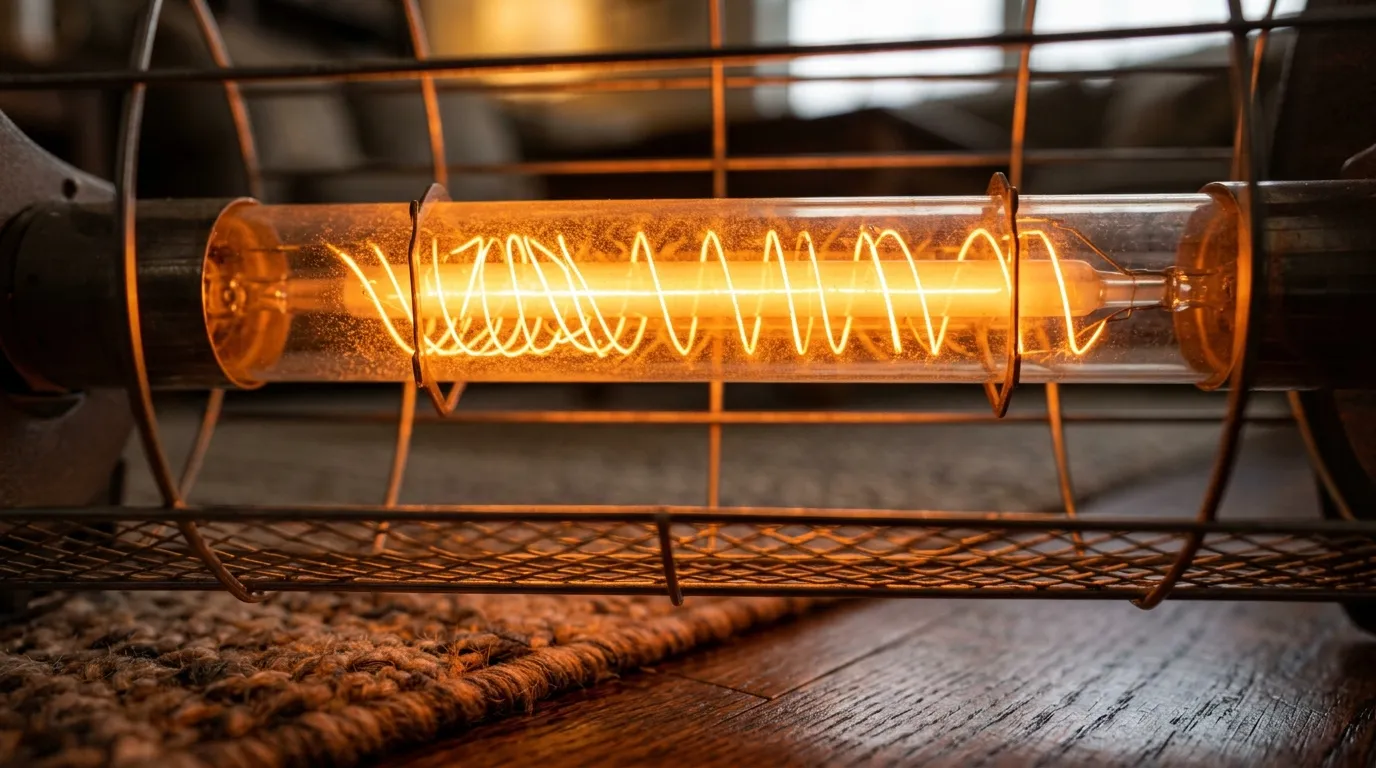
Quartz infrared heaters use a glowing quartz tube to radiate heat almost instantly. Dr Infrared and LifeSmart both build cabinet models around this element. They warm skin and objects directly in line of sight, not the air around them.
Carbon element infrared heaters
Carbon element heaters use a carbon-fiber panel instead of a glass tube. They run at a lower surface temperature, which is part of why Heat Storm markets its panels as a safer option near furniture. Output is similar; the panel simply glows less brightly.
Far infrared panels
Far infrared panels emit at a longer wavelength than quartz or carbon models, with almost no visible glow. They mount flat to a wall or ceiling and heat slowly but evenly. Duraflame and most cabinet-heater brands rarely use this format; it shows up more in dedicated panel heaters.
Garage heater and shop models
A garage heater built around an infrared element skips the wasted step of heating a large, leaky volume of air. It warms the person at the workbench instead. That is why garages, shops and covered porches are where infrared beats a standard space heater.
What specs actually matter when buying an infrared heater?
Past emitter type, a short list of specs decides comfort, safety and running cost.
1500 watts, BTU and instant heat
Nearly every plug-in infrared heater tops out at 1500 watts, about 5,100 BTU per hour, because that is the ceiling for a household outlet. Unlike a fan heater, it delivers instant heat the moment it switches on. There is no warm-up lag while air circulates.
Radiant heat and silent operation
Radiant heat needs no fan to work, so panel and tube models can run completely silent. Cabinet models with a blower are not silent. The fan moves air across the element and out through the housing, and that is a real, audible noise.
Thermostat and zone heating control
A built-in thermostat cycles the element to hold a set temperature rather than running flat-out. Zone heating is the whole point of infrared — heating one person or one workbench, not the whole room — so a heater with reliable thermostat control avoids wasted output.
Tip-over and overheat safety
Tip-over shut-off and overheat protection are non-negotiable on any electric heater, infrared included. Exposed quartz-tube and open-element models get genuinely hot and need real clearance from anything combustible. Cabinet models with a cool-touch housing are safer around kids and pets.
Running cost and energy efficient use
Every infrared heater is exactly as energy efficient as any other resistance heater. Electric heat is close to 100% efficient at the point of use no matter the element. Running cost comes down to kWh used, not watts saved — at 1500 watts, expect roughly 1.5 kWh per hour at your local electricity rate. The EPA doesn't rate individual heaters, but its guidance backs supplemental zone heating as a genuine way to cut a whole-house bill.
Every guide below is ranked from aggregated real owner reviews and manufacturer documentation, never from us buying and running a heater ourselves — see How We Rank for the full methodology.