


Affiliate Disclosure
Some links on this page are affiliate links. As an Amazon Associate, we earn from qualifying purchases — at no extra cost to you. We do not buy, test, or physically handle the products we cover; our rankings come from aggregated owner reviews, ratings and expert consensus. Commissions never change our verdicts. How we rank & full disclosure.
A hygrometer is the cheapest genuinely useful instrument in this entire pillar. It answers one question — is this room too dry or too damp — and that answer decides whether you need a humidifier, a dehumidifier, or nothing at all.
What Humidity Reading Should a Healthy Home Show? Relative Humidity Explained
Aim for 30–50% relative humidity, the range the EPA recommends, and keep the house below 60% as an absolute ceiling. Below 30% brings static and dry skin. Sustained readings above 60% invite dust mites and mould.
Dust mites need moisture drawn from the air to survive, which is why allergy guidance pushes toward the lower half of the range. Winter is when most homes get too dry, because cold outdoor air holds very little moisture.
Comfort range and dew point
If you want to compare rooms fairly, dew point is the honest measure, since it describes actual moisture content independent of temperature — two rooms can sit in the same comfort range on an RH reading while holding very different amounts of water. Some connected sensors calculate dew point automatically.
How Accurate Are Consumer Hygrometers? Accuracy and Calibration
A decent digital hygrometer using a capacitive polymer sensor is typically specified at ±2% to ±5% relative humidity — good enough for every decision a homeowner makes. Cheap analogue dial units are considerably worse and drift without calibration.
ThermoPro and Govee both publish accuracy specs on their hygrometer listings, which is worth checking against a model that stays vague. Accuracy tolerance is why two units on the same shelf can disagree by several points and both be working correctly.
Digital sensor vs analog display
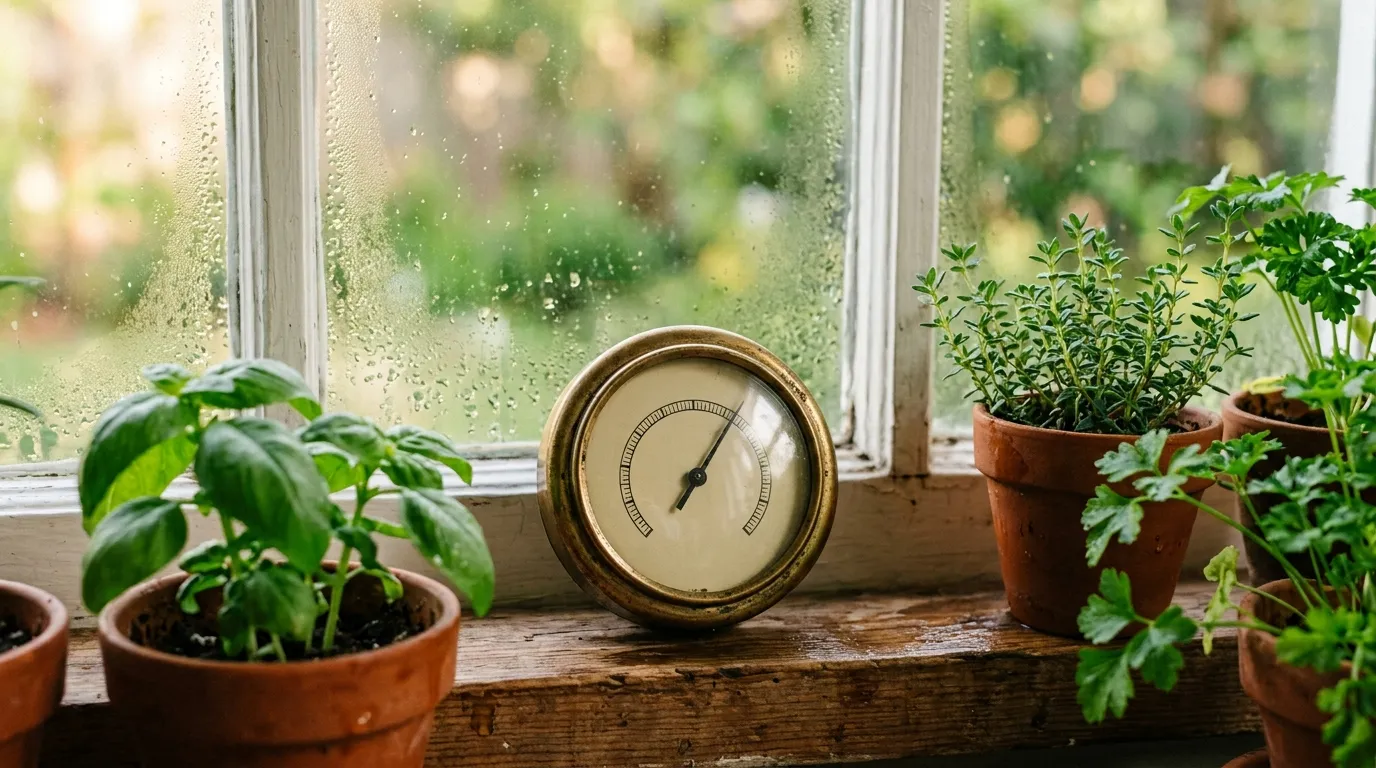
Analogue dial hygrometers with a needle display are decorative rather than functional — most use a bimetallic sensor element, arrive uncalibrated, and drift steadily. A digital sensor with a numeric display is the only kind worth buying if you plan to act on the reading.
Can You Check Whether a Hygrometer Is Telling the Truth?
Yes — the salt test. Seal the hygrometer in a bag with a small dish of table salt dampened into a slurry, wait eight to twelve hours, and the air inside will stabilise at close to 75% relative humidity.
This works because a saturated salt solution holds the air above it at a known, stable humidity — a genuine reference point rather than an approximation. Some digital hygrometers let you enter a calibration offset once you know how far out they are.
Indoor temperature and battery life
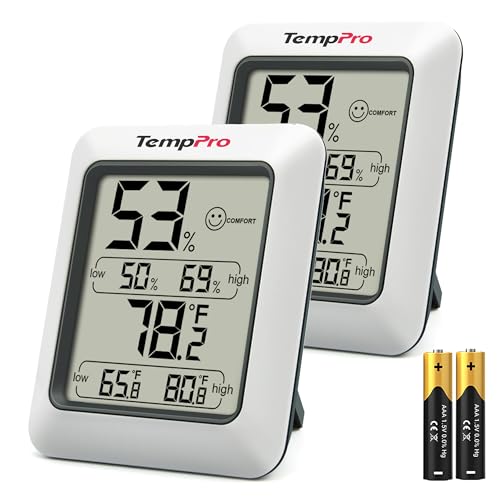
Most indoor hygrometers pair a humidity sensor with a temperature reading on the same display, and run for months on a single battery. INKBIRD and AcuRite both build combo units that report both figures side by side, which is useful for calculating dew point without a separate device.
Where Should a Hygrometer Go, and Do You Need Data Logging?
Place it on an interior wall at roughly breathing height, away from vents, windows and any humidifier plume. For anyone tracking trends over weeks, data logging models record history rather than just showing a live number.
Placement mistakes generate most of the readings people find confusing — a hygrometer sitting in a humidifier's output mist reads the mist, not the room.
Monitoring a greenhouse or humidor
Monitoring humidity matters well beyond the living room. A greenhouse needs it tracked closely for plant health, and a humidor needs a stable, narrow range to keep cigars from drying out or growing mould — both are common secondary uses for the same consumer hygrometers sold for household comfort.
Why Does the Same House Read Differently Room to Room?
Because relative humidity is relative to temperature. The same amount of moisture in the air reads as a higher percentage in a cold room and a lower percentage in a warm one — a cool basement at 65% and a warm living room at 45% can hold almost identical moisture.
This is the concept that makes humidity readings finally click. Condensation forms on windows because the air touching that cold glass reaches 100% relative humidity even though the room is nowhere near it. Heating a house in winter dries it out without removing a single gram of water — the air simply holds more before saturating. Multiple cheap hygrometers in different rooms will identify your actual problem area faster than one premium unit in the hallway.
Do You Need Min Max Memory and a Thermometer Combo?
Min max memory records the highest and lowest readings since you last reset it, which is genuinely useful for catching a spike you weren't home for — a shower left running, a window left open in the rain. Most useful hygrometers double as a thermometer too.
For the wider picture of how humidity interacts with everything else in your home's indoor climate — filtration, ventilation and heating load — a hygrometer pairs naturally with the instruments covered in our air quality monitors hub, most of which include humidity as a standard channel. See our full guide to the ideal indoor humidity level for what to target once you have a reliable reading.
See How We Rank for our full methodology: every recommendation here comes from aggregated real owner reviews, manufacturer specifications and published guidance, never from us buying and running a device ourselves.