


Affiliate Disclosure
Some links on this page are affiliate links. As an Amazon Associate, we earn from qualifying purchases — at no extra cost to you. We do not buy, test, or physically handle the products we cover; our rankings come from aggregated owner reviews, ratings and expert consensus. Commissions never change our verdicts. How we rank & full disclosure.
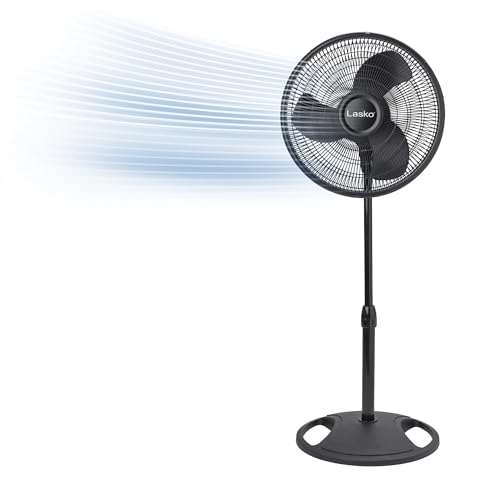
A pedestal fan is the most airflow you can buy for the money in a movable indoor fan. A large-diameter blade turning at moderate speed moves more air, more efficiently and more quietly, than a small one spinning fast. The adjustable-height column is the other half of the appeal, putting airflow at the level of a seated or standing person.
How Much Airflow Does Blade Size Actually Buy You?
A lot. Common household pedestal fans use 16-inch blades and typically move a few thousand CFM on high, while 18- and 20-inch models step up substantially. Blade diameter has a much larger effect on airflow than motor speed, and larger blades achieve it more quietly.
This is why a big fan on a low setting is almost always more pleasant than a small fan on high — the same volume of air arrives at lower velocity with less turbulence and less blade noise.
CFM and air circulation explained
CFM — cubic feet per minute — is the number worth comparing across models, when it's published. It measures actual air circulation, not just motor wattage. A high-wattage motor driving a small blade is simply a noisier way to move less air, so CFM tells the real story.
Does Adjustable Height Really Matter for a Standing Fan?
More than most buyers expect. Most pedestal fans offer adjustable height between roughly 40 and 55 inches — the difference between air arriving at a seated person's chest and at their head. As a standing fan, the taller settings also let airflow clear furniture instead of being blocked by a sofa back.
Air discharged at chest height travels further across a room before dissipating, and reaches more of a person's skin, which is what actually produces the cooling sensation.
Tilt head and oscillation
A tilt head that angles well downward lets a tall fan cool a bed; one that tilts upward can push warm ceiling air back down in winter. Oscillation sweeps the fan side to side automatically, spreading airflow across a room instead of aiming it at one spot — though it also shifts the fan's center of mass, which is why a wobbly base gets worse while oscillating.
Why Do Pedestal Fans Wobble?
Wobble usually comes from an underweighted base, an uneven floor, or a column that hasn't been fully tightened during assembly. A wide, heavy base — steel or weighted plastic — is what keeps a tall fan upright on hard floors.
Lasko and PELONIS both build heavier-based models specifically to address this complaint. Checking that every fastener is snug after the first week of use resolves most wobble issues.
Speed settings and quiet operation
Multiple speed settings matter more than top-end power for everyday use. A fan with three or four steps between low and high lets you dial in a genuinely quiet setting for sleeping, rather than choosing between too weak and too loud.
What Makes a Pedestal Fan Suitable for a Workshop Room Fan?
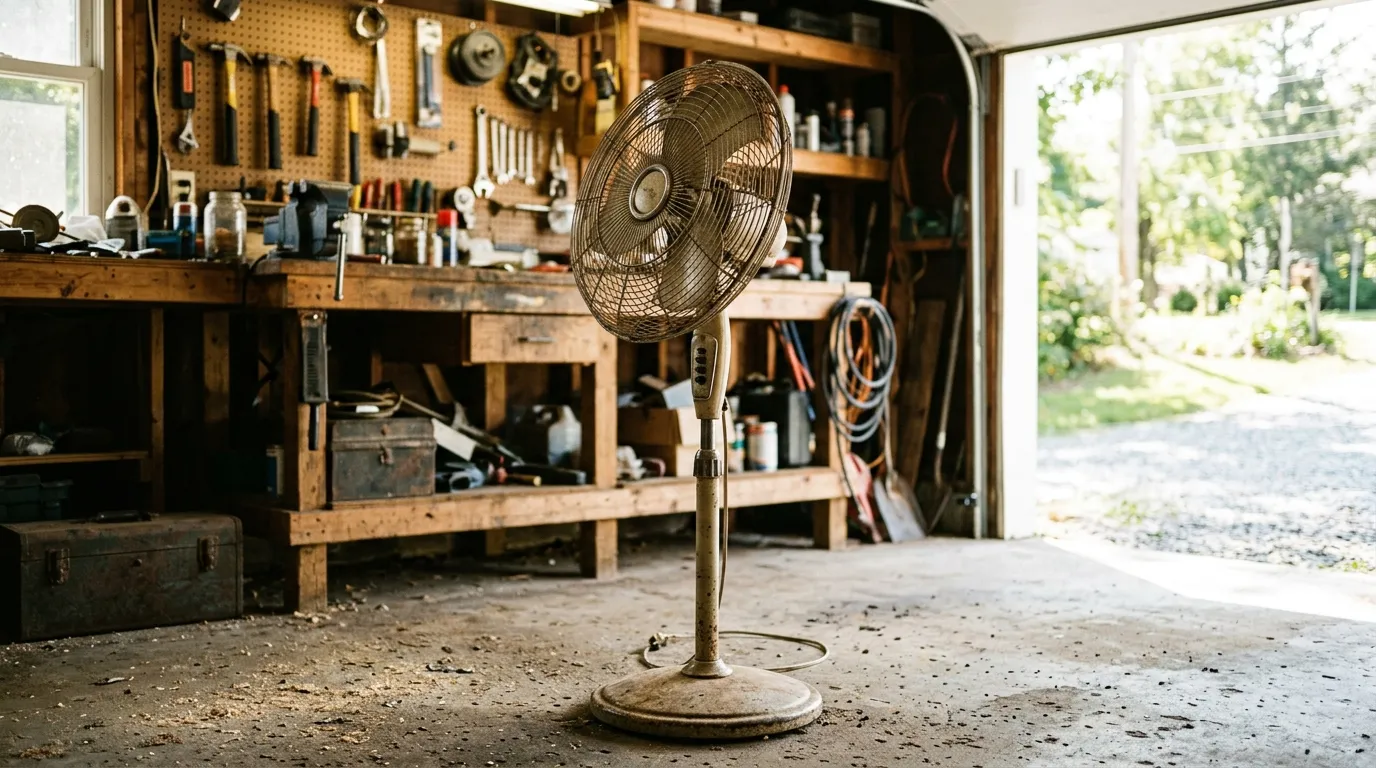
Metal blades, a metal guard, a heavy base and a sealed motor. Industrial-style pedestal fans are built for continuous running in dusty, warm environments, and move considerably more air than a household room fan — at the cost of more noise.
Sawdust and grit find their way into motor housings, so a household fan with an open motor will run hot and short-lived in a garage. Rowenta and Honeywell both offer heavier-duty options that hold up better outside a living room.
Remote control, timer and white noise
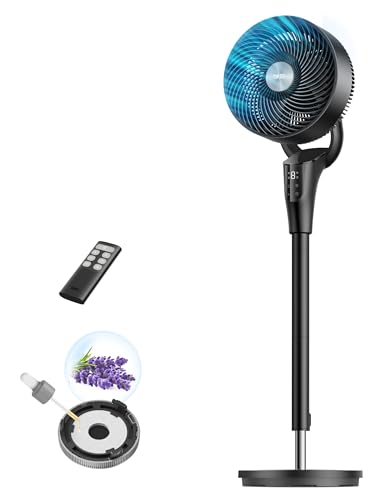
A remote control is a genuine convenience on a bedroom fan you don't want to get up to adjust. A timer lets the fan run for an hour or two while you fall asleep rather than all night, cutting both noise exposure and the dry-throat complaint continuous airflow can cause. Some owners deliberately run a fan for its steady white noise, using it to mask household sound rather than for cooling at all.
Metal or Plastic Blades: Which Should You Buy?
Plastic blades are lighter, quieter and fine for most living rooms. Metal blades cost more, weigh more and hold their shape under heavier daily use — the reason they show up on industrial and workshop models rather than bedroom fans.
Blade count and pitch affect the sound as much as the material. More blades tend to produce a smoother, quieter airstream at the cost of peak throughput, while fewer, more steeply pitched blades move more air per revolution and load the motor harder. If neither CFM nor blade count is published, owner descriptions of whether the fan can be felt across a room are more informative than any spec on the box.
Assembly quality matters as much as blade material. Columns that telescope on a friction collar will settle and lean if the collar isn't fully tightened, and a loose blade guard introduces a rattle that reads as wobble. A fan with a guard that removes without tools also gets cleaned more often — dust build-up on the leading edge of a blade measurably reduces airflow over time.
What Does a Pedestal Fan Cost to Run?
A typical household pedestal fan draws roughly 45 to 100 watts depending on size and speed — a small fraction of any air conditioner. Running cost is close to negligible compared with mechanical cooling.
Running a large fan continuously for a whole evening costs a fraction of what an hour of air conditioning does, which is the honest reason fans remain the first thing to try in a warm room.
Energy efficient cooling and running cost
A fan doesn't actually lower room temperature — it just moves air across your skin, which speeds evaporative cooling and feels cooler. That makes it an energy efficient first step before reaching for air conditioning, but it only works while the room is warm rather than genuinely hot. ENERGY STAR doesn't rate pedestal fans the way it rates air conditioners, so wattage on the spec sheet is the number to compare directly.
Every product recommendation below is ranked from aggregated real owner reviews and manufacturer specifications, never from us buying and running a unit ourselves — see How We Rank for the full methodology.