


Affiliate Disclosure
Some links on this page are affiliate links. As an Amazon Associate, we earn from qualifying purchases — at no extra cost to you. We do not buy, test, or physically handle the products we cover; our rankings come from aggregated owner reviews, ratings and expert consensus. Commissions never change our verdicts. How we rank & full disclosure.
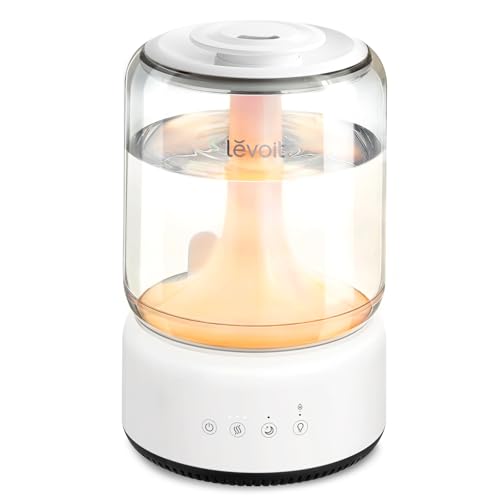
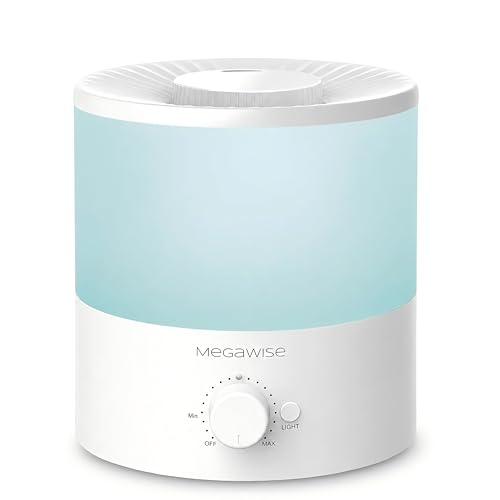
Cool mist is the default recommendation in this category, and for good reason. There's no heating element, no boiling water, and nothing hot for a curious toddler or a cat to knock over. What the label doesn't tell you is that "cool mist" covers two quite different technologies with opposite strengths. Choosing between them — not choosing on price — decides whether the unit is still running next winter.
What actually counts as a cool mist humidifier — evaporative or ultrasonic?
Any humidifier that adds moisture without heating the water. In practice that means two mechanisms: evaporative units, which pull air through a wet wick filter, and ultrasonic units, which vibrate water into a fine visible mist. Both are sold as cool mist, and they behave very differently.
An evaporative unit works like a damp towel over a radiator, just with a fan. Air is drawn through a saturated wick. Water evaporates into it, and the wick holds back the minerals. That gives two useful results: no white dust, ever, and a natural ceiling on humidity, because evaporation slows as the surrounding air gets wetter. It's genuinely hard to over-humidify a room with an evaporative unit.
Evaporative vs. ultrasonic: wicking filter and mist output
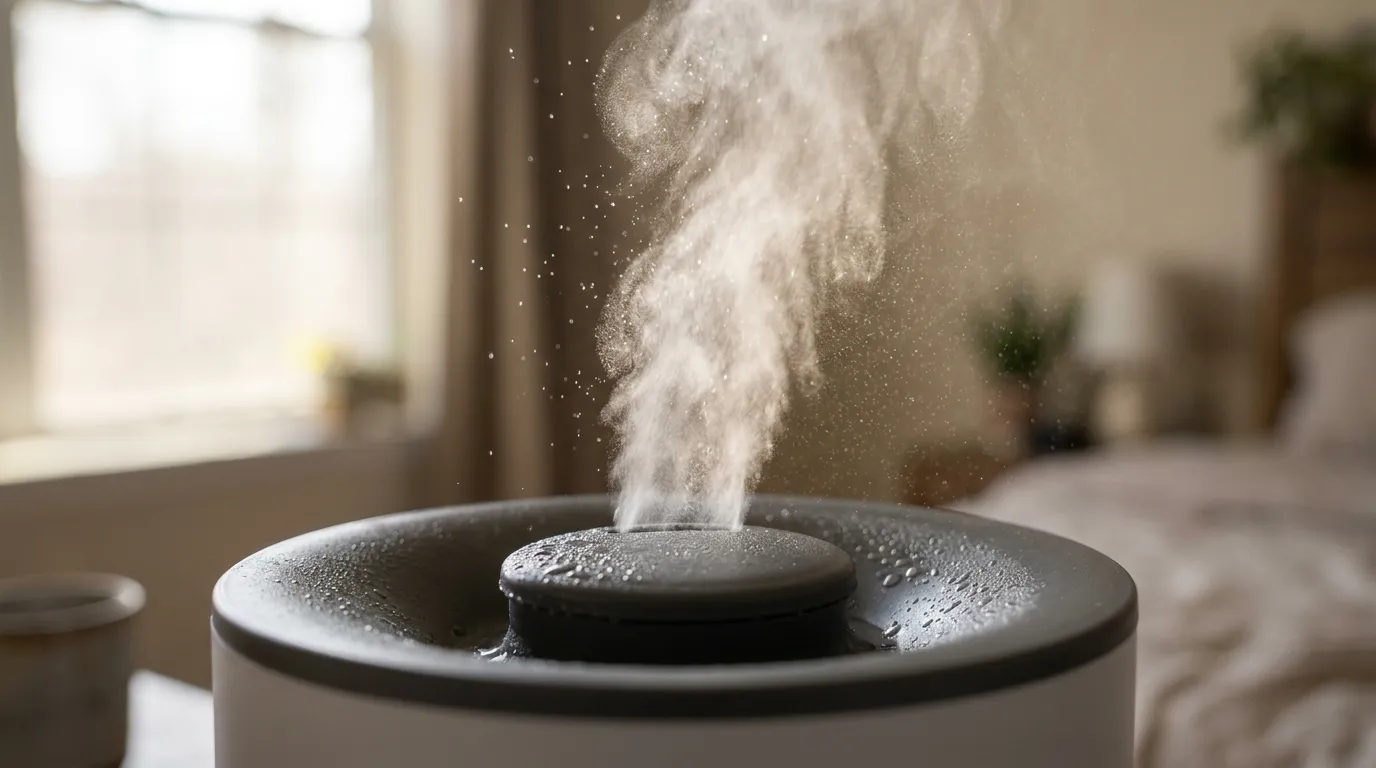
An ultrasonic unit atomizes water mechanically instead of evaporating it, so the visible mist output carries everything dissolved in the tank out into the room. It's close to silent, which is the whole appeal, but it doesn't self-limit and it has no wicking filter to catch minerals. If near-silence is what you're after, our ultrasonic humidifiers hub covers the water-quality and cleaning routine that keeps that trade-off manageable.
The wicking filter is what makes an evaporative unit self-regulating. As it saturates, mist output tapers on its own, so the machine can't easily push humidity too high. That built-in ceiling is the main reason evaporative units dominate nursery recommendations over ultrasonic ones.
Why is a cool mist humidifier the usual recommendation for a nursery?
Because there's no hot water and no heating element. A warm-mist vaporizer holds near-boiling water in a tank a child can pull over — the reason most nursery guidance defaults to cool mist, even though both types raise humidity equally well.
The safety difference is mechanical, not medical. It's about what happens if the unit gets knocked off a dresser, not about the mist itself. That means the other nursery considerations shift onto you: cool-mist units don't sterilize their water by boiling, so tank hygiene carries more weight in a room where someone sleeps eight feet away for twelve hours a night.
Placement is the second practical point. A cool plume aimed at a crib, a soft toy or a wall settles as liquid water on whatever it hits. Put the unit on a raised, water-safe surface well away from bedding, aim the nozzle into open space, and keep it off carpet. Owners consistently report damp patches and mildew smells that turned out to be a placement problem, not a faulty humidifier.
How big a room can tank capacity and square footage really cover?
Read the manufacturer's square-footage rating, then discount it for high ceilings, open doors and leaky windows. Output in gallons per day tells you whether the unit can keep up; tank capacity tells you how often you refill. Both numbers have to work for the room.
Coverage figures are generated under controlled conditions with the door shut, so a bedroom with a nine-foot ceiling and a gap under the door behaves like a bigger space. Open-plan areas are worse again, because the unit is effectively humidifying every room the air can reach. A larger tank capacity, in the one-to-two gallon range, also just means fewer overnight refills — which matters more than most buyers expect at 2 a.m.
Relative humidity, humidistat and auto shut-off
If the choice is between two sizes, the larger one with a real humidistat is almost always the safer purchase. It reaches setpoint and then throttles, rather than running flat out and never arriving. Auto shut-off is what protects the room once that setpoint is hit or the tank runs dry — without it, the unit keeps misting regardless of what the room actually needs.
The one place restraint pays off is a small, well-sealed bedroom. A high-output unit left on maximum in a compact room can push relative humidity past 60% overnight. That shows up as fogged windows in the morning and, eventually, mildew on cold external walls. The target band is roughly 30–50% relative humidity, and our guide to the ideal humidity level for your home's indoor climate covers how to verify you're actually inside it, rather than trusting the panel display.
What goes wrong with the filter, wicking filter and runtime over time?
Three things dominate: a wicking filter that crusts with mineral scale and stops absorbing, biofilm in a tank that's topped up rather than emptied, and mineral scale on ultrasonic transducers that quietly cuts mist output. All three are maintenance, not manufacturing defects.
On evaporative units, the wicking filter is a consumable, and hard water shortens its life considerably. A crusted filter doesn't fail loudly — output simply tapers off until the owner concludes the humidifier "stopped working." Manufacturers publish a replacement interval; treat it as a maximum, not a target, if your water is hard, and budget for it. Filters are a genuine recurring cost that rarely features in the purchase decision.
Runtime is the other number worth checking before buying. A larger tank on a low-output evaporative setting can run for two full days between fills, while a high-output ultrasonic unit on maximum may need refilling daily. If overnight runtime matters most to you, check the manufacturer's low-setting runtime figure, not just the tank capacity in gallons.
On the hygiene side, the fix is unglamorous and takes two minutes. Empty any standing water, dry the base, and refill fresh rather than topping up. Once a week, strip mineral scale with white vinegar and rinse thoroughly. Units with a wide tank opening you can reach into get cleaned far more often than units with a narrow neck — tank geometry is a more useful buying criterion than most of the features printed on the box.
Does dry air and low relative humidity make a room feel colder, or help sinus symptoms?
Marginally colder, and only near the outlet — evaporating water absorbs heat, so the plume itself feels cool. The bigger effect is how the room feels overall: properly humidified air at the same thermostat setting feels warmer, and it takes real pressure off dry sinus passages and irritated skin.
Very dry air speeds up evaporation from skin, which reads as a chill. That's why a house at 68°F in January can feel colder than the same house at the same setting in spring. Raising humidity into the comfortable band often lets people drop the thermostat a degree or two without noticing — a small but real running-cost argument for getting humidity right before turning the heat up.
Sinus and airway comfort follow the same logic. Dry air thickens mucus and irritates the sinus lining, which is why colds and congestion often feel worse overnight in a heated, dry bedroom. Bringing relative humidity back into range doesn't cure a cold, but it measurably eases the dry-sinus discomfort that keeps people awake.
Which features — energy efficient, quiet, essential oil trays — are worth paying for?
Top-fill design, a real humidistat with auto shut-off, a wide cleanable tank opening, and a genuinely quiet night mode. Everything else — colour-changing lights, app control, essential oil trays on units not built for oils — is where the marketing budget goes.
Top-fill is the feature owners are most emphatic about, because refilling is what determines whether a humidifier stays in use. Pouring a jug of water straight in, without unclipping a tank and carrying it upside-down to a sink, turns a chore into a five-second job. A humidistat with auto shut-off matters almost as much — without one, the unit runs until the tank is dry regardless of whether the room needs it. Ultrasonic units are naturally the quiet choice for a bedroom; evaporative units are quiet too, but never fully silent, because there's always a fan running.
Be cautious with essential oil trays. Oils attack plastics and seals on units not designed for them, and adding oil directly to the tank voids warranties on most models and can crack the reservoir. If aromatherapy is the goal, a separate diffuser is the cheaper mistake. Energy efficient models matter more than the spec sheet suggests too — a humidifier running continuously through a heating season adds up on the power bill, and ultrasonic units generally draw less than evaporative ones with an always-on fan. If a whole floor rather than one room is the actual problem, a portable unit is the wrong tool — the broader options are covered on the humidifiers hub.
Brands such as LEVOIT, Honeywell and Pure Enrichment cover most of the well-reviewed models in both categories, while Vicks remains the most recognized name in warm-mist and combination units for nurseries. EPA guidance on indoor relative humidity is the reference point the 30–50% target comes from, and it's worth checking against before trusting any single model's claims.
Everything here is drawn from aggregated owner reviews, manufacturer specifications and the complaint patterns that repeat across brands — never from us buying and running a unit ourselves. Our How We Rank page sets out that methodology in full, including what we will and won't claim to know.