

Affiliate Disclosure
Some links on this page are affiliate links. As an Amazon Associate, we earn from qualifying purchases — at no extra cost to you. We do not buy, test, or physically handle the products we cover; our rankings come from aggregated owner reviews, ratings and expert consensus. Commissions never change our verdicts. How we rank & full disclosure.
Disclosure: Some links below are affiliate links. As an Amazon Associate we earn from qualifying purchases at no extra cost to you — and a commission never changes which products we recommend.
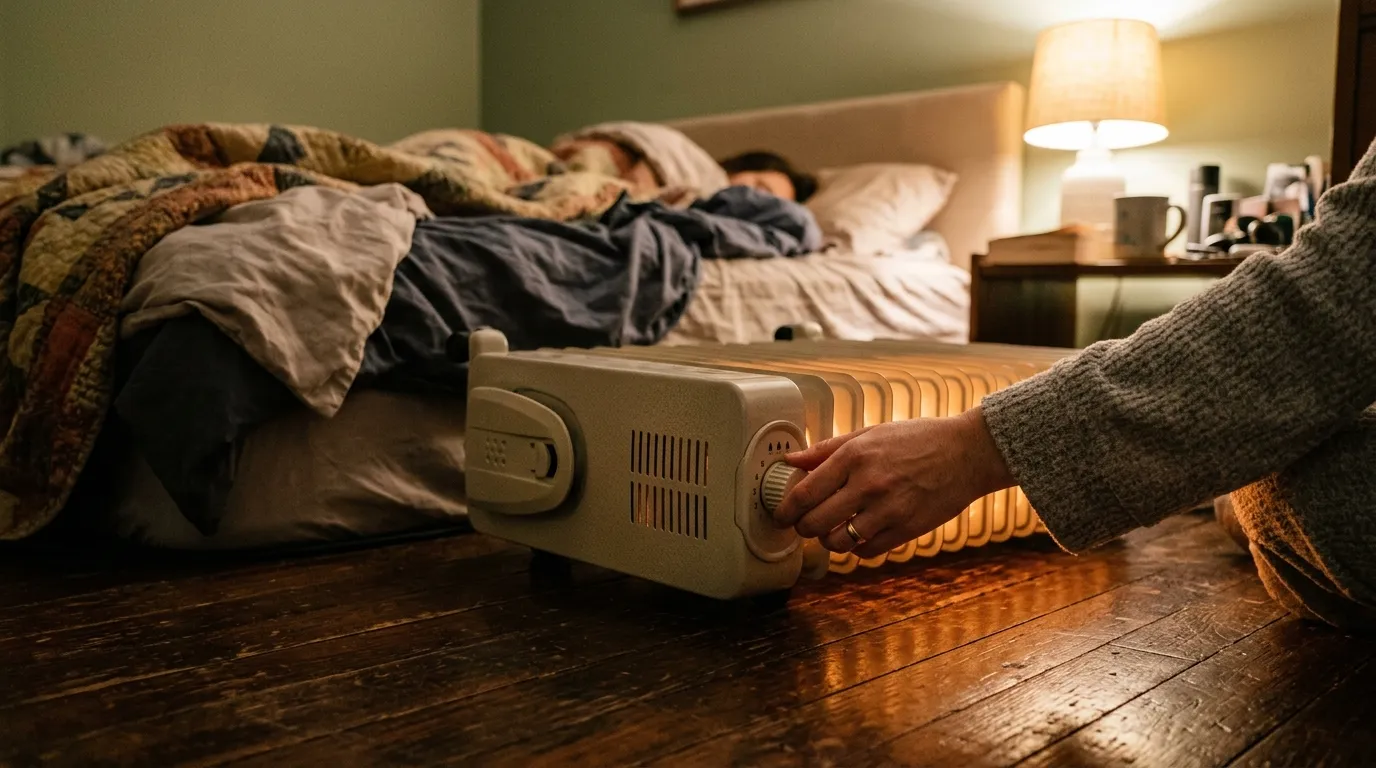
A bedroom is the single best place an oil-filled radiator makes sense. If your indoor climate goal is a room that stays comfortably warm all night without a fan droning beside your head, this is the category built for it — an oil-filled radiator is silent, holds heat for hours, and cycles off gently. The honest bottom line: for a bedroom, prioritize silence, a thermostat that holds temperature, and a timer to schedule warm-up before bed. If you instead want to walk into a cold room and feel heat in two minutes, a radiator will frustrate you — a fan-forced electric space heater is the faster choice for that job.
Are oil-filled radiators safe to leave on overnight in a bedroom?
They are among the safer portable heaters for overnight use — there is no exposed element or open flame, and the surface stays cooler than a ceramic heater. Every model here includes tip-over and overheat cut-offs, which should be treated as a minimum requirement.
That said, "safer" is not "unsupervised is fine." Keep at least three feet of clearance from bedding and curtains, plug straight into a wall outlet rather than an extension cord, and confirm the tip-over shut-off works before you rely on it overnight. Owners who follow those basics report years of trouble-free overnight use. See our home heating safety guidance for the habits that matter most.
What makes an oil-filled radiator different from a regular space heater?
An oil-filled radiator heats a sealed reservoir of diathermic oil inside its fins, then radiates that heat into the room slowly and silently. A standard electric space heater instead uses a fan to force hot air out immediately, which warms the room faster but adds fan noise.
This is a genuine trade-off, not a simple upgrade. Fins hold heat and keep radiating warmth for a while after the thermostat cuts power, which is exactly what you want overnight — the room does not go cold the instant the heater clicks off. A portable radiator is also heavier and slower to warm than a fan-forced unit, so it suits a room you occupy for hours, not one you walk in and out of. The trade is simple: radiant heat from a sealed oil reservoir is quieter and steadier, fan-forced air is faster. For a bedroom, most owners pick radiant heat every time.
Why are oil-filled radiators better for sleeping than fan heaters?
Two reasons: they make no fan noise, and they do not dry the air as aggressively. A radiator warms by radiation and gentle convection rather than blowing hot air, so the room feels less parched by morning — a frequent complaint with fan-forced heaters.
The silence is the headline benefit owners cite for bedrooms, but the humidity side matters too. Any heater lowers relative humidity a little, yet the gentle output of a radiator is easier on the throat and sinuses over a full night than a heater blasting warm air directly at the bed. If winter air still feels dry, pairing a radiator with attention to indoor humidity is the standard fix rather than switching heaters.
What size radiator do I need for a bedroom?
Most bedrooms are well served by a standard 1500 watts radiator, which comfortably holds roughly 150 to 300 square feet — around 5,100 BTU — in an averagely insulated room. A small bedroom can use a compact unit; a large master or a poorly insulated whole room wants the full 1500-watt output and more fins.
Unlike fast heaters, a radiator is forgiving here because it holds heat — a slightly undersized unit still keeps a small room comfortable, it just cycles more often to compensate. The mistake owners regret is going too small for a large, drafty bedroom and finding it never quite catches up before morning. Match the wattage and fin count to the room, and lean larger if you are unsure which size to buy.
How much does it cost to run an oil-filled radiator all night?
A 1500-watt radiator on a working thermostat typically draws well under a full 12 kWh over eight hours, because it cycles off once the room reaches temperature rather than running continuously like a fan heater on high.
Running cost is where a radiator actually pulls ahead of faster heaters. Because the oil keeps radiating warmth after the element shuts off, the thermostat spends more time off than on once the bedroom is up to temperature — that cycling behavior is what makes a radiator genuinely energy efficient for overnight use, not just quiet. Many models also include an eco mode that caps output below the full 1500 watts, trading a slightly longer warm-up for a lower running cost — worth using on a mild night. The EPA's general guidance on portable electric heaters applies here too: they are meant as supplemental heat for one room, not a substitute for whole-home heating, and running one all night in a well-sealed bedroom is exactly the use case they're built for.
Where in the bedroom should a portable radiator go?
Give it open floor space away from bedding, curtains, and foot traffic — ideally near the center of the wall you sleep against, not tucked in a corner where furniture blocks the radiant heat from reaching the rest of the room.
Because a radiator heats by radiation and slow convection rather than blasting air, placement matters more than it does for a fan heater. An electric radiator boxed in behind a dresser or under a curtain struggles to warm the whole room evenly, and fabric close to the fins is also a fire risk regardless of the tip-over protection built in. Owners who get the best results place the unit where air can circulate freely around all sides, then let the thermostat do the rest of the work overnight. A portable radiator on locking casters makes it easy to reposition between the bedroom in winter and a home office or nursery the rest of the year, which is part of why the category has stayed popular even as ceramic and infrared heaters have gotten more attention.
Digital thermostat or analog dial — which matters more on a bedroom radiator?
A digital thermostat that reports and holds a specific temperature is more precise, but a simple analog dial radiator is often just as effective in practice and easier to adjust by feel in a dark room at night.
The digital models in this category add a 24-hour timer and eco mode, which genuinely help with running cost and let you schedule the room to warm up right before bed instead of running all evening. The analog dial radiators trade that precision for simplicity — twist to a heat setting and walk away, which some owners actually prefer because there is nothing to accidentally reset. Either format needs a thermostat that holds its setting rather than swinging the room from too warm to too cold, and that consistency, more than the display type, is what separates a good bedroom radiator from a frustrating one.
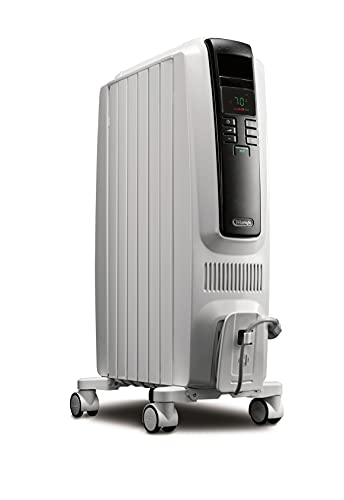
Best for silent overnight heat you can schedule
- Programmable 24-hour timer
- 1500W across three heat settings
- Fan-free, near-silent operation
- Tip-over and overheat protection
Why buy it: For a bedroom, the timer is what sets this apart — owners consistently report scheduling it to warm the room before bed and before waking, and the fan-free design means nothing hums while they sleep.
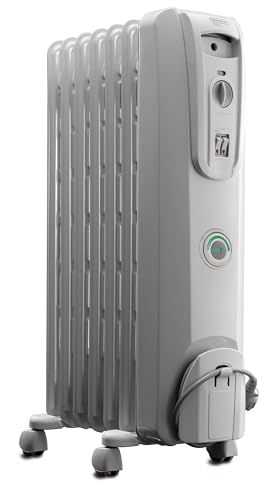
Best for quiet, dependable heat that lasts the night
- 1500W energy-saving settings
- Thermal fins hold heat for hours
- Adjustable thermostat
- Silent, fan-free heating
Why buy it: A frequent note among owners is that this classic De’Longhi holds warmth long after it cycles off and never wakes them — the qualities that matter most for a bedroom heater.

Best for a bigger main bedroom that stays cold
- 1500W silent convection heating
- Sized for larger indoor rooms
- Adjustable thermostat
- Overheat and tip-over safety
Why buy it: Owners with larger master bedrooms favor DREO’s radiator for keeping the whole room even overnight, with the same quiet operation that makes radiators a bedroom staple.

Best for quiet bedroom heat at a lower price
- 1500W with three heat modes
- Dual-knob analog controls
- Fan-free silent operation
- Tip-over protection
Why buy it: The consensus favors PELONIS as the value bedroom pick — owners get the same silent, steady radiator heat with simple dials that are hard to fumble in the dark.

Best for a dependable no-frills bedroom radiator
- 7 oil-filled fins
- Adjustable thermostat
- Three heat settings
- ETL-certified overheat and tip-over protection
Why buy it: Owners describe this as basic but safe and quiet — the ETL safety certification and adjustable thermostat cover what a bedroom heater actually needs without paying for extras.

Best for a small bedroom or bedside radiator
- Oil-filled fin radiator design
- Adjustable thermostat
- Tip-over and overheat protection
- Compact footprint
Why buy it: For a small bedroom or a child’s room, owners like the Caynel for the same quiet, lingering warmth in a body small enough to sit unobtrusively beside a bed.
How we picked
These rankings come from aggregated owner reviews, manufacturer specifications, and the recurring complaint patterns across hundreds of listings — never from us buying and running the radiators ourselves. For a bedroom specifically, we weighted silence, thermostat steadiness, timer availability, running cost, and the tip-over and overheat safety features that matter most for a heater left on while you sleep. DeLonghi and PELONIS dominate this list because owners consistently rate their thermostats as accurate rather than optimistic, and buyers comparing against other brands like Honeywell or Costway report the same pattern: fin count and thermostat quality matter more than the badge on the front. Read our full How We Rank methodology for the complete process.