

Affiliate Disclosure
Some links on this page are affiliate links. As an Amazon Associate, we earn from qualifying purchases — at no extra cost to you. We do not buy, test, or physically handle the products we cover; our rankings come from aggregated owner reviews, ratings and expert consensus. Commissions never change our verdicts. How we rank & full disclosure.
Disclosure: Some links below are affiliate links. As an Amazon Associate we earn from qualifying purchases at no extra cost to you — and a commission never changes which products we recommend.
Oil-filled radiators are the quiet, slow-and-steady end of home heating — and for the right indoor climate problem they are the best option there is. If you want a space heater you can run through the night without hearing a fan, that holds radiant heat long after the thermostat cycles off, an oil-filled radiator is exactly right. If you need instant heat the moment you walk in, or heat for a garage or outdoor space, this is the wrong category — a ceramic or infrared heater warms faster. The picks below are the portable, electric radiators owners trust most for steady, silent, whole-room warmth, and every one of them ships with tip-over and overheat protection as standard.
What types of oil-filled radiator heaters are there?
Most oil-filled radiators split by wattage (700W to 1500 watts), fin count, and control style — dial thermostat versus digital programmable timer. A few add an eco mode that automatically caps wattage once the room is at temperature.
1500 watts and fin count
Fin count is the first spec to check. More fins mean more surface area radiating heat, which matters more than wattage once you're above 1500 watts. Entry-level units like the Amazon Basics radiator use seven steel fins with a simple dial thermostat — turn it up, walk away.
Thermostat, eco mode and timer
Step-up models from De’Longhi and PELONIS add digital displays, programmable timers, and an eco mode that trims energy use overnight without you noticing the drop in output. What the extra cost buys is control — scheduling the timer to warm a bedroom before you wake, or letting eco mode manage the thermostat automatically once the room holds steady.
None of these change how the heat itself feels. A radiator's radiant heat is radiant heat regardless of price tier. Compare that against a Honeywell ceramic or ENERGY STAR-rated unit if instant heat matters more to you than silence, since those trade the radiator's slow build for speed.
Are oil-filled radiators actually cheaper to run?
Not per hour — a 1500-watt radiator draws the same power as any other 1500-watt space heater. The running cost math is identical: watts ÷ 1000 × your kWh rate × hours used. The saving comes from how radiators work, not from lower electric draw.
Running cost and energy efficient duty cycles
At typical U.S. residential electricity rates, a 1500-watt radiator running flat-out costs the same per hour as any other 1500W electric heater on the market. The wattage, not the design, sets the base draw. What changes the math is duty cycle. The oil inside never needs replacing; it's a heat reservoir, not fuel. Once the fins are hot, the thermostat can idle the element while stored heat keeps radiating. That is how an energy efficient radiator with eco mode enabled cuts real-world running cost, by cycling off more than a fan-forced space heater does in the same room.
BTU output for comparison
For context, 1500 watts converts to roughly 5,100 BTU of heat output — useful if you're also comparing against a gas or propane unit rated in BTU rather than watts. If you want the full picture on zone heating costs across every heater type, our home heating guide covers how to work out your own numbers rather than trusting a generic figure.
How long does an oil-filled radiator take to warm a whole room?
Longer than a fan heater — typically the slowest common space heater category to reach temperature. Plan on it building warmth gradually over 20 to 40 minutes rather than instantly. That is the trade-off for silence and lingering radiant heat.
Radiant heat and overnight use
This is the number-one thing to understand before buying. A radiator is not a fast heater, and buyers expecting instant warmth are the ones who leave disappointed reviews. What it does instead is hold a whole room at a steady temperature quietly for hours, and keep radiating heat after the thermostat switches off. That often continues for another 20 to 30 minutes once the fins have cooled from full temperature — ideal for running a radiator overnight in a bedroom.
Silent, steady output
If your evenings are long and stationary, that trade-off is ideal. If you want a five-minute blast of heat, look at a ceramic or tower heater instead. Owners running these overnight consistently report that the slow ramp-up is worth it for the silent, even output once the room is holding steady.
What specs and features actually matter on a radiator heater?
A thermostat that actually holds temperature, a timer if you want overnight scheduling, enough fins and wattage for your square footage, and tip-over plus overheat protection on every unit. Silence is inherent to the category, so a "quiet" claim alone tells you little.
Fins, wattage and timer scheduling
Fin count and wattage set how big a room it can hold. A programmable timer is what separates a set-and-forget bedroom radiator from one you switch on and off by hand every night. The premium De’Longhi models add digital timers, an eco mode, and finer thermostat control, while budget PELONIS and Amazon Basics units keep it to simple dials. Both heat the same — you're paying for convenience, not more warmth.
Tip-over, overheat and portable, electric safety
Every radiator worth buying is portable on caster wheels, fully electric with no fuel to refill, and carries tip-over and overheat cutoffs. That's a baseline safety standard the EPA and independent safety labs expect from any modern space heater. Owners rarely regret the safety cut-offs, and they often regret skipping a timer once the first cold week hits.
What do owners complain about most?
The most common complaint is slow warm-up, followed by weight — these are heavy units to move. Some owners also notice a faint clicking as the metal fins expand and contract. None of these are faults. They're the nature of a heavy metal radiator holding radiant heat.
A recurring pattern is buyers wanting radiator silence and instant heat at once, which no single space heater delivers. That's a physics trade-off, not a build-quality issue. The clicking, when it happens, is thermal expansion, and it usually settles once the unit reaches a stable temperature. If portability matters, check the caster wheels, which most models include. A 1500-watt radiator with fins typically weighs 15 to 25 pounds — noticeably heavier than an electric ceramic or infrared alternative of the same wattage. Some owners moving between a bedroom and living room also compare running cost against a Costway or Honeywell unit before settling on one radiator for the whole house. See our oil-filled radiator hub for how these compare with the rest of the heating lineup.
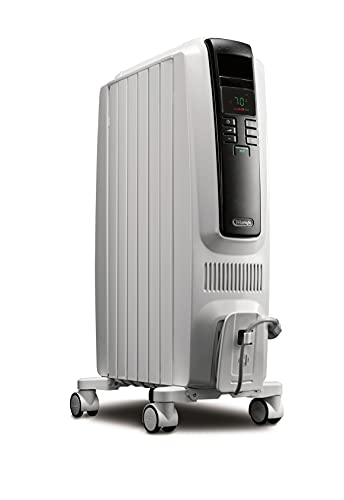
Best for quiet, steady heat with programmable control
- 1500W across three heat settings
- Programmable 24-hour timer
- Patented high-surface-area fins
- Tip-over and overheat protection
Why buy it: De’Longhi’s Dragon line is the one owners name most for set-and-forget overnight heat — the consensus favors it for holding a room steady quietly, and the timer means it is warm before you wake.

Best for heating a bigger room without noise
- 1500W silent convection heating
- Sized for larger indoor rooms
- Adjustable thermostat
- Overheat and tip-over safety
Why buy it: Owners with bigger rooms consistently report that DREO’s radiator holds warmth well after it cycles off, giving even heat without the fan hum of a ceramic heater.

Best for reliable radiator heat at a lower price
- 1500W with three heat modes
- Dual-knob analog controls
- Tip-over protection
- Quiet, fan-free operation
Why buy it: A common thread in reviews is that PELONIS delivers the core radiator experience — quiet, steady, safe — for less money, with simple dial controls owners find hard to get wrong.
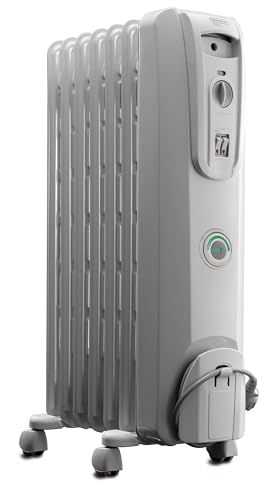
Best for quiet, dependable heat that lasts for hours
- 1500W energy-saving three settings
- Thermal chimney fins for even heat
- Adjustable thermostat
- Fan-free silent operation
Why buy it: Owners who run a radiator through the night favor this classic De’Longhi for its silence and how long it holds heat after the thermostat clicks off — a frequent note is that it never wakes them.

Best for a no-frills radiator that just works
- 7 oil-filled steel fins
- Three heat settings
- ETL-certified overheat protection
- Simple, durable build
Why buy it: The consensus favors this as the safe budget pick — owners describe it as basic but dependable, with the ETL safety certification and steady heat that matter more than extra features.

Best for quiet radiator heat in a smaller space
- Oil-filled fin radiator design
- Adjustable thermostat
- Tip-over and overheat protection
- Compact footprint for small rooms
Why buy it: For a small room or a second radiator, owners like the Caynel for delivering the same quiet, lingering heat in a more compact body that tucks beside a desk or bed.
Where does an oil-filled radiator fit next to other space heaters?
It's the pick for a bedroom or home office where you're stationary for hours and silence matters more than speed. For a garage, basement, or any room you enter and leave quickly, a ceramic, infrared, or tower-style space heater will get you comfortable faster.
Every category on this site trades one thing for another. A ceramic space heater with a fan gives near-instant heat but adds motor noise. A tower heater oscillates to cover more floor area but still runs a fan. An infrared heater warms objects and people directly rather than the air, so it works well outdoors, but it leaves a room's ambient temperature lower than a radiator would.
An oil-filled radiator gives up speed for silence and even, whole-room heat retention. It keeps radiating warmth for 20 minutes or more after the thermostat cuts the electric element, which no fan-forced heater does. If your household runs a mix — a radiator overnight in the bedroom, something faster in the living room — that's a normal and sensible split. It's not a sign you bought the wrong unit.
How we picked
These rankings come from aggregated owner reviews, manufacturer specifications, and the recurring complaint patterns across hundreds of listings — never from us buying and running the radiators ourselves. We weighted heat retention, thermostat accuracy, fin count relative to wattage, timer and eco mode options, noise (or the lack of it), and tip-over and overheat safety certification, because those are what separate a radiator owners keep for years from one they return within a season. Every listing here is portable, fully electric, and rated for indoor whole-room use — we excluded anything without independently tested overheat protection. Read our full How We Rank methodology for the complete process.