

Affiliate Disclosure
Some links on this page are affiliate links. As an Amazon Associate, we earn from qualifying purchases — at no extra cost to you. We do not buy, test, or physically handle the products we cover; our rankings come from aggregated owner reviews, ratings and expert consensus. Commissions never change our verdicts. How we rank & full disclosure.
Some links below are affiliate links: if you buy through one we may earn a commission at no extra cost to you. That never changes which heaters we recommend — our rankings come from aggregated owner reviews and manufacturer specifications, not from who pays the most.
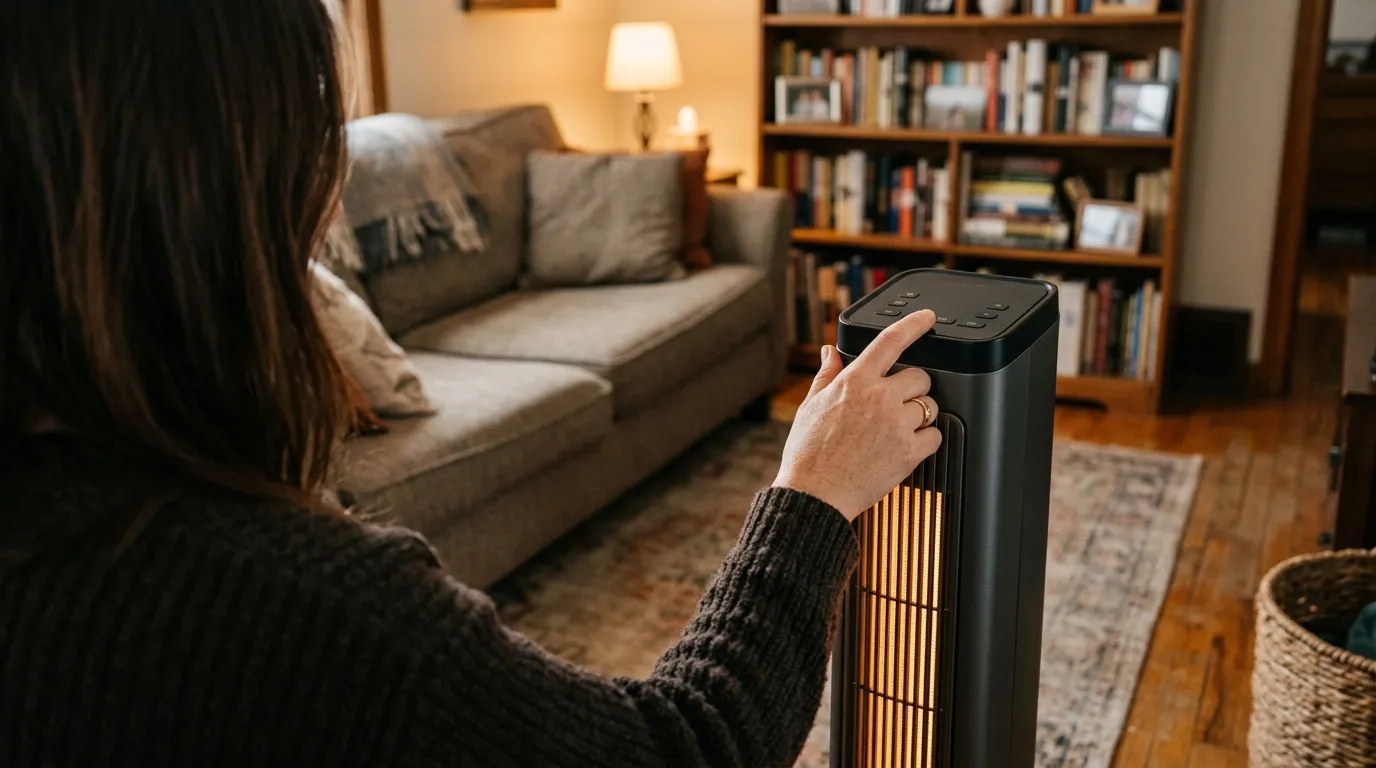
A tower heater trades the concentrated blast of a boxy portable for even, vertical coverage — a slim, tall profile body that spreads warmth up and across a room from a corner. That shape makes it one of the better tools for a room's indoor climate when you want uniform comfort rather than a single hot spot. Most towers are ceramic, fan-forced, genuinely portable electric heaters that ship with a remote control and a built-in timer, so once it's dialed in you rarely have to get up and touch it. If your priority is whole-room evenness in a space you use daily, a tower is worth choosing; if you need silent all-night heat with no fan at all, an oil-filled radiator is the quieter category.
What types of tower heaters are there — ceramic, fan-forced and oscillating?
Nearly every tower heater on the market uses a ceramic PTC heating element pushed by a fan-forced blower, built into a tall profile cabinet designed for oscillation rather than sitting still. The real variation between models is control quality — thermostat, timer, remote control — not the underlying heat technology.
Ceramic PTC elements self-regulate somewhat as they warm up, part of why they're considered safer than a bare wire coil, and fan-forced circulation is what lets a tall, narrow tower move warm air across a room instead of just radiating it a few feet. Oscillation — most towers sweep 70 to 120 degrees — is the feature that actually earns the tower shape its keep: a stationary heater this narrow would warm one wedge of the room and leave the rest cold. If a listing does not mention oscillation, treat it as a spot heater rather than a whole-room tower. Every model in this roundup also includes tip-over and overheat auto shut-off — treat those two as non-negotiable, not optional extras.
A tower is really just one shape of space heater, not a separate category — the same ceramic element inside a Lasko tower also shows up in a compact desk model, just in a different cabinet. What the tower shape buys you over a small box-style space heater is reach: the tall, narrow body lets a fan-forced blower throw warm air across a whole room instead of concentrating it on whatever is directly in front of the unit. That's the trade-off worth understanding before you shop by price alone.
What size tower heater do you need?
Match the tower to the room, not the wattage — nearly every model tops out at the same 1500-watt ceiling. A 1500W tower comfortably warms roughly 150 to 300 square feet in an averagely insulated room, and a taller body spreads that heat further.
Because output is effectively fixed at 1500 watts, the real variable is how well a heater distributes it. A taller 30-inch tower throws heat across more of an open room than a compact one, and insulation, ceiling height and drafts all shrink the effective range. For a big living room, size up the physical unit rather than hunting for a bigger number that does not exist.
Are ceramic tower heaters worth it over a cheap box heater?
For even coverage and quieter running, yes. Ceramic PTC towers spread heat more evenly and tend to run quieter than a basic box heater, and features like oscillation, a real thermostat and a timer are what owners say justify the step up.
A cheap single-setting box heater does one thing — full blast at whatever it is pointed at. Towers add the controls that make a heater livable: a thermostat that holds temperature, oscillation that reaches more than one seat, and a timer for hands-off running. Brands like DREO, Honeywell and even Dyson sell premium electric towers built around exactly these controls, and the consensus is that those features, not raw heat, are what people are actually paying for.
How many watts do tower heaters use, and what's the running cost?
Virtually every electric tower heater tops out at 1500 watts — the practical ceiling for a standard 120V household outlet, equal to roughly 5,100 BTU. Running cost is identical for every model at that wattage; what differs is how well the heat actually gets used.
At 1,500 watts, an hour of running costs roughly what your utility charges per kWh, so an evening of use lands in the range of a few kWh depending on how long the thermostat lets it cycle on and off. There is no EPA efficiency rating for portable electric heaters, so staying energy efficient in this category means using the thermostat and timer to avoid overheating an already-warm room, not one model drawing fewer watts than another for the same heat output.
Plug it straight into a wall outlet, not a power strip or extension cord — a sustained 1,500-watt draw is close to the limit many cords are rated for, and a warm cord means unplug it and stop. Because a tower is portable, people move it between rooms through the season; each time you relocate it, check the new outlet is not already shared with another heavy appliance on the same circuit, since two heaters on one breaker is the most common way owners trip it.
What are the most common tower heater complaints?
Fan noise, uneven heat in large rooms, and units that overshoot without a proper thermostat. The recurring theme in reviews is that the cheapest towers cut the features that make a heater comfortable, not the heat itself.
The fix for each is in the buying decision: choose a quiet PTC model for a bedroom, size the physical tower up for a big room, and insist on a real adjustable thermostat rather than a fixed high setting. Every pick above was chosen with those recurring complaints in mind. And remember heat dries the air — pair a tower with attention to humidity control if a heated room starts to feel dry by late winter.
A remote control resolves a smaller but real complaint: getting up to adjust a heater across the room every time it overshoots or undershoots. Models that ship with one let you fine-tune the thermostat from the couch or the bed, which matters more than it sounds once winter settles in and you are not moving from under a blanket to change a setting.

Best for even, whole-room warmth without a hot spot
- Whole-room heat circulation
- Three heat settings
- Slim tower footprint
- Steady, low-noise output
Why buy it: Vornado is the brand owners consistently name when they want the whole room to feel warm rather than just the space in front of the heater. That even circulation is the single thing most people say separates a tower they keep from one that leaves the far side of the room cold.

Best for an open living space a small heater cannot fill
- Tall 30-inch body for wider throw
- 75-degree oscillation
- Adjustable thermostat and 12-hour timer
- Remote and tip-over switch
Why buy it: For a larger room, owners consistently favor a taller tower with wide oscillation over a compact unit working flat out. This PELONIS is built to move heat across the whole floor, which is exactly the job a small heater fails at in an open space.
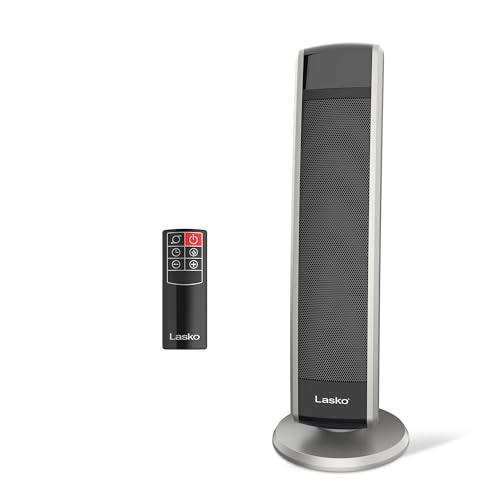
Best for dependable coverage for the lowest price
- 29-inch slim ceramic tower
- Oscillation and digital thermostat
- Timer with remote control
- Long-running, dependable design
Why buy it: Lasko has spent decades as the budget-workhorse name in tower heaters, and the 5586 is why. Owners consistently report it does the core job — wide, oscillating warmth with a timer and remote — for noticeably less than the premium brands, which makes it the default value pick.

Best for set-and-forget heat with a timer and eco mode
- Programmable thermostat and ECO mode
- Oscillation for wider coverage
- 12-hour timer and remote
- Ceramic PTC heating
Why buy it: The ECO mode and timer are what owners point to for hands-off running — warm the room, then let it hold temperature without burning full power the whole time. The consensus favors this PELONIS for anyone who wants to set it once and stop thinking about it.
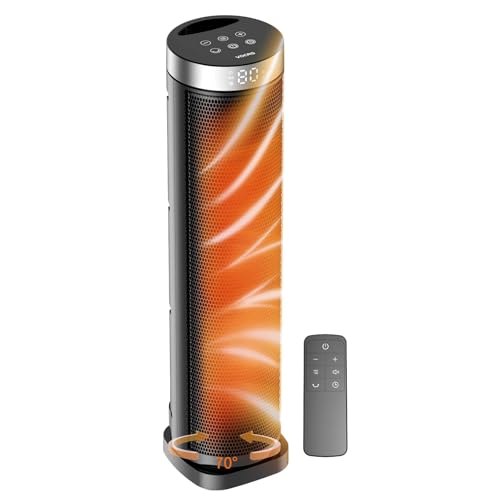
Best for quiet rooms where fan noise is a dealbreaker
- Quiet PTC ceramic heating
- 70-degree oscillation
- 12-hour timer and remote
- 1500W with adjustable thermostat
Why buy it: A recurring complaint across cheaper towers is fan hum, and quiet PTC output is what owners consistently reach for in a room where noise matters. The timer means it does not have to run continuously, which keeps both the noise and the running cost down.
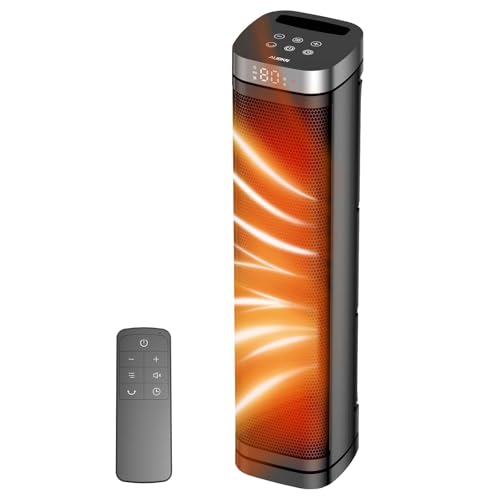
Best for covering a big room without overspending
- Extra-large 24-inch tower body
- 1500W output
- Wide coverage design
- Adjustable heat settings
Why buy it: When the problem is square footage and the budget is tight, owners consistently report that a physically bigger tower keeps up better than a compact one at its limit. This AUBKN is built around coverage first, which is the right trade when the room is the challenge.
How we picked
We do not buy, run or physically handle the heaters we cover. These rankings come from reading aggregated owner reviews, manufacturer specifications and the complaint patterns that only appear once a product has been in thousands of homes — the noise, the coverage gaps, the control quirks. The goal is to reflect what owners consistently report over a season of real use, not a single first impression. Our full method is on the How We Rank page, and the tower heaters hub covers the questions behind these picks.
Across the brands we looked at — Vornado, PELONIS, Lasko, DREO, Honeywell and Dyson among them — the pattern held: owners forgive a lot when oscillation is wide, the thermostat holds its target temperature, and the unit is quiet enough to run overnight. They complain fastest about a fixed heat setting with no thermostat at all, regardless of the name on the box. If a tower is not the right shape for your room, compare it against a ceramic heater for a compact space or an oil-filled radiator for silent overnight heat.