


Affiliate Disclosure
Some links on this page are affiliate links. As an Amazon Associate, we earn from qualifying purchases — at no extra cost to you. We do not buy, test, or physically handle the products we cover; our rankings come from aggregated owner reviews, ratings and expert consensus. Commissions never change our verdicts. How we rank & full disclosure.
A cool mist humidifier — usually written cool-mist humidifier — is the default way most people add moisture back into dry air indoors: no hot water, no heating element, and safe to run in a room with kids or pets. This category suits almost anyone fighting winter dry air, static, or an irritated sinus. The one group who should look elsewhere: if you specifically want the perceived warmth or the water-boiling hygiene of warm mist, a cool-mist unit is not the tool. For everyone else, the picks below are the models owners keep coming back to, chosen for genuinely energy efficient operation and mist output that lasts the night, sorted by the job you are buying for.
What actually separates a good cool-mist humidifier from a bad one?
Three things: tank capacity (how long it runs), noise (whether you can sleep next to it), and how easy it is to clean. Almost every one-star review traces back to one of those, not to how much mist a unit can produce.
Mist output is rarely the problem — even budget units make plenty of mist. The difference is whether a full tank lasts the night, whether the fan or ultrasonic hum keeps you awake, and whether the tank opening is wide enough to get a hand inside to scrub. Match those to your room and you have most of the decision made.
Ultrasonic or evaporative — which cool-mist type should you buy?
Ultrasonic units use a vibrating plate to create a fine, silent mist and dominate this category for bedroom use. Evaporative humidifiers instead pull water through a wicking filter with a fan, which self-regulates output and is harder to over-humidify a room with, but runs slightly louder.
Every model on this list is ultrasonic, which is why quiet, near-silent operation is achievable even at higher mist output — there's no fan noise, just a faint hum. An evaporative unit's wicking filter needs periodic replacement, which is an added running cost ultrasonic units don't have, but it also naturally caps humidity output since a saturated filter can only evaporate so much water, reducing the mineral dust and over-humidifying risk that ultrasonic models carry. For a quiet bedroom, ultrasonic wins; for a set-and-forget unit that's harder to overdo, evaporative has a real case. Neither type heats the water, so both stay genuinely energy efficient to run overnight compared with a warm-mist unit that has to boil water continuously.
Top-fill or traditional bottom-fill?
Top-fill lets you pour water straight into the unit or refill from a jug without flipping a heavy tank over the sink. It is the single feature owners mention most as making a humidifier pleasant to live with rather than a chore.
Bottom-fill (lift-out tank) units are usually cheaper and can seal better against leaks, but the flip-carry-refill routine gets old fast, especially with a large tank capacity. If you will refill daily, the consensus favors paying a little more for top-fill.
How do I stop the white dust and keep it hygienic?
Use distilled or filtered water to kill the white mineral dust, and empty, rinse and dry the tank every few days rather than topping up old water. Ultrasonic cool-mist units atomise whatever is in the tank, minerals and microbes alike.
This is the maintenance reality of the whole category, not a flaw in any one model. A common complaint is a musty smell or mineral film after a week of neglect — both disappear with distilled water and a regular rinse. Buy for tank capacity and quiet; assume a cleaning habit comes with it.
Tank capacity, auto shut-off, and humidistat — what safety features matter?
Auto shut-off, which stops the unit once the tank runs dry, is close to mandatory — running an empty ultrasonic plate risks damage and is a common complaint on units without it. A built-in humidistat that targets a relative-humidity setpoint rather than just running continuously is the other feature worth paying for.
A tank measured in gallons rather than liters on the largest models here signals a genuinely long-runtime unit meant for an all-night session in a bigger bedroom. Pair a large tank capacity with a humidistat and the humidifier holds a target humidity and idles rather than overshooting into damp, condensation-prone territory. Auto shut-off is the cheap insurance that protects the unit itself — without it, an ultrasonic plate left running dry can burn out well before its expected lifespan.
What size room does each tank suit?
Roughly: a 1.5–2 L tank suits a nursery, office or small bedroom; a 2.5–3 L tank suits a standard bedroom matched to its square footage; and a 4 L-class tank, closer to a full gallon, suits a large bedroom or open living space that needs all-night runtime.
Buying a unit rated a little bigger than your room's square footage is the safe move — it reaches your target humidity and idles instead of running flat out. Aim to keep the room around 40–50% relative humidity; a built-in readout or a cheap standalone hygrometer stops you from overshooting into condensation and mould. A few models, like the essential oil diffuser tray on one of the picks above, add a scent option on top of the core humidity job — a nice-to-have, not a reason to buy on its own.
Can a cool-mist humidifier actually help a stuffy sinus or dry throat?
Yes, within reason. Restoring room humidity to a healthy 40–50% relative humidity range keeps nasal passages and a dry sinus from drying out further overnight, which is why cool-mist humidifiers are a standard recommendation during winter heating season and cold and flu season alike.
Dry air pulls moisture out of your skin and airways the same way it pulls moisture out of furniture and houseplants, and a heated home in winter is often drier than a desert during the day. Running a humidifier overnight in the bedroom is the most common way owners report relief from a scratchy throat or dry sinus by morning — not a cure for a cold, but a genuine comfort improvement backed by basic physiology. The EPA's general indoor air quality guidance also flags maintaining reasonable humidity as one of the simpler home health interventions available, as long as you don't overshoot into the damp, mold-friendly range above 60%.

Best for the everyday bedroom that wants quiet, fuss-free mist
- 2.5 L top-fill tank
- Rated around 28 dB
- Large-room rating
- Ultrasonic cool mist
Why buy it: Owners consistently report it hits the balance most people want — easy top-fill refills, quiet enough to sleep beside, and enough output for a normal room without babysitting.

Best for bigger rooms that need a full night of runtime
- 4 L tank
- Up to 36-hour runtime
- Rated around 28 dB
- Cool-mist output
Why buy it: The large tank and long runtime are the headline in owner feedback — it is the unit people reach for when a smaller humidifier keeps drying out overnight.
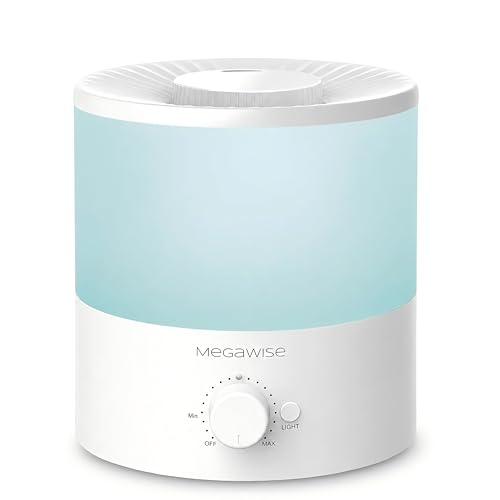
Best for a small room or desk on a tight budget
- 1.5 L tank
- Rated around 25 dB
- Compact footprint
- Cool-mist output
Why buy it: A common note in reviews is that it does the one job well for the money: quiet, compact, and fine for a nursery or office where a big tank would be overkill.
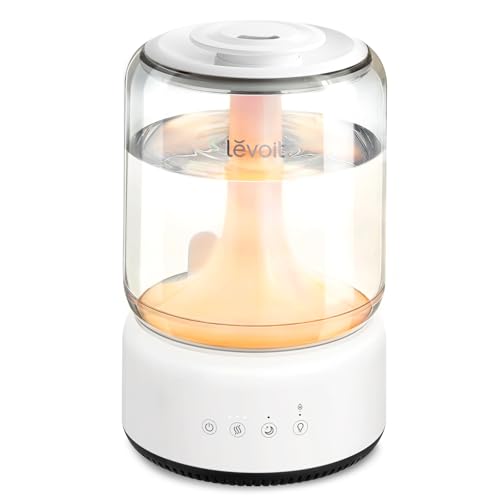
Best for buyers who want the longest runtime and a large tank
- 4.2 L top-fill tank
- Sized for large rooms
- Ultrasonic cool mist
- Quiet operation
Why buy it: Repeat buyers highlight the combination of the biggest tank here and genuinely easy pour-in filling — the reason it earns the step-up price for larger spaces.

Best for the quietest possible bedside operation
- 2 L tank
- Rated around 24 dB
- Sleep mode
- Cool-mist output
Why buy it: At its low rated noise level it is among the quietest in the category, and light sleepers repeatedly single it out for running near-silent on the overnight setting.

Best for pairing humidity with a light scent
- 3 L tank
- Built-in oil diffuser tray
- Quiet operation
- Cool-mist output
Why buy it: The diffuser tray is what owners buy this for — one unit that manages both humidity and a faint scent, instead of a humidifier plus a separate diffuser.
How we picked
These rankings come from aggregated owner reviews, manufacturer specifications and recurring complaint patterns — not first-hand testing. We don't buy, run or physically handle the units; we read where the consensus lands across large numbers of verified-purchase reviews and weigh it against each maker's own claims.
That favors units owners actually keep using over ones that only look good on a spec sheet. LEVOIT dominates this category, and Honeywell, Pure Enrichment, and Vicks are the other names that come up repeatedly in humidifier comparisons if you want to look beyond this list. See How We Rank for the full methodology, and browse the cool-mist humidifiers hub or the wider humidity control section for related guides.