
Affiliate Disclosure
Some links on this page are affiliate links. As an Amazon Associate, we earn from qualifying purchases — at no extra cost to you. We do not buy, test, or physically handle the products we cover; our rankings come from aggregated owner reviews, ratings and expert consensus. Commissions never change our verdicts. How we rank & full disclosure.
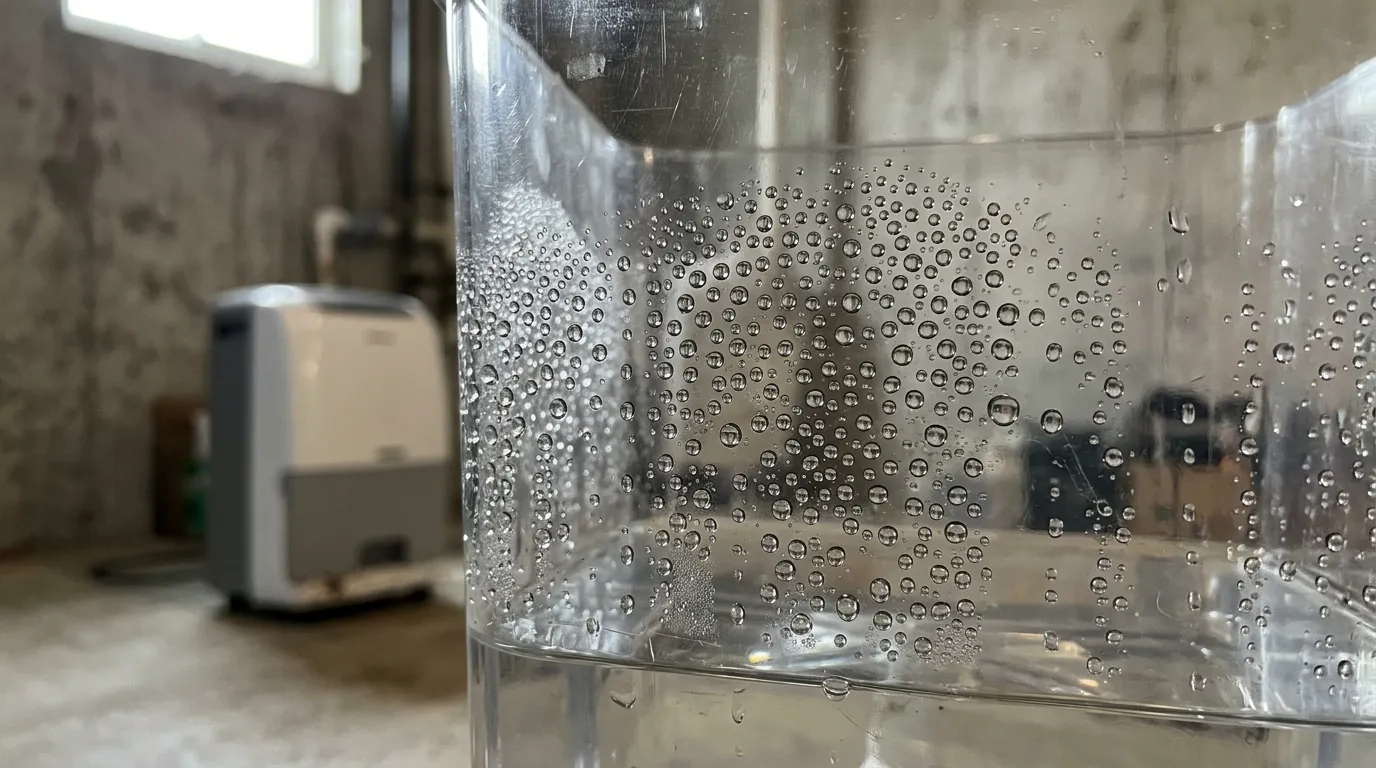
A basement sets the tone for the whole home's indoor climate: damp air down there means musty odor upstairs, and left long enough, mold and warped flooring. The right dehumidifier depends almost entirely on two things — how big and how wet the space is. A large unfinished basement needs a high-capacity compressor unit with a drain hose; a small finished room needs something quieter and simpler. This page covers both ends. If your problem is specifically a low, cold crawl space, that is a harder job than a standing-height basement and worth treating separately.
What size dehumidifier does a basement need, in pints per day?
Match pints-per-day capacity to square footage and dampness. A large or wet basement wants an 80-pint-per-day unit rated for 4,500–5,500 sq ft of coverage; an average, moderately damp basement is fine with a 30-pint-per-day unit; a small finished room can use a compact water tank model.
Because basements run cooler than the rooms manufacturers rate for, buying a size up from your square footage is the safe move. An oversized unit reaches your target relative humidity and idles; an undersized one runs constantly and still loses ground on a genuinely wet floor. A built-in humidistat that holds a target percentage, paired with auto restart after a power blip, keeps that coverage consistent without you checking on it daily.
Compressor or tank-style — which type should you buy, and does low temperature matter?
Compressor (refrigerant) units are the standard for real basement moisture: high extraction, and they support a continuous drain hose. Small tank-style units suit a single finished room but empty their water tank quickly and can't keep up with a whole damp basement. Below about 65°F, a standard compressor unit's coils can frost over, so a genuinely cold, low temperature basement needs a model rated for low-temperature operation.
The rule of thumb owners settle on: unfinished or large basement, buy a compressor unit and run a hose; small finished bedroom or office with light dampness, a quiet tank unit is enough. Mixing those up is the most common source of disappointed reviews. Frigidaire, hOmeLabs, Midea and Aprilaire are other widely reviewed basement dehumidifier brands alongside the Waykar and AEOCKY picks above, and Aprilaire in particular is known for low-temperature-rated compressor models.
How energy efficient is a basement dehumidifier to run?
A compressor dehumidifier is energy efficient by ENERGY STAR standards when it is correctly sized — an ENERGY STAR-certified 80-pint unit uses noticeably less electricity than an older, non-certified model at the same capacity, since it runs on a humidistat rather than continuously.
Coverage claims from the EPA and ENERGY STAR both assume the unit is matched to the room, so an undersized dehumidifier running around the clock trying to keep up with a wet basement is the single biggest driver of a high electric bill in this category — not the compressor technology itself. Buy ENERGY STAR-certified where you can, size to your actual square footage rather than the cheapest capacity, and let the humidistat do the work of cycling the compressor on and off.
Do you need continuous drainage?
For anything but a small room, yes. A high-capacity unit can fill its internal tank in hours, so without a drain hose to a floor drain or sump it simply shuts off and lets humidity climb back up until someone empties it.
Every large unit here supports continuous drainage, and some include the hose. Owners who set this up once describe near-zero maintenance; those who rely on the tank describe constant emptying. If your basement has a floor drain or sump, use it.
What do owners complain about most?
Buying too small, and underestimating noise. A unit rated below the room's real needs runs non-stop and never wins; a compressor in a finished basement can be louder than expected near a bedroom. Correct sizing and placement fix nearly all of it.
A common complaint is expecting a bargain 30-pint unit to dry a large open basement — it can't, and that's a sizing mistake rather than a faulty product. Set humidity around 50%, size up for a cool space, and put a noisier unit away from living areas, and the recurring gripes largely go away.
How do you stop a basement from getting damp again?
A dehumidifier treats the symptom, not always the cause. If a basement stays consistently damp no matter how hard the unit runs, check for an external source first — grading that slopes water toward the foundation, a clogged gutter, or a sump pump that is not keeping up — before assuming you need a bigger machine.
Running a dehumidifier alongside those fixes, rather than instead of them, is what actually keeps a basement dry long-term. Musty odor that returns within days of the unit being off is a sign of an ongoing moisture source rather than a one-time fix; mold that has already taken hold on drywall or framing needs remediation beyond what any dehumidifier can do on its own. For a genuinely wet basement, pair a properly sized compressor unit and continuous drainage with exterior water management, and treat the appliance as maintenance for humidity you cannot otherwise eliminate, not a cure for an active leak.
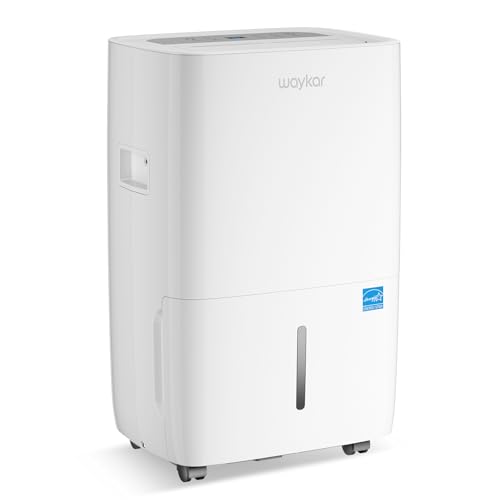
Best for most full-size and finished basements
- 80-pint-class capacity
- Rated to 5,000 sq ft
- Energy Star certified
- Continuous drain option
Why buy it: Owners consistently report it takes a damp basement down to a comfortable, stable level and holds it — the capacity-plus-drainage combination most basements actually need.
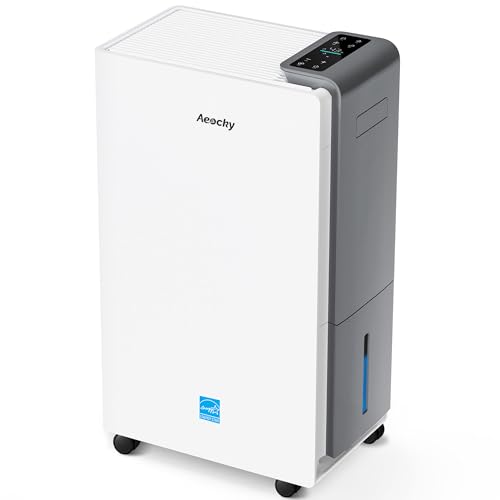
Best for sprawling or chronically wet basements
- Up to 80 pints/day
- Rated to 5,500 sq ft
- Energy Star certified
- Continuous drain option
Why buy it: The consensus favors it where floor area is the challenge — reviewers with large open basements point to its coverage and efficiency rating as the reason it keeps pace.

Best for a mid-size basement that is damp but not flooded
- 34-pint-class capacity
- Rated to 2,000 sq ft
- Energy Star certified
- Continuous drain option
Why buy it: Owners of average basements say the 80-pint units are more than they need; this one uses less power for the same everyday result in a moderately damp space.

Best for a small, finished basement room with no floor drain
- 95 oz water tank
- Rated to 1,000 sq ft
- Auto shut-off
- Quiet operation
Why buy it: For a finished basement bedroom or office without a nearby drain, owners like the quiet, tank-based design — enough for a single room without the size or noise of a compressor unit.

Best for an unfinished basement you never want to hand-empty
- Rated to 4,500 sq ft
- Includes drain hose
- Compressor operation
- Automatic humidity control
Why buy it: Buyers who run a hose to a floor drain repeatedly call this the set-and-forget option — the humidity control keeps it cycling without anyone touching a tank.

Best for a basement bedroom or bathroom that needs to stay quiet
- 98 oz water tank
- Rated to 1,000 sq ft
- Humidity display
- Auto shut-off
Why buy it: A recurring note is how unobtrusive it is in a lived-in basement room — the humidity readout and quiet operation make it easy to leave running near a bed.
How we picked
These rankings come from aggregated owner reviews, manufacturer specifications and recurring complaint patterns — not first-hand testing. We don't buy, run or physically handle the units; we read where the consensus lands across large numbers of verified-purchase reviews and weigh it against each maker's stated specs.
That favors units owners keep running for years over ones that only look strong on paper. See How We Rank for the full methodology, and browse the basement dehumidifiers hub or the wider humidity control section for related guides.