

Affiliate Disclosure
Some links on this page are affiliate links. As an Amazon Associate, we earn from qualifying purchases — at no extra cost to you. We do not buy, test, or physically handle the products we cover; our rankings come from aggregated owner reviews, ratings and expert consensus. Commissions never change our verdicts. How we rank & full disclosure.
This roundup covers general-purpose, whole-home dehumidifiers that a lot of owners end up running in a basement — simply because the basement is usually the dampest part of the house and the natural place to fix the home's indoor climate. These are versatile machines: large capacity, continuous-drain capable, and easy to move between a basement, laundry or utility area rather than being purpose-built for one room. If you specifically want units engineered and sized for basement-only duty, crawl-space drainage and cold-cellar conditions, our dedicated basement dehumidifiers guide is the better starting point. This page is about flexible whole-home performance.
Compressor vs desiccant dehumidifiers — which type fits a basement?
Nearly every large dehumidifier sold for home use, including every pick here, is a compressor (refrigerant) unit — the same core technology as an air conditioner, condensing moisture out of the air onto cold coils. Desiccant dehumidifiers use a moisture-absorbing material instead and keep working better in cold temperatures, but at lower capacity for the size.
Compressor units are the right choice for nearly every basement because they move far more water per day for the price and size, and a basement usually stays within the temperature range a compressor handles well. Desiccant units are a niche pick — mainly for an unheated space that drops below the point where a compressor's coils start icing over. For a typical basement that stays above the low 40s Fahrenheit, a compressor dehumidifier rated in pints per day is the more capable, more common choice.
What features matter — humidistat, continuous drainage and auto shut-off?
A built-in humidistat lets the unit target a specific relative humidity and cycle off once it gets there, instead of running flat out all day. Continuous drainage through a hose to a floor drain means you never empty a water tank, and auto shut-off protects the unit once that tank does fill.
For a basement specifically, continuous drainage is worth prioritizing over tank capacity, because nobody wants to remember to empty a tank in a room they only visit occasionally. The EPA's general guidance on indoor moisture control puts the mold-resistant range around 30–50% relative humidity; a humidistat set near the top of that band keeps a basement dry enough to resist mold without running the compressor nonstop, which also keeps it more energy efficient than leaving it on maximum extraction around the clock. If continuous drainage is not possible in your basement, auto shut-off on tank-full is the safety net that stops the water tank from overflowing while you are upstairs.
Why choose a whole-home dehumidifier instead of a basement-specific one?
Flexibility. A high-capacity general-purpose unit dries a basement just as well but isn't locked to it — you can move it to a laundry, a damp spare room or the main floor in a wet season. One capable machine covers several moisture problems.
Basement-specific models are optimised for one job; whole-home units trade a little of that specialisation for range. If your dampness shows up in more than one part of the house across the year, the versatile unit usually earns its keep, and it still handles the basement as its home base.
What capacity works across a whole home?
For whole-floor coverage, an 80-pint-class unit rated for 4,500–5,500 sq ft gives you headroom to dry a large or open level. A 30-pint-class unit suits a single moderately damp area if you don't need to cover an entire floor.
Buying with capacity to spare means one unit can serve the dampest room and still cope if you relocate it somewhere larger. Since basements run cool, the same oversizing logic that helps there also makes the unit more effective in any cooler part of the home.
Can you move one unit between rooms easily?
Yes — most of these have castors or a manageable weight and a simple tank, so relocating them is realistic. The compact tank models are the most portable; the big compressor units move too, but you'll want to re-run the drain hose after each move.
This portability is the whole appeal of a general-purpose unit. Owners frequently describe keeping one in the basement most of the year and wheeling it up to a laundry or bathroom during a damp spell, then back again — one purchase covering several rooms.
Whole-home unit or a dedicated basement model — how to decide?
Choose a versatile whole-home unit if your moisture problem moves around the house or you want one machine for several rooms. Choose a dedicated basement model if the basement is the only problem and you want it optimised for cold, drainage and continuous unattended duty.
The two overlap, and the same large compressor unit can serve either role. If you know the basement is your single, permanent concern, start with the dedicated basement dehumidifiers guide; if you want range, the picks on this page are built for it.
What does a dehumidifier actually do about basement mold and musty odor?
It removes the moisture mold needs to grow and, over time, that starves out new growth and reduces the musty odor damp basements are known for. It does not clean up mold that has already established itself on a wall, box or ceiling tile — that still needs to be physically removed.
Think of a dehumidifier as prevention and containment rather than a cure. Run continuously with drain hose plumbed to a floor drain, it keeps a damp basement's relative humidity low enough that mold struggles to get a foothold in the first place, which is the outcome most owners are actually after. If musty odor persists after weeks of steady dehumidifier use, that is usually a sign of an active moisture source — a crack, a sump pump issue, or grading outside that channels water toward the foundation — worth investigating rather than running the unit harder.
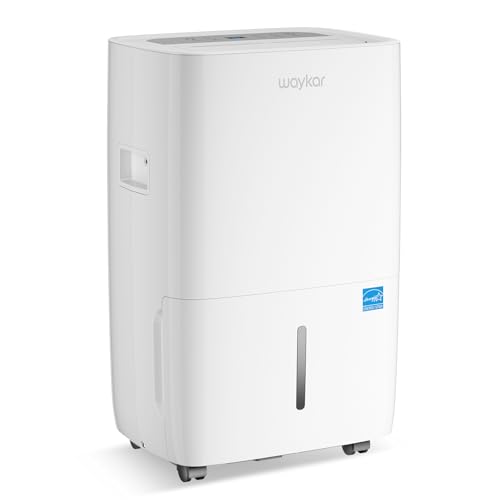
Best for a whole floor or level, including a basement
- 80-pint-class capacity
- Rated to 5,000 sq ft
- Energy Star certified
- Continuous drain option
Why buy it: Owners consistently report this general-purpose unit is powerful enough to dry an entire level of a home — many simply park it in the basement because that is the dampest room, but it moves between spaces easily.
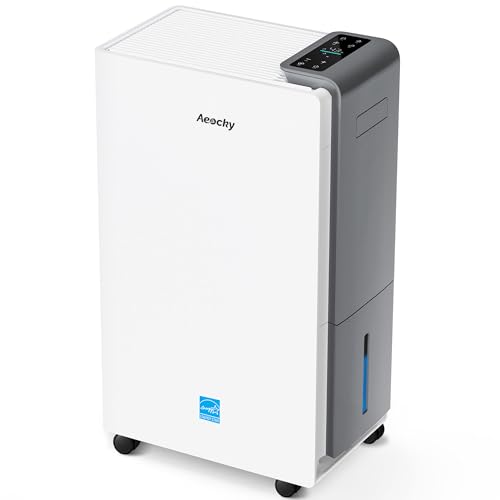
Best for the largest homes and open-plan levels
- Up to 80 pints/day
- Rated to 5,500 sq ft
- Energy Star certified
- Continuous drain option
Why buy it: The consensus favors it where a single unit has to cover the most square footage — reviewers with large, open homes value the extra coverage headroom over any basement-specific feature.

Best for a mid-size home area that is generally damp
- 34-pint-class capacity
- Rated to 2,000 sq ft
- Energy Star certified
- Continuous drain option
Why buy it: A common note is that this mid-capacity unit handles a normal level of household dampness at lower running cost — enough for most rooms without the size or draw of an 80-pint machine.

Best for a unit you want running all season, anywhere in the home
- Rated to 4,500 sq ft
- Includes drain hose
- Compressor operation
- Automatic humidity control
Why buy it: Owners who run a hose to a drain describe it as a fixture they never think about — the automatic humidity control keeps it cycling wherever they place it.

Best for moving between a basement, laundry and spare room
- 95 oz water tank
- Rated to 1,000 sq ft
- Auto shut-off
- Colour ambient light
Why buy it: Reviewers like this compact tank unit for its portability — light enough to carry from a damp basement corner to a laundry or closet as needed, without plumbing anything in.

Best for a finished, lived-in room rather than a raw cellar
- 95 oz water tank
- Dedicated sleep mode
- Auto shut-off
- Rated to 1,000 sq ft
Why buy it: For a finished basement family room or a quiet daytime space, owners value the sleep mode and low noise — general-purpose humidity control that is pleasant to be around.
How we picked
These rankings come from aggregated owner reviews, manufacturer specifications and recurring complaint patterns — not first-hand testing. We don't buy, run or physically handle the units; we read where the consensus lands across large numbers of verified-purchase reviews and weigh it against each maker's stated specs.
That favors versatile units owners keep using across different rooms over ones that only look strong on paper. Beyond the picks above, familiar names in this category include Frigidaire, hOmeLabs, Midea and Vremi, and an ENERGY STAR label is worth checking on any of them since basement units run for long stretches and the difference in draw adds up over a season. Match rated coverage to your basement's actual square footage rather than assuming bigger is always better — an oversized compressor cycling on and off constantly wastes energy without drying the space any faster. See How We Rank for the full methodology, and browse the dehumidifiers hub or the wider humidity control section for related guides.