

Affiliate Disclosure
Some links on this page are affiliate links. As an Amazon Associate, we earn from qualifying purchases — at no extra cost to you. We do not buy, test, or physically handle the products we cover; our rankings come from aggregated owner reviews, ratings and expert consensus. Commissions never change our verdicts. How we rank & full disclosure.
Some of the links below are affiliate links. If you buy through them we may earn a commission at no extra cost to you. It never changes which products we recommend or how they rank.
A dehumidifier is the most direct lever you have over the moisture side of your home's indoor climate — the appliance that stops a basement smelling damp, keeps mold off a bathroom ceiling, and takes the clammy edge off a humid bedroom. If you have visible condensation, a musty smell, or relative humidity that sits above roughly 60%, a compressor-based unit sized to your space is worth buying. If your problem is a single closet, a small bathroom, or an RV, a compact thermo-electric unit is enough — a full compressor model would just be noise and wasted watts. Coverage claims on the box vary widely between brands, so match the rated square footage generously rather than buying the smallest, cheapest unit that technically fits your room.
How big a dehumidifier do you actually need?
Match capacity to the space and how wet it is. For a damp basement or a whole floor, an 80-pints per day compressor unit rated for 4,500–5,000 square footage is the safe choice; for a single bedroom or bathroom, a 30–50 oz compact unit clears the air without the noise or power draw.
Manufacturer coverage figures are measured in near-ideal conditions, so treat them as a ceiling, not a promise — a genuinely wet basement behaves like a much larger space. The common mistake is undersizing: buying a small water tank unit for a problem that needs a compressor, then wondering why the air still feels heavy. Pints-per-day ratings also changed under the 2019 DOE test method, so a modern "34-pint" model can remove as much water as an older "50-pint" one; compare current listings, not old numbers.
Compressor vs thermo-electric — which type is right?
Compressor (refrigerant) dehumidifiers pull far more water per day and keep working at normal room temperatures, which is why every large-capacity pick here is one. Thermo-electric (Peltier) units are quiet and cheap but only manage a few ounces a day — fine for a closet, not a basement.
The two are not really competing products; they solve different problems. A compressor unit is what you want for structural damp, laundry rooms, and anywhere you can smell moisture. A Peltier unit is what you want on a nightstand. A common complaint appears when the two get mixed up: someone buys a silent 95 oz water tank hoping it will dry a flooded basement, and it never stood a chance. Buy for the job, not the sticker price.
Compressor or desiccant — is a desiccant dehumidifier ever the better choice?
A desiccant dehumidifier uses a moisture-absorbing material instead of refrigerant, and it keeps working efficiently in cold spaces — an unheated garage or a cold-climate basement — where a compressor unit's coils would ice up. For a typical heated home, compressor units remain the more energy efficient choice at a lower price.
Desiccant units run their absorbent wheel through a heater to release the collected moisture, which uses more electricity than an equivalent compressor unit at room temperature, but they don't suffer the same performance drop-off in the cold that sends compressor coils into a frost cycle. For most homes covered on this page, a compressor dehumidifier is the right default — it's cheaper to run and to buy at the same extraction rate. Desiccant is worth seeking out specifically for a cold garage, attic, or three-season room where a compressor unit would struggle.
Which features matter, and which are just marketing?
A built-in humidistat, a continuous drain-hose port, auto shut-off, and auto-restart after a power cut are the four owners actually use. Color LED lighting and app control are pleasant extras, but they are rarely the reason a unit earns its place.
The drain port is the quiet hero: connect a hose and a compressor unit runs for weeks without you touching the tank. The humidistat lets it hold a target and switch itself off, instead of running the tank dry and cycling pointlessly, while auto shut-off protects the unit once the water tank is genuinely full on units without continuous drainage hooked up. Recurring complaints across brands cluster around three things — a tank that is too small for the extraction rate, compressor hum that carries through a floor, and coils that ice up in a cold basement. Check the operating-temperature range if the room drops below about 60°F, and note that an ENERGY STAR certified model typically runs meaningfully cheaper over a humid season than an uncertified one at the same pints per day rating.
How do you keep a dehumidifier from becoming a mold source itself?
Empty and wipe the tank regularly, run it with a drain hose wherever you can, and rinse the filter monthly. The most common musty odor complaint traces back to standing water left in a tank, not a fault in the unit.
Any appliance that collects water needs basic hygiene. A tank left full between uses grows biofilm, and that musty odor is what people are smelling when they blame the machine. Continuous drainage sidesteps the problem entirely; where that is not possible, a weekly wipe-down and a dry-out period does the job.
How much does it cost to run a dehumidifier all season?
An 80-pints-per-day compressor unit running several hours a day through a humid season adds a modest but noticeable line to the electric bill, depending on local rates and how humid the space actually is. An ENERGY STAR certified model can meaningfully undercut that compared to an uncertified unit at the same extraction rate.
Running cost tracks directly with how hard the compressor has to work, which is why correct sizing matters as much for your electric bill as for how quickly the room dries out. An undersized unit runs constantly trying to catch up and never really gets there; a properly sized one reaches its humidistat setpoint and cycles off, which is both more comfortable and cheaper to run. Pairing coverage to your actual square footage, rather than buying the cheapest pints-per-day number available, is the single best lever for keeping the running cost down over a full damp season.
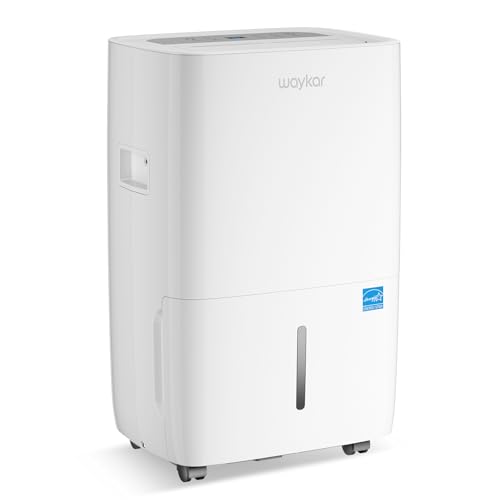
Best for damp basements and whole-floor moisture problems
- Compressor design rated up to 80 pints/day
- Covers spaces up to about 5,000 sq ft
- Energy Star certified
- Continuous drain-hose port for hands-off operation
Why buy it: A refrigerant compressor unit sized for real basement moisture, not a novelty tank. Owners consistently report it pulls water fast and holds a set humidity without babysitting once a drain hose is attached.
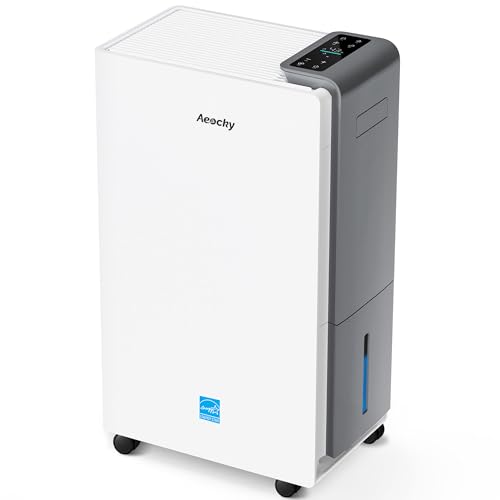
Best for large homes where running cost matters
- Up to 80 pints/day compressor capacity
- Rated for areas up to roughly 5,500 sq ft
- Energy Star certified for lower running cost
- Built-in humidistat with auto shut-off
Why buy it: A strong alternative to the Waykar when efficiency is the priority. The consensus favors it for big open floors, where owners note it holds target humidity without the compressor cycling constantly.

Best for a single damp room or a small apartment
- 34-pint/day compressor capacity
- Covers areas up to about 2,000 sq ft
- Energy Star certified
- Adjustable humidistat with 24-hour timer
Why buy it: The right size when an 80-pint unit is overkill. Owners consistently report it clears a laundry room, bathroom, or mid-size bedroom quietly without dominating the power bill.

Best for bedrooms and closets on a budget
- Compact thermo-electric design
- 95 oz reservoir with auto shut-off
- Sleep mode for near-silent overnight running
- Rated for spaces up to about 1,000 sq ft
Why buy it: A quiet, inexpensive way to take the edge off a single room. A common note from owners is that it will not rescue a flooding basement, but it steadily dries a bedroom or nursery closet without fan roar.

Best for light-sleepers who want minimal noise
- Ultra-quiet Peltier operation
- 95 oz water tank with auto shut-off
- Seven-color ambient night light
- Rated for rooms up to about 1,000 sq ft
Why buy it: Aimed squarely at the bedroom. Owners consistently report the near-silent running and soft light make it easy to leave on overnight, though the small tank needs emptying every day or two in humid weather.

Best for small living rooms, bathrooms, and RVs
- Portable thermo-electric design
- 95 oz tank with automatic shut-off
- Adjustable seven-color ambient light
- Rated for spaces up to about 1,000 sq ft
Why buy it: A tidy, portable unit for spaces a full compressor model would overwhelm. The consensus favors it for bathrooms and RVs, where owners value the small footprint over raw extraction rate.
How we picked
We do not buy, test, or physically handle the units we cover. Every pick above is chosen by reading aggregated owner reviews, manufacturer specifications, and the recurring complaint patterns that show up once a product has been in thousands of homes — then weighing that consensus against the job each category is meant to do. Beyond the brands featured here, Frigidaire, hOmeLabs, Midea, and Vremi are other established names worth comparing if you need a different size or price point, and the EPA's general moisture-control guidance backs up prioritizing ENERGY STAR certified units for anything that runs for months at a stretch. Read the full method on our How We Rank page.
For the wider picture — sizing, placement, and where a dehumidifier fits alongside the rest of your setup — start with the dehumidifiers hub, or step up to the humidity control pillar to see how moisture ties into the rest of your home's indoor climate.