
Affiliate Disclosure
Some links on this page are affiliate links. As an Amazon Associate, we earn from qualifying purchases — at no extra cost to you. We do not buy, test, or physically handle the products we cover; our rankings come from aggregated owner reviews, ratings and expert consensus. Commissions never change our verdicts. How we rank & full disclosure.
The product links below are affiliate links. As an Amazon Associate we earn from qualifying purchases at no extra cost to you, and a commission never changes which products we recommend or where they rank.
An air quality monitor is the one device that turns your indoor climate from a guess into a number. If you have unexplained stuffiness, allergy flare-ups, a gas stove, or a bedroom that feels heavy by morning, a monitor tells you which invisible thing — particulates, VOCs, CO2 or humidity — is actually the problem. If your air already feels fine and you have no specific concern, you can skip this category; a monitor measures, it doesn't clean. The bottom line: buy the monitor that reports the readings you'll act on, on a display you'll actually check.
What should an air quality monitor actually measure?
The readings that matter for a home are PM2.5 (fine particulates), VOCs, CO2 and humidity. A monitor covering those four gives you a genuine picture of indoor air; one that only shows a single "AQI score" hides which pollutant is driving it.
PM2.5 is what spikes from cooking, candles, wildfire smoke and dust. VOCs come from cleaning products, paint and new furniture. CO2 climbs in closed, occupied rooms and is the number that correlates with that stuffy, foggy-headed feeling. Humidity ties them together — too high breeds mould, too low irritates airways. A monitor that breaks these out separately lets you fix the right thing instead of chasing a mystery score.
Do you need a smart, app-connected monitor or a standalone display?
A connected monitor is better if you want phone alerts and historical trends; a standalone display is better if you just want to glance at a number and prefer nothing tied to Wi-Fi or an app. Both are valid — it comes down to whether you'll watch charts or watch a screen.
App-based units like the Amazon Smart Air Quality Monitor shine when you want to be notified while you're in another room and to see how air changed overnight. Standalone units like the Aranet4 or the large-display monitors win for people who distrust yet another app or want a reading with no setup. A common complaint about budget smart monitors is flaky Wi-Fi, so if reliability matters most, a self-contained display sidesteps that entirely.
How accurate are affordable air quality monitors?
Consumer monitors are reliable for spotting trends and relative changes, not for certified lab-grade absolute values. The best use is watching whether a number rises or falls when you cook, ventilate or run a purifier — direction matters more than the exact figure.
CO2 sensing is where quality shows most: true NDIR sensors (as in the Aranet4) hold calibration far better than the low-cost estimated-CO2 chips in some multi-sensor units, which is why owners who care specifically about CO2 pay more for it. For particulates and VOCs, even inexpensive monitors are useful because you're mainly comparing before-and-after in your own room, where a small consistent offset doesn't change the decision you make.
What do AQI, particulate matter and formaldehyde readings actually tell you?
AQI (Air Quality Index) is a single 0-500 score the EPA uses to translate raw pollutant levels into a plain "good/moderate/unhealthy" read, but a monitor that only shows AQI hides which particulate matter or gas is actually driving the number. A monitor that breaks out PM2.5, VOCs, CO2 and formaldehyde (often labeled HCHO) separately gives you enough detail to act — ventilate for CO2, open a window for VOCs, or replace new furniture off-gassing formaldehyde.
Established air-quality brands like Airthings, Temtop, IQAir and Awair each built their reputation on one or two of these sensors done well rather than trying to cover everything cheaply, which is worth knowing if a specific pollutant — radon for Airthings, particulates for IQAir — is your main concern. For most homes, a monitor covering PM2.5, VOC, CO2 and humidity together is the more useful everyday tool than a single-purpose specialist.
Real-time readings, data logging and health — how should you actually use a monitor?
A monitor's real-time display is most useful for cause and effect — watching a number spike when you cook, light a candle or close the windows, then confirming it drops after you ventilate. Data logging (available on app-connected models) turns those single moments into a trend, showing whether your home's air is generally improving or getting worse over weeks, not just right now.
None of this replaces a doctor for a genuine health concern, but a monitor is a legitimate first step if you suspect indoor air is behind headaches, stuffiness or allergy-like symptoms that ease when you are away from home. Calibration drift is real on cheaper sensors over a year or two of continuous use, so treat a sudden, unexplained jump in any single reading as a sign to double-check the sensor rather than panic about air quality overnight.
What do first-time air quality monitor buyers get wrong?
The most common mistake is buying a monitor that only reports a single AQI number and expecting it to diagnose a specific problem. A summary score cannot tell you whether a stuffy bedroom is a CO2 issue (crack a window) or a VOC issue (something is off-gassing), so if you actually plan to act on the reading, pick a monitor that breaks pollutants out separately from day one.
The second mistake is over-trusting absolute numbers from a budget sensor, especially for CO2. Low-cost estimated-CO2 chips drift over time and are not the same technology as a true NDIR sensor like the Aranet4's; if a specific reading — CO2 for a stuffy office, PM2.5 for wildfire smoke season — genuinely matters to your health decisions, that is where spending more on sensor accuracy pays off. For everyday trend-watching, a cheaper multi-sensor monitor is perfectly adequate.
The third regret is placement: a monitor tucked in a corner behind furniture or right next to a window reads that specific spot, not the room you actually breathe in. Place it at roughly seated or standing height, away from direct drafts and cooking exhaust, so the number on the app reflects the air you are living in rather than a false alert or a falsely reassuring calm reading.
A fourth, quieter mistake is buying a monitor and never acting on what it reports. The value of an air quality monitor is entirely in the response — cracking a window when CO2 climbs, running a purifier when PM2.5 spikes, checking new furniture or paint when VOCs stay elevated for days. A monitor with alerts turned on, so the reading reaches you instead of waiting to be checked, gets used far more consistently than one you have to remember to glance at, which is the real difference between owners who find these devices genuinely useful and those who stop looking at the display within a month.

Best for Alexa homes that want simple, reliable air alerts
- Tracks PM2.5, VOCs, humidity, temperature and carbon monoxide
- Sends a phone notification when air quality drops
- Works with Alexa routines and Echo devices
- Compact and screen-free — readings live in the app
Why buy it: Owners consistently report this is the most fuss-free way to get told when indoor air turns bad, and its tight Alexa integration is the main reason buyers pick it over a standalone display.

Best for Buyers who want lab-grade CO2 accuracy
- True NDIR CO2 sensor plus temperature and humidity
- Battery lasts years — no wiring and no app required
- Easy-read e-ink display works in any light
- Fully portable, so it moves room to room
Why buy it: A recurring theme in owner reviews is trust: the Aranet4 is the monitor people cite when they want CO2 numbers they can rely on, and the multi-year battery means it simply keeps working in the background.

Best for People who want every reading on one large screen
- Measures CO2, HCHO, TVOC, PM2.5, PM1.0 and PM10
- Large 7.2-inch colour display
- Tracks humidity and temperature alongside particulates
- Colour-coded air-quality status at a glance
Why buy it: The consensus favors this one for households that want the full picture — owners like seeing particulate, VOC and CO2 figures side by side rather than trusting a single summary score.

Best for A living-room monitor you read from across the room
- Real-time CO2 reading plus nine air-quality indicators
- Large 7-inch screen visible from a distance
- Seven configurable alert thresholds
- Colour status shifts as the air changes
Why buy it: A common complaint with small monitors is squinting at tiny numbers; buyers pick this one specifically because the oversized display makes the day’s air-quality trend obvious without walking over to it.

Best for A capable multi-sensor monitor on a budget
- Tracks ten parameters including CO2 and PM2.5
- Colour touchscreen display
- Rechargeable battery for portable use
- Reads temperature and humidity too
Why buy it: Owners consistently report it covers the readings most homes actually care about at a noticeably lower price than the name brands, which is why it lands as the default value pick.
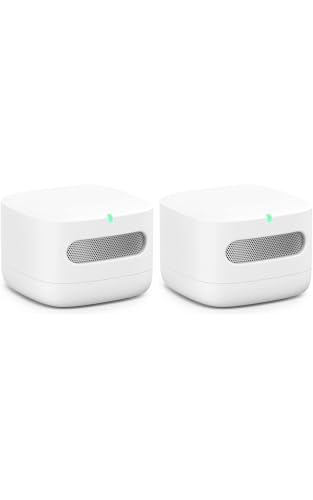
Best for Covering two rooms from day one
- Two identical smart monitors in one box
- Per-room PM2.5, VOC, humidity and CO alerts
- Works with Alexa for whole-home routines
- Lower cost per unit than buying singly
Why buy it: For anyone who already knew they would want more than one, buyers report the two-pack is the easiest way to watch a bedroom and a living area without paying full price twice.
How we picked
These rankings come from aggregated owner reviews, manufacturer specifications and recurring complaint patterns — not from us buying or physically handling the units. We do not run first-hand tests; our value is synthesising what the whole ownership base reports so you don't have to read thousands of reviews yourself. See how we rank for the full method. For where monitors fit alongside purifiers, thermostats and humidity control, start with the air quality monitors hub or the wider smart climate control section.