
Affiliate Disclosure
Some links on this page are affiliate links. As an Amazon Associate, we earn from qualifying purchases — at no extra cost to you. We do not buy, test, or physically handle the products we cover; our rankings come from aggregated owner reviews, ratings and expert consensus. Commissions never change our verdicts. How we rank & full disclosure.
Affiliate disclosure: Some links below are affiliate links. As an Amazon Associate we earn from qualifying purchases, at no extra cost to you. Commissions never change which products we recommend or how we rank them.
Radon is the one part of your home's indoor climate you genuinely cannot feel, see or smell — a colorless radioactive gas that seeps up from the ground, and the EPA recommends every home test for it regardless of age or location. The honest bottom line: if you have a basement, a slab or any lived-in space in contact with the ground, a continuous detector belongs on your list. If you live several floors up in an apartment with no ground contact, your risk is lower and a one-time short-term test may be all you need. For everyone else, a digital detector that shows a trend beats a single kit reading, and the picks below reflect what owners rank highest for accuracy, cost and ease of living with day to day.
What is radon, and how do detectors measure it?
Radon gas forms naturally from decaying uranium in soil and rock, then seeps into homes through foundation cracks and gaps. It is measured in picocuries per liter of air (pCi/L), which counts the alpha particle radiation the gas emits as it decays — that count is what a detector's sensor actually reads.
Because radon is invisible and odorless, a detector is the only practical way to know your real exposure. Consumer units use different sensing methods to count that alpha particle activity, but they all report back in the same pCi/L unit so results are comparable across brands and test types. Ecosense, EcoQube and FTLAB are other detector makers besides Airthings and X-Sense worth knowing, each offering continuous monitor designs that read pCi/L in real-time rather than requiring a lab.
Why does the EPA action level and calibration matter?
The EPA action level of 4 pCi/L is the threshold at which the agency recommends mitigation, and radon exposure above that level over years is linked to a meaningfully higher lung cancer risk — the EPA names radon as the second leading cause of lung cancer in the US after smoking. Accuracy depends on decent calibration, so look for a detector that states its calibration standard or offers a calibration-check option.
This is a genuine health question, not just an indoor-comfort one, which is why the EPA action level gets referenced so consistently across every reputable source on the topic. A detector reading meaningfully above 4 pCi/L on a long-term average is the trigger for professional mitigation — typically sub-slab ventilation that vents radon gas outside before it enters the living space — not a reason to panic over one high hourly reading. Confirm any device you buy has been checked against a known calibration standard; an uncalibrated sensor undermines the whole point of testing.
Do you need a continuous digital detector or a mail-in test kit?
A continuous digital detector if you want an ongoing picture; a kit if you only need a one-time snapshot. Radon fluctuates with weather, season and how a house is sealed, so a detector that averages over days and months tells you far more than a single lab result. The consensus favors owning a detector for any ground-contact space.
What radon level should actually trigger action?
The EPA sets 4 pCi/L as the level at which it recommends fixing a home, and suggests considering action between 2 and 4 pCi/L. Every detector here reads in pCi/L for that reason. A common mistake owners describe is reacting to a single high hour — it is the multi-day average that matters, not one spike.
Does a radon detector need an app or a subscription?
No — several strong options run entirely on-device with no account. Smart models add remote alerts and history via an app, which owners of rentals and second homes value, but a common complaint is being pushed toward a subscription. Confirm before buying that ongoing monitoring is free, as it is on the models above.
Where should you place a radon detector?
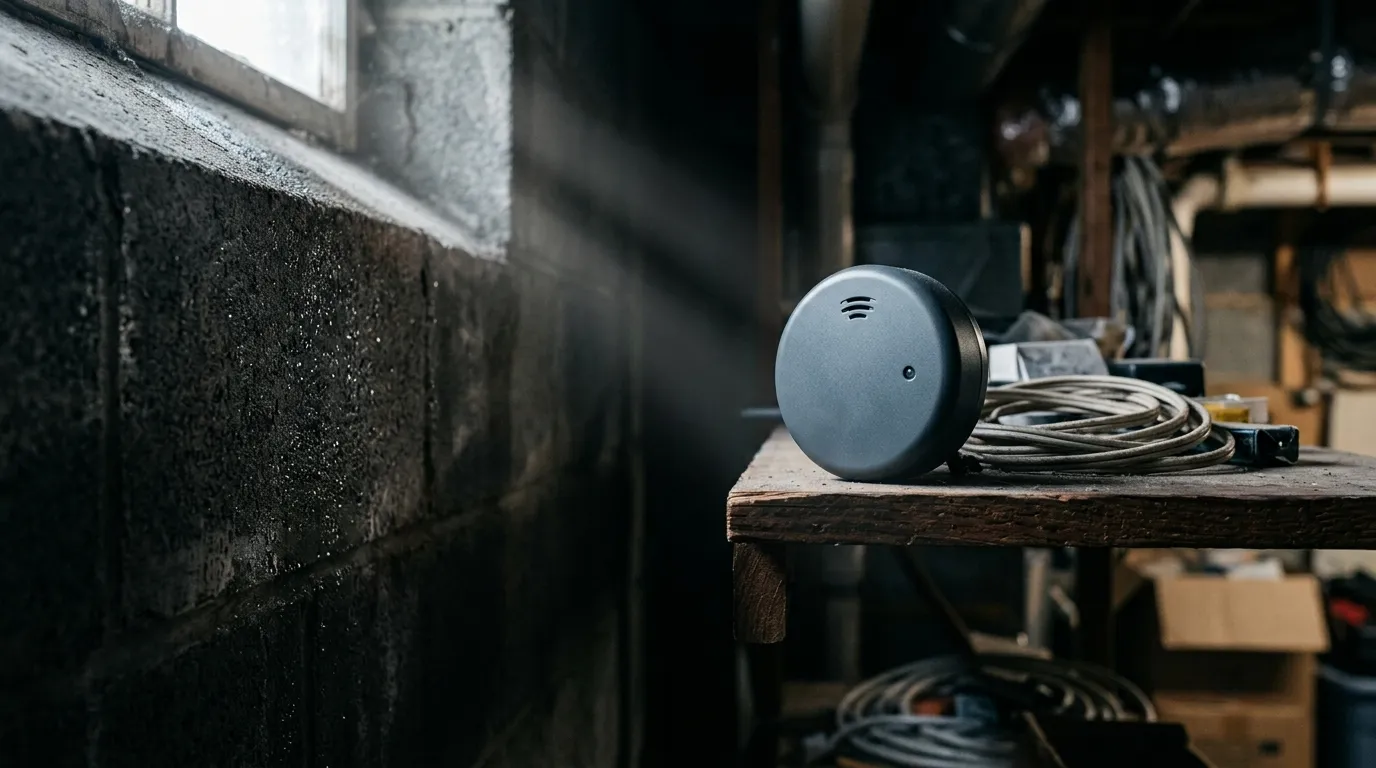
In the lowest lived-in level — usually a basement or ground floor — about two to six feet off the floor, away from drafts, exterior walls and direct airflow from vents or windows. Owners repeatedly note that placement changes the reading, so keep it in one representative spot rather than moving it around.
Should a radon detector have an audible alarm?
Yes, for anyone who does not want to check an app or screen regularly. An audible alarm that triggers above the EPA action level catches a spike even if nobody has looked at the reading in weeks, which matters most in a basement or spare room people visit less often than the main living space.
A silent, screen-only detector still works, but it depends on someone remembering to check it — an alarm removes that dependency and is the safer default for a room you do not pass through daily. Several picks above pair a continuous monitor with an audible and visual alert specifically for this reason, so a rising level gets noticed without anyone opening an app. If you already own a smart home system, look for a detector whose alarm can also push a notification, giving you both the immediate audible warning and a record you can check later.

Best for anyone who wants a trend, not a single reading
- Digital pCi/L readout with 1-day, 7-day and long-term averages
- Bluetooth sync to the Airthings companion app
- Also tracks temperature and humidity
- Battery-powered — no wiring, hub or lab fees
Why buy it: Owners consistently report the app history is what sets this apart — radon naturally swings day to day, so a rolling average tells you far more than a one-off number. It is the model most reviewers recommend to someone testing for the first time.
Best for continuous monitoring with zero ongoing cost
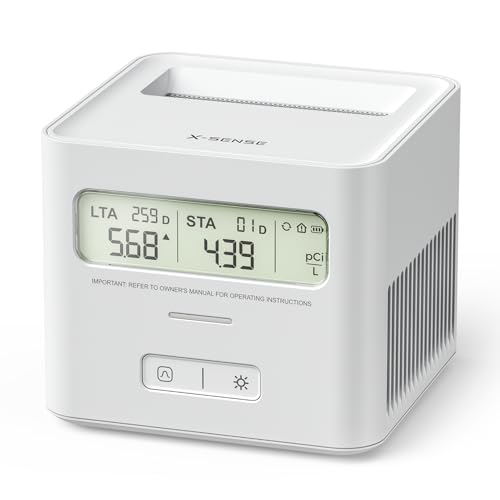
- Continuous on-device pCi/L readout
- No lab fees, mailers or subscription
- Audible and visual alerts above the action level
- Compact — sits on a shelf or wall-mounts
Why buy it: The consensus draw here is cost: there are no test-kit mailings or per-reading charges, so it pays for itself against repeat lab tests. Owners note the readout is easy to check at a glance without opening an app.

Best for people who do not want an app or account
- On-device 1-day, 7-day and long-term averages
- Runs on 3 AAA batteries — no wiring
- No app or account needed to read results
- USA pCi/L calibration
Why buy it: A common complaint about smart detectors — app dependence — simply does not apply here. Owners who want a reliable number on a screen, with nothing to pair or sign into, reach for this one repeatedly.

Best for second homes, rentals and away-from-home monitoring
- Wi-Fi connected with app push notifications
- Remote monitoring when you are away from the property
- Continuous on-device pCi/L readout
- Audible high-level alarm
Why buy it: Owners of vacation properties and rentals single out the remote alerts — you find out a level has climbed without being on site. A recurring note is to confirm solid Wi-Fi where you plan to place it.

Best for a long on-device record without an app
- Stores up to 504 days of readings on-device
- Rechargeable battery
- Also displays temperature and humidity
- Long-term trend logging you can review anytime
Why buy it: For anyone who wants a long data history but does not want a cloud account, the on-device log is the standout. It addresses a common frustration with cheaper units, where readings reset the moment power is lost.
Best for set-and-forget alarm without a data platform
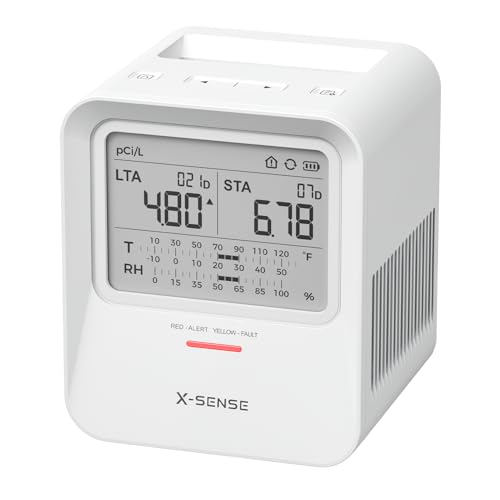
- Standalone operation — no app or hub
- Audible and visual alerts above the action level
- Continuous digital pCi/L display
- Simple shelf or desk placement
Why buy it: Owners who want an alarm they can forget about, rather than another dashboard to check, consistently rate this the least fussy option. It does one job — warn you when radon is high — and does it plainly.
How we picked
Energy Efficient HVAC System does not buy, test or physically handle the detectors it covers. This ranking is built from aggregated owner reviews, manufacturer specifications and the recurring patterns in what buyers praise and complain about — accuracy against professional tests, whether ongoing monitoring is truly free, and how easy each unit is to read and place. For the full method, see our How We Rank methodology. If you are new to the topic, our what is radon explainer covers how the gas gets in and how a detector actually measures it, and the radon detectors hub compares a consumer detector against a professional test.