
Affiliate Disclosure
Some links on this page are affiliate links. As an Amazon Associate, we earn from qualifying purchases — at no extra cost to you. We do not buy, test, or physically handle the products we cover; our rankings come from aggregated owner reviews, ratings and expert consensus. Commissions never change our verdicts. How we rank & full disclosure.
Affiliate disclosure: Some links below are affiliate links. As an Amazon Associate we earn from qualifying purchases, at no extra cost to you. Commissions never change which products we recommend or how we rank them.
A multi zone home is the situation where a smart thermostat has the most influence over your indoor climate. It's also the one most likely to trip up a buyer, because the phrase "multi-zone" hides two different jobs. The honest bottom line: if your house has separate HVAC zones, each needs its own thermostat. What matters is buying units that manage cleanly together with app control in one place. If instead you have a single system but rooms that run hot and cold, the answer is a thermostat with a remote sensor, not several thermostats. Nearly every unit below runs on WiFi and supports Alexa or Google Home, so the real decision is about zoning strategy, not connectivity. The picks below cover both cases, and lead with the brands owners find easiest to run in numbers.
What does "multi-zone" actually mean for thermostats?
Two different things. A truly zoned system has separate HVAC controls for different areas — each zone gets its own thermostat. A single-system home with uneven rooms is not zoned; it just needs better balancing. Knowing which you have decides whether you buy several thermostats or one thermostat plus sensors, so confirm before you shop.
Zoning versus a single HVAC system
A truly zoned HVAC system uses dampers and multiple thermostats to heat or cool different areas independently. A single-system home just has one furnace or heat pump and one thermostat, no matter how many rooms it feeds.
Compatibility per zone
Check compatibility at each individual thermostat location before you buy. An older zone can use different wiring than a newer one, even in the same house.
Can one smart thermostat control multiple zones?
No — a thermostat controls the one HVAC zone it's wired to. A genuinely zoned home needs one thermostat per zone, ideally the same brand so they share an app and routines. Owners are happiest matching units across zones rather than mixing brands, which fragments control across multiple apps.
Do you need a C-wire, and does installation get harder with multiple zones?
Most smart thermostats want a C-wire for reliable WiFi and power, though several models run without one using clever power-stealing tricks. Installation gets more involved with multiple zones simply because you're repeating the same wiring check at every thermostat location, not because the wiring itself changes.
WiFi power and compatibility checks
Before buying for a zoned home, check C-wire availability and HVAC compatibility at each individual location. An older zone on a heat pump system may need a different wiring approach than a newer zone on standard forced air. Doing this compatibility check per zone up front avoids the common headache of one unit installing cleanly while another sits in a box because its wiring doesn't match. Manufacturers' online compatibility checkers make this a five-minute job per zone, and it's worth doing before you buy multiples of the same model.
Do room sensors replace separate zones?
Not exactly. A remote sensor, like ecobee's SmartSensor, lets one system prioritize the room you're in, which evens out a house without true zoning. But it can't heat one room while cooling another, since there's still a single system. Owners with a two-story home find remote sensors a cheaper fix than adding real zoning hardware.
Remote sensor balancing and learning
Most smart thermostats also add a learning feature over the first week or two. It adjusts scheduling based on when you actually change the temperature, rather than a rigid programmable schedule you set once and forget.
Geofencing and energy savings
That learning behavior, combined with geofencing that detects when everyone's left the house and quietly backs off the setpoint, is where most of the real-world energy savings come from — more than any single hardware spec.
What features matter most for a multi-zone smart thermostat?
Geofencing, a programmable weekly schedule, app control that groups every zone in one place, and a monthly energy report that shows whether the setup is actually saving anything. Alexa and Google Home compatibility matter if you already use either ecosystem.
Geofencing, programmable scheduling and energy report
Geofencing uses your phone's location to trigger scheduling changes automatically. Owners consistently rate it as more reliable than a fixed programmable schedule for an unpredictable routine. An energy report — a monthly or seasonal breakdown of runtime and estimated energy savings — is what turns "the house feels more comfortable" into an actual number you can point to.
Heat pump compatibility
If a heat pump is part of any zone's system, confirm the thermostat explicitly supports heat pump auxiliary and emergency heat modes. A mismatched thermostat can run auxiliary heat far more than necessary and quietly inflate a winter bill.
How do you manage several thermostats without app chaos?
Buy one brand and group the units in its app. ecobee, Sensi and Nest each let you see and schedule multiple thermostats from a single interface, and set shared Home/Away behavior. The recurring complaint from mixed-brand setups is bouncing between apps, which single-brand households simply avoid.
App control with Alexa and Google Home
Honeywell is the other major name in this space, and its wired, on-device scheduling appeals to households that would rather each family member adjust a zone at the wall than hunt through an app. Whichever brand you pick, standardizing across every zone is what keeps scheduling, geofencing, and app control simple instead of fragmented. Most units here also support Alexa and Google Home, so voice control works the same way in every room.
How much do you actually save with smart thermostats across multiple zones?
Energy savings scale with the number of zones running smart scheduling. Each thermostat independently backs off setpoints when its zone is unoccupied — a benefit a single whole-house thermostat can't deliver.
A single-zone smart thermostat mostly saves energy through geofencing and learning behavior applied to the whole house at once. In a multi-zone home, every additional zone running its own scheduling and geofencing compounds that saving, since an empty upstairs zone can back off independently of an occupied downstairs zone. That's the real financial case for equipping every zone with a proper smart thermostat, rather than leaving older, dumber units on some zones to save money upfront. The energy report data most owners share shows the payback period shrinking the more zones are covered.
What should you check before retrofitting an older zoned system?
Confirm each zone's HVAC compatibility and C-wire situation individually, check whether the system uses a heat pump on any zone, and decide upfront whether you're standardizing on one thermostat brand across every zone.
Older zoned systems, especially multi-decade HVAC setups, sometimes use wiring conventions that don't map cleanly onto a modern smart thermostat's terminal layout. This is where Sensi's broad compatibility and guided installation process earns its reputation, since it's built to handle exactly these mismatched, older configurations. Take photos of the existing wiring at each zone before removing anything, and label wires by zone, not just by terminal letter. It's the single easiest way to avoid a frustrating troubleshooting session partway through a multi-zone installation.
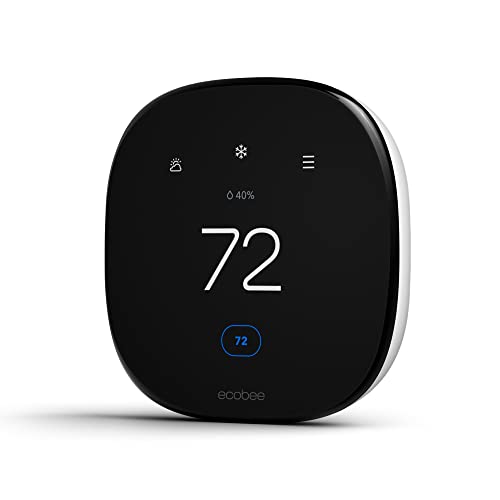
Best for balancing rooms with sensors and running several units in one app
- Supports ecobee SmartSensors to balance far-off rooms
- Multiple ecobee units managed from one app
- Works with Alexa, Google Home, Apple Home and SmartThings
- Full-color touchscreen with on-device controls
Why buy it: For multi-zone homes ecobee is the consensus first choice, because the SmartSensors let one zone follow an occupied bedroom instead of the hallway, and owners running two or three units appreciate seeing them all in a single app rather than juggling several.

Best for outfitting several zones without paying premium three times over
- Lower-priced ecobee — cheaper to buy per zone
- Same wide Alexa, Google and Apple Home support
- Optional SmartSensor support to add later
- Energy Star certified
Why buy it: When each HVAC zone needs its own thermostat, unit price adds up fast. Owners kitting out a whole house repeatedly land here to keep the ecobee app experience while trimming the per-zone cost, adding sensors only where a room actually needs one.

Best for wide compatibility across mixed or older zoned systems
- Broad HVAC compatibility, including many older systems
- Multiple thermostats grouped in the Sensi app
- Guided DIY install, frequently no C-wire needed
- Works with Alexa and Google
Why buy it: Zoned homes often mix system ages and wiring, and Sensi has a long reputation for fitting where others cannot. Owners with several zones credit the app for keeping a group of thermostats organized without a mismatched wiring headache on any one of them.
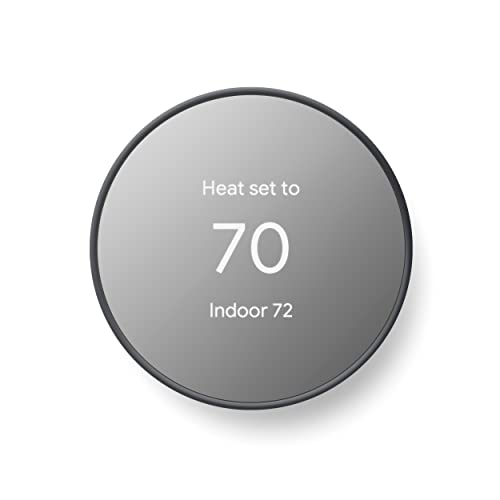
Best for multiple Google-home zones controlled from one Home app
- Multiple Nest units live together in the Google Home app
- Home/Away routines can act across zones
- Often installs without a C-wire — compatibility check advised
- Mirror-finish display with touch-strip control
Why buy it: If the house already runs on Google, several Nest units sit cleanly in one app and share Home/Away logic. Owners like the consistency, with the usual caveat to run the wiring checker per zone, since one mismatched location is the common snag.
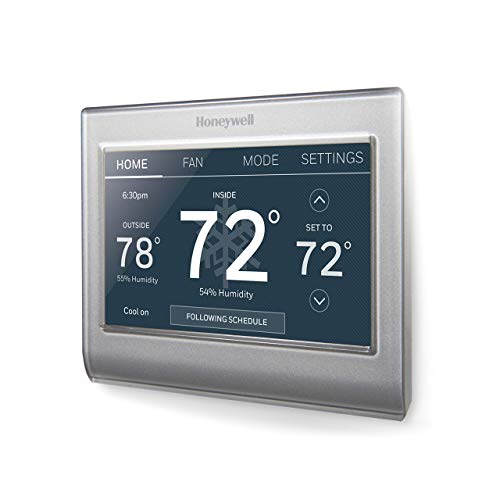
Best for zones you would rather schedule at the wall than in an app
- Large color touchscreen, 7-day programmable per unit
- Full scheduling on-device without the app
- Alexa-ready
- C-wire required
Why buy it: For a zone controlled by different family members, on-device scheduling avoids everyone needing the app. Owners with a hard-wired, C-wire-equipped system point to the big screen as the reason each zone stays easy for anyone in the house to adjust.
How we picked
Energy Efficient HVAC System does not buy, test or physically handle the thermostats it covers. This multi-zone ranking is built from aggregated owner reviews, manufacturer specifications and the recurring themes buyers raise. Those themes include running several units in one app, wiring compatibility across mixed zones, and whether sensors or separate thermostats fit the home.
We give weight to ENERGY STAR certification and documented energy savings claims, since those numbers are independently verified rather than marketing copy. We also compare owner-reported reliability across ecobee, Nest, Honeywell, and Sensi, rather than assuming the biggest name wins by default. See our How We Rank methodology for the full process. The smart thermostats hub covers compatibility in depth, and our smart climate control pillar shows how thermostats, vents and monitors work together across a whole home.