
Affiliate Disclosure
Some links on this page are affiliate links. As an Amazon Associate, we earn from qualifying purchases — at no extra cost to you. We do not buy, test, or physically handle the products we cover; our rankings come from aggregated owner reviews, ratings and expert consensus. Commissions never change our verdicts. How we rank & full disclosure.
Affiliate disclosure: Some links below are affiliate links. As an Amazon Associate we earn from qualifying purchases, at no extra cost to you. Commissions never change which products we recommend or how we rank them.
A smart thermostat is the one device that actively manages the biggest lever on your home's indoor climate — the heating and cooling that drives both comfort and the largest slice of your energy bill. The honest bottom line: most homes with central HVAC will see a modest, real saving from automatic setbacks, and the upgrade is worth it if you value scheduling and remote control. If you rent, have unusual or high-voltage wiring, or already turn your system down by hand every day, the payback is thinner. The single thing that decides whether a purchase goes smoothly is not the brand — it is your wiring, which is why the picks below lead with compatibility.
What smart features actually matter — geofencing, learning, zoning?
Geofencing uses your phone's location to switch between home and away automatically, learning adjusts the schedule to your habits over the first week or two, and zoning lets multiple thermostats or remote sensors manage different rooms independently. All three drive energy savings without you touching the app once they are set up.
Geofencing is the feature owners say they stop thinking about once it works — no more forgetting to set back the temperature before leaving for the day. Learning, ecobee and Nest's signature feature, watches your manual adjustments and builds a schedule around them, though most owners still fine-tune it in the app rather than trusting it blindly out of the box. True zoning, where separate thermostats or remote sensors control airflow to different parts of the house, needs compatible HVAC hardware — dampers or multiple systems — so it is more relevant to a heat pump or multi-zone forced-air setup than a single-zone furnace. Most of these WiFi-connected thermostats also generate a monthly energy report comparing your usage to past months or similar homes, which is a simple way to confirm the energy savings are actually showing up.
Will a smart thermostat work with your wiring (the C-wire question)?
This is the make-or-break check. Many smart thermostats need a common (C) wire for steady power; some, like the Nest and Sensi, often work without one. The most common reason a purchase goes wrong is a wiring mismatch, so run the manufacturer compatibility checker with a photo of your existing wiring before you buy, not after.
Compatibility goes beyond the C-wire, too — a heat pump system uses different wiring conventions than a standard forced-air furnace, and not every smart thermostat supports heat pump auxiliary and emergency heat stages out of the box. Check the manufacturer's compatibility page against both your wiring and your HVAC equipment type before ordering, and budget a little extra installation time if your system needs an add-on C-wire adapter rather than a straightforward swap.
Do smart thermostats actually save money?
Most owners report a real but modest reduction in heating and cooling cost. The saving comes from consistency, not magic — the thermostat sets back automatically every day when nobody is home, which a person only remembers to do some days. Expect a sensible dent in the bill over a year, not a dramatic overnight drop.
Scheduling is the baseline feature behind that saving, and every model above supports it, whether through geofencing, a learned pattern, or a simple manually programmed weekly schedule. The energy report most apps generate month to month is worth actually reading rather than ignoring — it is the easiest way to confirm the schedule you set is doing what you expect, and to catch a system running longer than normal before it shows up as a surprise on the utility bill.
Which ecosystem — Alexa, Google or Apple Home — should you match?
Buy to match the assistant you already use. ecobee is the broadest, working across Alexa, Google, Apple Home and SmartThings; Nest fits Google homes most naturally; the Amazon model leans on Alexa. Owners are happiest when the thermostat matches their existing speakers and app rather than adding a second ecosystem.
Do you need room sensors?
Only if some rooms run hotter or colder than where the thermostat sits. Remote sensors let the system balance to an occupied bedroom or office instead of the hallway, which owners with a two-story home or a far-off nursery value most. If your home holds an even temperature, a sensor adds little.
How hard is smart thermostat installation, and who should call a pro?
Most homeowners can complete installation themselves in under an hour once compatibility is confirmed — it is four to six labeled wires, a base plate, and the manufacturer's guided setup in the app. Call an HVAC technician if your system uses a heat pump with auxiliary heat, multi-stage equipment, or wiring that does not match any labeled terminal on the new thermostat.
Honeywell, alongside Nest and ecobee, has been in the thermostat business long enough that its wiring conventions are the reference point most compatibility checkers are built around, which is part of why brand-name units tend to have smoother self-installs than obscure ones. The one situation that reliably justifies a professional call is a heat pump system, since auxiliary and emergency heat staging is where DIY installs most often go wrong — get that wrong and the system can run inefficiently without an obvious symptom. For a standard single-stage furnace or central AC, the guided app walkthrough on any of the picks above is enough for most people.
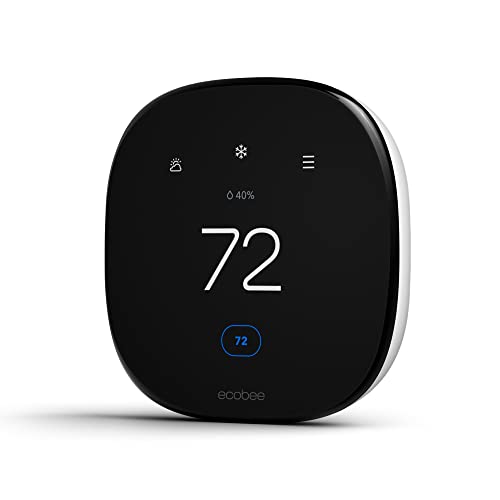
Best for most homes that want room sensors and wide compatibility
- Full-color touchscreen with on-device controls
- Works with Alexa, Google Home, Apple Home and SmartThings
- Supports ecobee SmartSensors for room-by-room comfort
- Energy Star certified with usage reports
Why buy it: Owners consistently rate ecobee highest for flexibility — it plays nicely with every major ecosystem, and the optional room sensors fix the classic complaint that a hallway thermostat ignores the room you actually sit in. The on-device screen means you are not forced into the app for a quick change.

Best for a low-cost first smart thermostat in an Alexa home
- One of the lowest-cost major smart thermostats
- Built on Honeywell Home temperature control
- Works with Alexa and Ring routines
- C-wire required — check your wiring first
Why buy it: The consensus budget pick. Owners report it does the core job — schedules and app control — for a fraction of the premium models, with the main caveat being that it needs a C-wire and leans on Alexa rather than a full ecosystem spread.
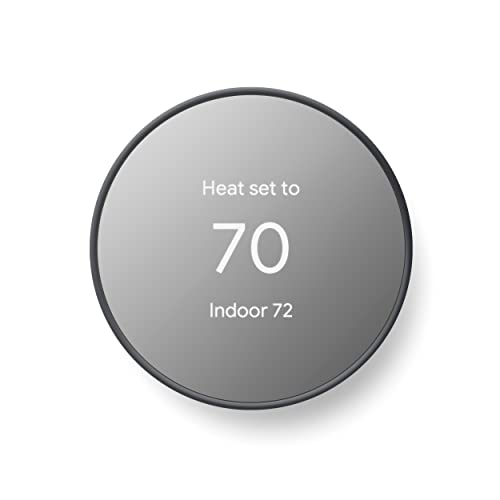
Best for Google-home households that want simple, good-looking control
- Mirror-finish display with touch-strip control
- Schedules and Home/Away routines via the Google Home app
- Energy-history suggestions to trim runtime
- Often works without a C-wire — compatibility check advised
Why buy it: A favorite for looks and simplicity. Owners in the Google ecosystem like how cleanly it fits, and a recurring plus is that it frequently installs without a C-wire — though the checker is worth running, since a common return reason is a wiring mismatch.

Best for ecobee features at a lower entry price
- Touchscreen ecobee at a lower price point
- Works with Alexa, Google Home and Apple Home
- Energy Star certified
- Optional SmartSensor support to add later
Why buy it: The value entry to the ecobee line. Owners note you keep the wide compatibility and touchscreen while skipping the bundled sensor, which you can add down the road if room-by-room control becomes a priority.

Best for wide HVAC compatibility and a straightforward self-install
- Guided DIY install through the Sensi app
- Wide HVAC compatibility, frequently no C-wire needed
- Flexible scheduling in the app
- Energy Star certified
Why buy it: Sensi has a long reputation for painless installs, and owners repeatedly credit the step-by-step app for getting them through wiring without a pro. It is the pick people recommend to anyone nervous about touching their HVAC.
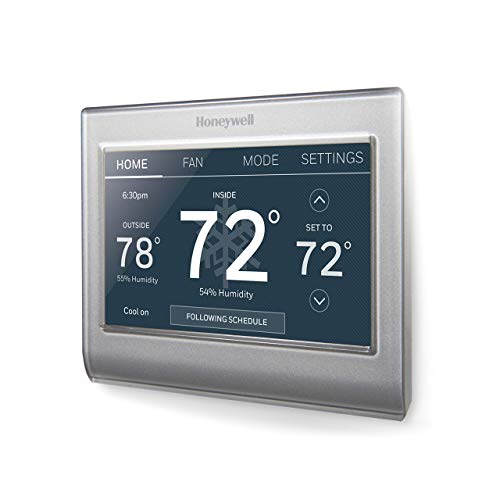
Best for households that prefer scheduling on the wall, not an app
- Large color touchscreen, 7-day programmable
- Full scheduling on-device without opening the app
- Alexa-ready
- C-wire required
Why buy it: For anyone who wants to program the whole week from the wall rather than a phone, the big color screen is the draw. Owners who share a home with less app-inclined family members consistently point to this as the reason they chose it.
How we picked
Energy Efficient HVAC System does not buy, test or physically handle the thermostats it covers. This ranking draws on aggregated owner reviews, manufacturer specifications and the recurring themes buyers raise — wiring compatibility, install difficulty, ecosystem fit and real-world savings. See our How We Rank methodology for the full process. Most models above are ENERGY STAR certified and support full 7-day programmable scheduling plus app control from your phone in addition to on-device use, which is the baseline we expect before a thermostat earns a spot on this list. The smart thermostats hub covers compatibility and setup in more depth, and our smart climate control pillar shows where a thermostat fits alongside the monitors and vents that round out a connected home.