
Affiliate Disclosure
Some links on this page are affiliate links. As an Amazon Associate, we earn from qualifying purchases — at no extra cost to you. We do not buy, test, or physically handle the products we cover; our rankings come from aggregated owner reviews, ratings and expert consensus. Commissions never change our verdicts. How we rank & full disclosure.
Some links below are affiliate links. As an Amazon Associate we earn a commission from qualifying purchases at no extra cost to you — it never changes which products we recommend or how we rank them.
Living next to construction turns dust into a permanent indoor climate problem: fine silica and drywall dust drift in every time a door opens and settle everywhere. A purifier cannot seal your home, but the right one keeps the air breathable and creates at least one genuinely clean room. For construction dust the priorities are blunt — a washable pre-filter so heavy grit does not destroy your HEPA in weeks, and enough coverage to recover fast after each exposure. If you can only clean one room properly, make it the bedroom.
Construction dust isn't one thing — it's a mix of coarse grit from cutting and sanding plus genuinely fine particulates like drywall gypsum and, on some sites, silica, small enough to bypass your body's natural filtering and settle deep in the lungs with repeated exposure. That range is exactly why a single-stage filter struggles: it needs to trap heavy grit before it clogs, and fine dust down to sub-micron sizes at the same time. Every pick below pairs a washable pre-filter for the coarse load with true HEPA behind it for the fine fraction, rather than relying on one filter stage to do both jobs.
How long construction lasts next door changes the math on what to buy. A short renovation of a few weeks is a case for renting or borrowing extra coverage rather than committing to a premium unit; a new-build project running for months, or a permanent situation like living near an active quarry or ongoing development, justifies spending more upfront on a rugged washable pre-filter and higher CADR, since the running cost of replacement filters on a cheap unit adds up fast over that timeline. Either way, the goal isn't eliminating dust entirely — that's not realistic with doors and windows in regular use — it's keeping the PM2.5 and particulate level low enough, most of the time, that the air is comfortable to breathe and sleep in.
What specs matter for construction dust — CADR, true HEPA, and pre-filter design?
CADR (Clean Air Delivery Rate) tells you how fast a unit clears dust for its square footage, tested and certified by AHAM rather than self-reported. True HEPA captures fine particulates and allergens down to 0.3 microns; a washable pre-filter is what keeps that HEPA filter from clogging on coarse grit within weeks.
Near active construction, the pre-filter arguably matters more than the HEPA rating itself, because coarse dust is what actually kills filter lifespan. A high CADR at a given square footage translates to more air changes per hour, which is what determines how fast a room recovers after a door opens and a fresh cloud of dust blows in. Check the pre-filter design specifically — a washable, rinseable one turns an ongoing filter replacement expense into a five-minute chore under a tap, which matters enormously when dust exposure is daily rather than occasional.
Can an air purifier keep up with constant construction dust?
In a sealed room, yes; for the whole house, only partly. A well-sized true HEPA unit removes fine construction dust faster than it drifts back in through a closed door. Where owners get frustrated is expecting one purifier to clean a house with windows and doors constantly opening onto the site.
The realistic strategy is containment: seal the gaps you can, run a high-coverage unit in your main living space, and dedicate a second, quieter unit to one bedroom you keep shut. That gives you a clean place to sleep even while the rest of the home takes a beating. A washable pre-filter is close to essential here, because coarse construction grit clogs disposable filters startlingly fast and drives up filter replacement cost fast.
Do I need a special filter for construction dust and allergies?
True HEPA already captures fine construction dust and common allergens down to 0.3 microns, so the filter grade is rarely the problem. The real need is a washable pre-filter to intercept heavy grit first — without it, coarse dust clogs the HEPA in weeks and drives your filter replacement costs up sharply.
If nearby work involves cutting concrete, sanding drywall or sawing wood, the coarse fraction is what overwhelms filters. A rinseable pre-filter turns that from an expense into a chore: you wash it instead of replacing the whole stack. Anyone in the house with allergies or asthma benefits doubly here, since the same fine-particle filtration that catches construction dust also catches pollen and other allergens. Activated carbon layers help if paint or solvent smells ride along, but they do nothing for the dust particulates themselves.
How should I run it during heavy work outside?
Continuously, on a higher speed while work is active, then let auto mode or a lower speed take over once things settle. Keep windows and the nearest doors shut, and check the pre-filter often — during active construction it may need rinsing every week or two rather than every couple of months.
A unit with auto mode and a built-in air-quality sensor is worth the extra cost here specifically because construction dust arrives in unpredictable spikes rather than a steady background level. Auto mode ramps the fan up the moment a truck rumbles by or a saw starts next door, then eases back down rather than running at full blast around the clock, which also protects the pre-filter from unnecessary wear between the actual dust events.
How does LEVOIT compare to Coway, Winix, and Honeywell?
LEVOIT and MOOKA lead this list on coverage and washable pre-filter design at a competitive price; Coway and Winix are the established names owners compare them against for CADR-per-dollar and filter replacement cost, and Honeywell remains a familiar big-box option with wide parts availability.
For a construction-adjacent home running multiple units, filter replacement economics compound fast, so Coway and Winix are worth pricing out if a washable pre-filter alone isn't cutting it. Honeywell units are easy to find locally when a filter needs replacing in a hurry, which some owners value over ordering online during a dusty week. All of these brands reference EPA particulate guidance and AHAM-certified CADR testing, the two standards worth checking before trusting any dust-specific marketing claim. None of these brands will stop dust from settling on furniture and floors — a purifier only pulls particulates out of the air itself, so regular damp-dusting and vacuuming with a HEPA-filtered vacuum still does real work alongside whichever unit you choose.

Best for Homes fighting a constant influx of fine construction dust
- Rated for very large rooms up to about 2,200 sq ft
- Washable filter component copes with heavy, ongoing dust loads
- PM2.5 display shows spikes when nearby work kicks up
- High fan speeds for rapid air changes after a dusty day
Why buy it: The strongest pick when construction dust is relentless. The washable component means you are not buying filters every few weeks, and owners consistently report the PM2.5 display spiking then dropping as the unit catches up — useful proof it is keeping pace.

Best for Open-plan homes that need maximum HEPA coverage
- True HEPA rated for rooms up to about 2,200 sq ft
- Multi-stage filtration for coarse and fine construction dust
- Strong airflow to recover quickly after doors open
- Large clean-air delivery for whole-room turnover
Why buy it: A high-coverage HEPA unit for big spaces exposed to outdoor grit. Owners consistently report fast recovery once windows and doors are closed, though a common complaint is audible noise at the highest speed.

Best for Large rooms needing serious reach without a premium price
- Cleans rooms up to about 1,695 sq ft in an hour
- Multi-stage filter including True HEPA for fine dust
- Higher airflow tuned for larger open areas
- Simple controls with no app to manage
Why buy it: A lot of coverage per dollar for dust-heavy homes. Owners consistently report it handles big rooms that overwhelm smaller units, making it the value choice when you need reach on a budget.

Best for A bedroom clean room away from the worst of the dust
- H13 True HEPA captures the finest construction dust to 0.3 microns
- Activated-carbon layer helps with paint and solvent odors
- Quiet sleep mode for a sealed bedroom retreat
- Compact enough to dedicate to one room
Why buy it: The unit to create one genuinely clean room during a build. Owners consistently report a sealed bedroom running an H13 unit stays notably cleaner than the rest of the house, which matters most for sleep and recovery.
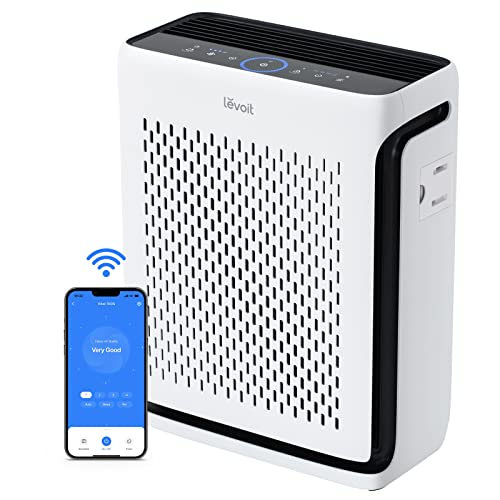
Best for Rooms where gritty, large-particle dust clogs filters fast
- Washable pre-filter catches heavy grit before the HEPA
- True HEPA and carbon behind it for fine dust and odor
- Rinseable pre-filter saves money when dust is constant
- Sized for a single bedroom or living room
Why buy it: Built for the gritty side of construction dust. The washable pre-filter is exactly what stops the expensive HEPA clogging in weeks, and owners consistently report that rinsing it keeps performance up when the air is heavy with debris.
How we picked
We do not buy or run these purifiers ourselves. Energy Efficient HVAC System ranks them from aggregated owner reviews, manufacturer filtration specs, AHAM-referenced CADR figures where published, and the recurring complaint patterns that only appear across many buyers. For homes near construction the consensus favors washable pre-filters, high coverage matched to real square footage, and auto mode responsiveness above all, because coarse grit volume — not fine-particle filtration alone — is what defeats most units. See how we rank for the full method.
For more, read the air purifiers for dust hub, browse the air purification pillar, or see how to improve indoor air quality for the wider picture.