


Affiliate Disclosure
Some links on this page are affiliate links. As an Amazon Associate, we earn from qualifying purchases — at no extra cost to you. We do not buy, test, or physically handle the products we cover; our rankings come from aggregated owner reviews, ratings and expert consensus. Commissions never change our verdicts. How we rank & full disclosure.
Dust is the most misunderstood job people give an air purifier. Household dust is a mixture — skin flakes, fabric fibers, soil, pollen and outdoor particulate — and most of it spends most of its time on surfaces rather than in the air. A purifier only ever works on the airborne fraction.
Do Air Purifiers Actually Reduce Household Dust and Allergens?
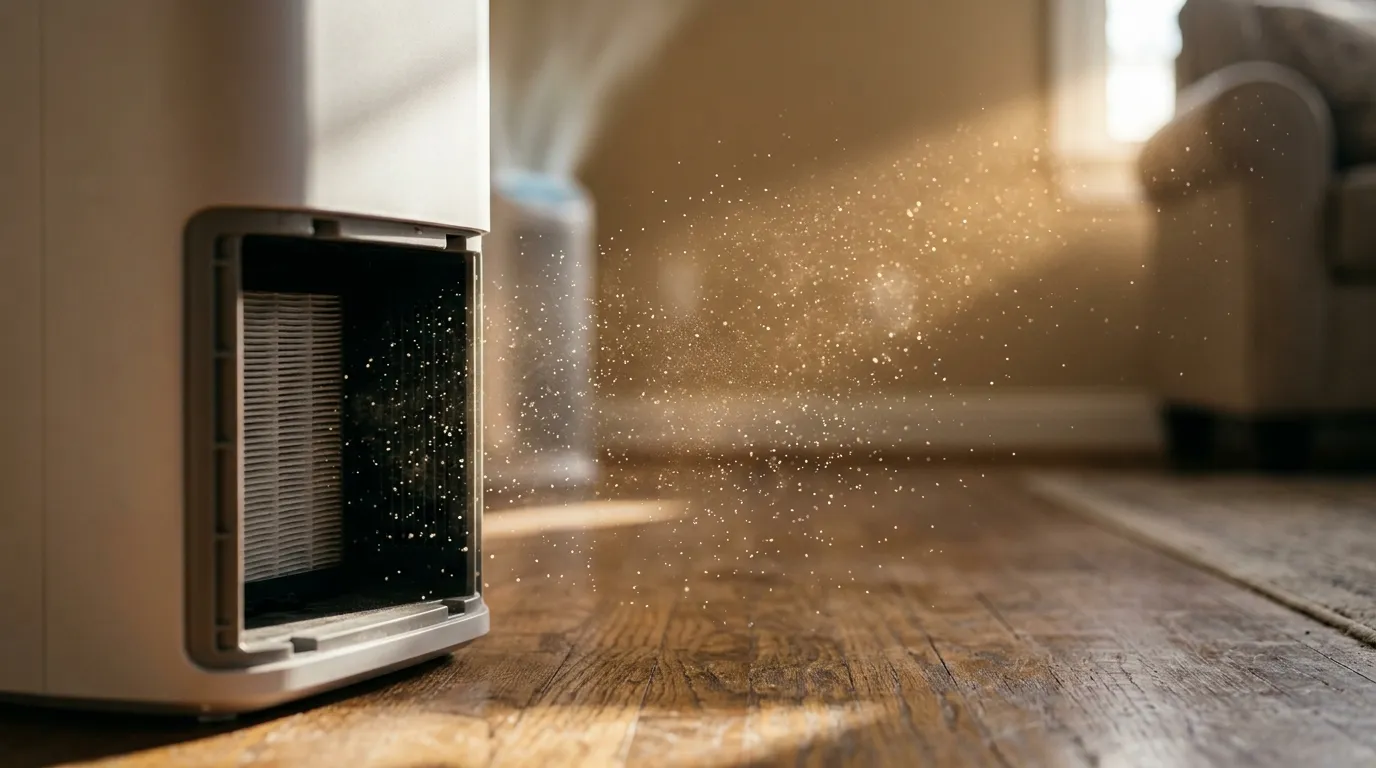
They reduce airborne dust and allergens substantially, and settled dust only modestly. A purifier captures particles while they're suspended, so fewer make it back down onto surfaces — but the heavy, visible fraction settles too fast to ever pass through the machine.
Owners consistently report less haze in sunlight through a window, easier breathing, and a real but less dramatic drop in how often surfaces need wiping.
Fine dust, PM2.5 and particulates
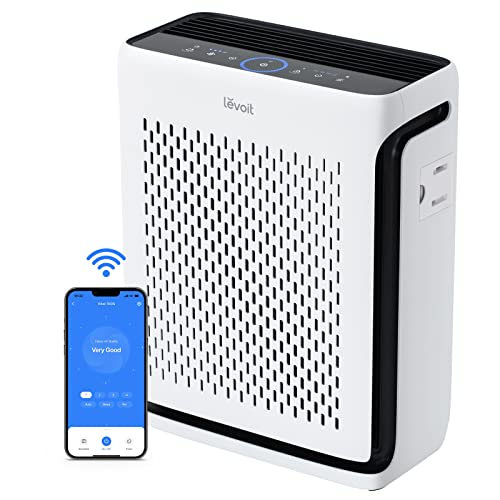
The finest fraction of household dust — fine dust and PM2.5 particulates that stay airborne longest and travel deepest into the lungs — is exactly what a purifier is best at removing. LEVOIT and Honeywell both build models tuned specifically for that fine fraction rather than the heavier, visible dust that settles quickly regardless of filtration.
What Filter Setup Matters Most: HEPA, True HEPA and Pre-Filter
A true HEPA filter behind a washable pre-filter. Dust is a heavy, high-volume load, and the pre-filter stops that load from blinding the expensive HEPA media within months.
Confirm the media is certified true HEPA or H13 rather than a "HEPA-type" substitute — that wording is where the real performance difference hides. Coway and Winix both clearly label true HEPA on their dust-focused units.
Activated carbon and air purifier basics
Activated carbon adds little for a purely dust-focused air purifier, since it targets odor rather than particles. Skipping it is a legitimate saving unless odor is also part of your complaint — it's a consumable layer with an ongoing cost and no return on a dust-only problem.
How Often Will the Filter Need Changing? CADR and Filter Replacement
Faster than the label suggests. Manufacturer schedules assume average conditions; homes near construction or under renovation can halve HEPA filter life, and filter replacement on the pre-filter needs attention every few weeks.
The clearest warning sign isn't the indicator light — most are timers, not sensors — but airflow and CADR performance quietly falling as a filter loads up.
Air changes per hour and square footage
Sizing follows the standard rule: a smoke CADR of roughly two-thirds the room's square footage, tested to AHAM standards, with extra headroom so the unit can hit that on a quiet mid speed. That headroom is what delivers enough air changes per hour to actually keep up in a dusty home, rather than just meeting the coverage claim on paper.
Can a Purifier Cope With Construction Dust?
It helps considerably but shouldn't be the only measure. Construction dust arrives in volumes far beyond what a consumer purifier is designed for, so sealing the work area and ventilating it outdoors does the heavy lifting.
During active work, plastic sheeting over doorways and a fan exhausting the zone outside protect the rest of the house, while the purifier runs in the adjacent room being protected.
Auto mode and air quality tracking
Auto mode uses the unit's own air quality sensor to ramp up automatically when dust spikes — useful during active renovation work, when dust levels swing throughout the day far more than they do in a normal household. The EPA's general guidance on source control, ventilation and filtration, in that order, applies directly here — see our guide to improving indoor air quality.
Where Should a Dust Purifier Go in a Room?
Where the dust is generated or where you spend the most time — usually the bedroom, since bedding, carpet and movement release particles all night. Keep intake faces at least a foot clear of walls and furniture so the unit can pull its rated airflow.
Corner placement is the most common self-inflicted performance loss in this category. Restricting intake cuts effective clean-air delivery no matter how good the filter is, and a purifier tucked behind a curtain or against a sofa can underperform its specification badly.
Does a Dust Purifier Help With Allergies?
Partly. It captures the airborne mite allergen particles stirred out of bedding and carpet, which is genuinely useful — but the mites and the bulk of their allergen live in fabric, where filtration can't reach them.
Washing bedding weekly in hot water and vacuuming with a sealed HEPA vacuum reduce the reservoir that feeds the airborne fraction. Humidity is the other lever for allergies, since dust mites depend on moisture and struggle below roughly 50% relative humidity — the ideal indoor humidity level guide covers the band worth targeting. If the room is large or open-plan, air purifiers for large rooms covers where the standard sizing math stops working.
Every recommendation in this category is built from aggregated real owner reviews and published manufacturer filtration specifications, never from buying and running units ourselves — see How We Rank for the full methodology.