
Affiliate Disclosure
Some links on this page are affiliate links. As an Amazon Associate, we earn from qualifying purchases — at no extra cost to you. We do not buy, test, or physically handle the products we cover; our rankings come from aggregated owner reviews, ratings and expert consensus. Commissions never change our verdicts. How we rank & full disclosure.
Some links below are affiliate links. As an Amazon Associate we earn from qualifying purchases at no extra cost to you. We do not buy, test or physically handle these units — our rankings come from aggregated owner reviews and manufacturer documentation, and a commission never changes them.
A car cabin is a small, sealed slice of your daily indoor climate, and it fills fast with traffic exhaust, new-interior VOCs, food smells and pet odor. The upside is that a small cabin has so little air volume that even a modest HEPA unit can make a real difference — this roundup suits commuters stuck in traffic, allergy sufferers, and anyone fighting a stubborn cabin smell. It is not for someone expecting a cupholder-size gadget to match a home purifier; car units are small by necessity, so treat them as maintenance for a compact space rather than heavy-duty air cleaning. Whether you're chasing down cigarette smoke that won't air out, protecting against allergens on a long commute, or just want the dashboard air to feel less stale, the right car air purifier is the one sized and filtered for the actual problem you have — not the one with the most features on the box.
Do car air purifiers actually work?
Yes, within limits. Because a car cabin holds so little air, a small true-HEPA unit can measurably cut dust, pollen and fumes over a commute. It will not instantly erase heavy smoke, and airflow is far lower than a home unit.
The honest picture from owner reviews is steady, background improvement rather than a dramatic before-and-after. A real HEPA filter captures the fine particles in exhaust and pollen, and a carbon layer handles odor, but the tiny fan means results build over minutes, not seconds. Owners who run the unit continuously and change filters on schedule report the best results; those expecting a strong smell to vanish immediately are usually disappointed.
HEPA, ionizer or charcoal bags — what should you get?
A true-HEPA unit for particles, ideally with carbon for odor. Passive charcoal bags are great for smell and moisture with no power. Be cautious with ionizer-only "purifiers," which can generate ozone in a sealed cabin.
Each type does a different job: HEPA physically traps particles, activated carbon and charcoal bags absorb odor and gases, and the two together cover most cabin complaints. The one category to approach carefully is ionizer or ozone-based devices, because producing ozone inside a small enclosed car is exactly where it is least desirable. Every powered unit above is built on a real filter rather than relying on ionization, and the charcoal bags are a safe, powerless complement. If you already own an ionizer-style unit, running it with the windows cracked occasionally is a reasonable compromise; for a sealed cabin during a long drive, a HEPA-and-carbon combination is simply the safer default.
How do you power and place a car purifier — cup holder or dashboard?
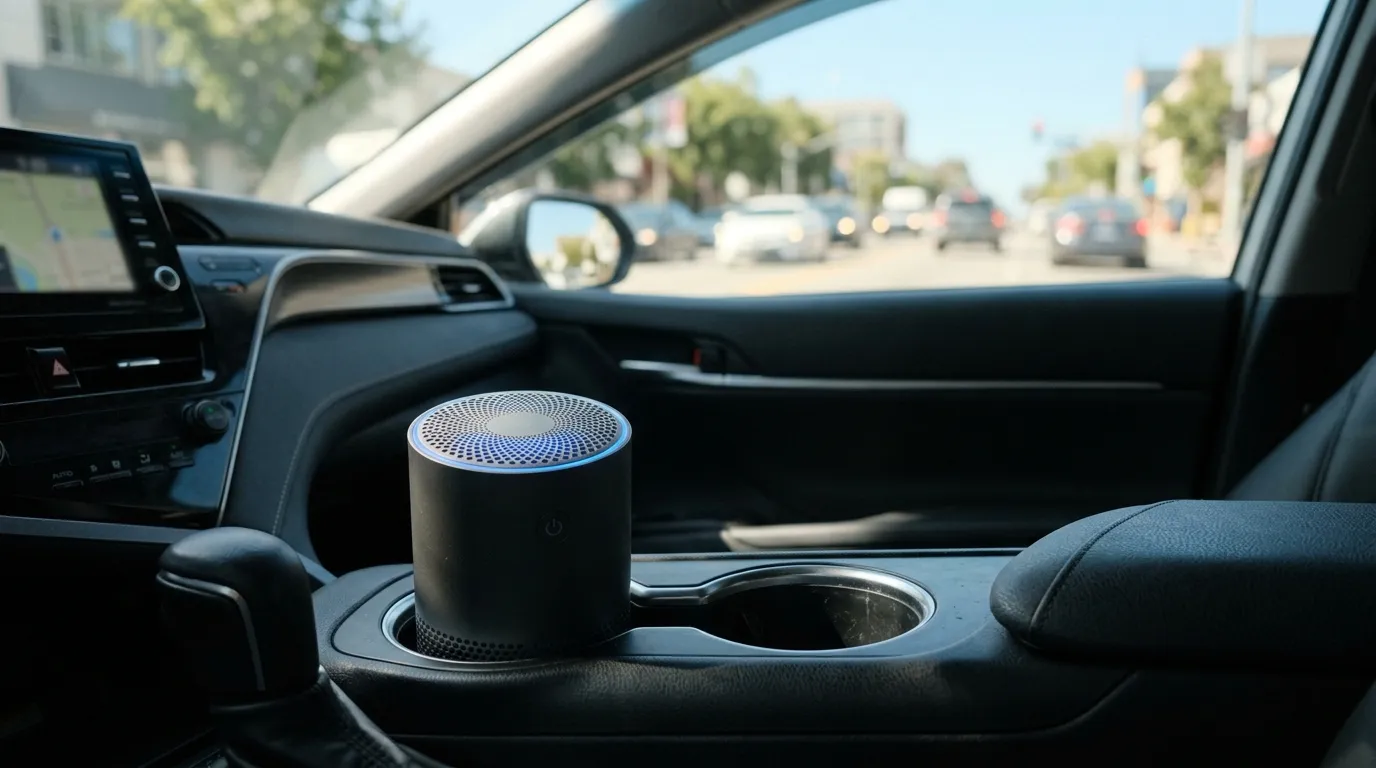
Most run off USB or a 12V socket; a few, like the PureZone Mini, are cordless and fully portable. A cup holder is the most common placement since it holds the unit upright with air moving around it; a dashboard or headrest mount works too, as long as the intake stays unobstructed.
Placement matters more than owners expect: a purifier tucked out of the airflow cleans very little, while one in the open near where you sit works as intended. A cup holder placement is popular precisely because it's built into every car and keeps the unit stable while driving. Cordless, portable units avoid a cable draped across the cabin, which is a common annoyance with plug-in dashboard models. Route any power cord so it cannot interfere with driving. The charcoal bags simply sit under a seat or on the parcel shelf and need no placement thought at all.
Does a car purifier help with cigarette smoke and allergens?
A true HEPA filter with an activated carbon stage measurably reduces cigarette smoke particles, PM2.5, and common allergens like pollen and pet dander in the small volume of a car cabin. It works faster here than in a house simply because there's so much less air to clean.
Cigarette smoke is one of the toughest tests for a car purifier, because it combines fine particles that HEPA traps with lingering odor that only activated carbon really addresses — a HEPA-only unit will pull the visible haze down but leave the smell behind. Allergens like pollen and pet dander track into a cabin on clothes and gear, and a purifier running continuously on a commute keeps PM2.5 levels lower than a car with no filtration running at all. Filter replacement matters more in a smoke-heavy or high-pollen car than a typical commute, since both saturate the carbon and HEPA media faster — checking the filter monthly rather than waiting for a schedule reminder is the safer habit for a heavily used cabin.
What do owners complain about most?
Low airflow, weak performance against strong odor, and fiddly cable placement. These are the realities of a car-size unit, not defects — the physics of a tiny fan and small filter set the ceiling.
The recurring theme is expectation-setting: owners who treat a car purifier as ongoing maintenance for a small cabin stay happy, while those expecting home-purifier power do not. Keeping the filter fresh, running the unit on the drive, and pairing a HEPA model with charcoal bags for odor is the setup that satisfies most people. For the bigger picture on filtration and ventilation, see our guide to improving indoor air quality.
How often should you replace the filter in a car purifier?
Most compact HEPA car filters need replacing every one to three months with daily use, sooner if you smoke in the car, commute in heavy traffic, or carry pets often. A filter left in too long stops trapping cigarette smoke and allergens effectively even though the fan keeps running.
Because a car unit's filter is small compared to a home purifier's, it saturates faster relative to how much air passes through it. Owners who set a recurring reminder tied to an oil change or a fixed monthly date report far more consistent odor and PM2.5 control than those who wait until performance visibly drops. A dirty filter doesn't just stop helping — restricted airflow through a clogged HEPA layer can also make the little fan work harder and run louder, which is one of the more common "this stopped working" complaints that turns out to be a simple filter replacement.

Best for a commuter who wants a trusted, genuinely portable unit
- True HEPA filtration in a cupholder-size body
- Cordless rechargeable battery for flexible placement
- Quiet enough to leave running on a commute
- From an established home air-purifier brand
Why buy it: Owners consistently report it takes the edge off traffic fumes and stale cabin air, and the cordless design avoids the dangling-cable annoyance of plug-in units. A common complaint is that its small filter is best for maintenance, not clearing heavy smoke fast.

Best for drivers who want the strongest filter grade in a car unit
- H13 True HEPA in a 3-in-1 filtration stack
- 360-degree air intake for the cabin
- One-touch operation with a compact footprint
- Carbon layer for exhaust and cabin odor
Why buy it: The consensus favors this one when filter grade matters most, since H13 media captures finer particles than a basic car filter. Owners report noticeable improvement in traffic. A common complaint is that any car-size unit has limited airflow, so give it time to work.

Best for cars with lingering smoke or food smells
- H13 HEPA plus an activated-carbon odor stage
- Aimed specifically at smoke and cabin odor
- USB powered for cupholder or console placement
- Compact, low-profile design
Why buy it: Owners report the carbon stage is what actually helps with smoke and takeout smells that a HEPA-only unit leaves behind. A common complaint is that the carbon saturates and needs replacing, so odor performance fades if you skip filter changes.
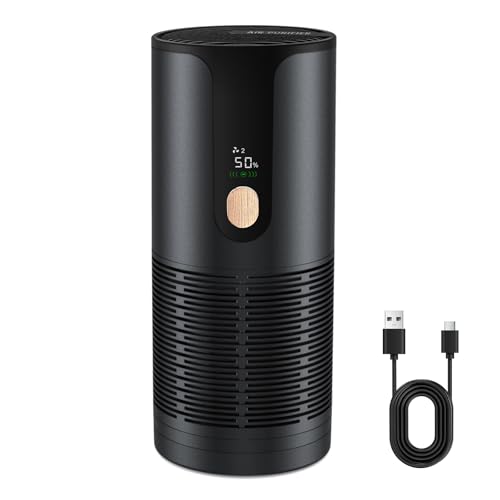
Best for a quiet, inexpensive everyday unit
- True HEPA 3-layer filtration
- Very quiet, around 15 dB on low
- Small enough for a desk or console
- Low price and modest filter cost
Why buy it: Owners consistently report it is a cheap, quiet way to keep everyday cabin air fresher, and it doubles as a small desk unit. A common complaint is that its tiny airflow means it is for maintenance in a small cabin, not clearing a strong odor quickly.

Best for drivers who want filtration plus a light scent
- True HEPA filter for dust and dander
- Built-in slot for a fragrance element
- Portable car-accessory form factor
- Simple one-button operation
Why buy it: Owners report the combination of a real filter and a subtle scent suits drivers who want the cabin to feel fresh, not just be filtered. A common complaint is that the fragrance is a matter of taste, so treat it as a bonus rather than the reason to buy.

Best for absorbing odor and moisture with no power at all
- Activated bamboo charcoal, no electricity needed
- Absorbs odor and excess moisture passively
- Reactivates in sunlight for reuse
- Set of four bags for a car or small spaces
Why buy it: The consensus is that these are a cheap, maintenance-free way to fight persistent odor and damp in a parked car, working quietly in the background. A common complaint is that they only absorb smells and moisture — they do not filter particles like a HEPA unit, so they complement one rather than replace it.
How we picked
We did not buy or run these units ourselves. Energy Efficient HVAC System ranks products from aggregated owner reviews, manufacturer specifications and the recurring complaint patterns that surface in real cabins — genuine filter grade, honest airflow, odor control and placement. We favored true-HEPA units, flagged carbon for odor, and included a passive charcoal option, while steering away from ozone-producing gadgets in an enclosed car. Pure Enrichment leads this list, and LEVOIT, Philips, and FRiEQ are other names worth cross-checking if you want more portable options at different price points. Compare the wider field on the car air purifiers hub, browse the air purification section for the whole-home picture, and read How We Rank for the method.