
Affiliate Disclosure
Some links on this page are affiliate links. As an Amazon Associate, we earn from qualifying purchases — at no extra cost to you. We do not buy, test, or physically handle the products we cover; our rankings come from aggregated owner reviews, ratings and expert consensus. Commissions never change our verdicts. How we rank & full disclosure.
Some links below are affiliate links. As an Amazon Associate we earn from qualifying purchases at no extra cost to you. We do not buy, test or physically handle these products — our rankings come from aggregated owner reviews and manufacturer documentation, and a commission never changes them.
A replacement filter is the quiet running cost behind your indoor climate. An air purifier only cleans air as well as the media inside it, and a clogged or degraded filter slowly turns a good machine into an expensive fan. This roundup suits owners of the most common purifier lines who want the right filter without guesswork. The single most important rule is that filters are model-specific. Buy the exact compatible part for your purifier, not the closest-looking one. If you're unsure which filter your unit takes, check the model number on the back before ordering anything below.
How do I find the right replacement HEPA filter?
Match it to your purifier's exact model number, which is printed on the unit and in its manual. Filters are shaped for a specific housing, so the correct compatible part is defined by your machine, not by size or looks.
Genuine, compatible and correct fit
Every filter above is tied to a named purifier line — Levoit Core 300, Honeywell HPA, Coway Airmega, Winix C545, GermGuardian AC-series — because that's how filters are actually sold. Owners consistently report that the biggest ordering mistake is buying a filter that looks similar but is built for a different model. It then fits poorly or restricts airflow. Confirm the model number first, and the right filter follows directly from it.
Genuine, OEM, or aftermarket HEPA filters — does it matter?
Often yes. Genuine, OEM (original equipment manufacturer) filters guarantee the fit, seal and airflow the purifier was designed around. Good compatible aftermarket filters exist, but the risk is a loose seal or an overstated "HEPA" grade that lets air bypass the media.
True HEPA grade and airflow
The recurring complaint pattern with cheap third-party filters is airflow. A filter that doesn't seat tightly lets unfiltered air slip past the edges, so the purifier looks like it's running while capturing far fewer particulates. That's why the picks above lean toward genuine OEM parts for the popular lines. If you do choose a compatible aftermarket filter, owners advise verifying it's true HEPA and confirming a snug fit, rather than assuming a lower price means the same performance.
What's the difference between the HEPA layer and the carbon filter?
The HEPA layer traps particulates — dust, pollen, pet dander and other allergens; a separate activated carbon filter layer absorbs odors and VOC gases that HEPA media physically can't capture. Most replacement cartridges combine both in one unit.
Activated carbon for odor and VOC
These two jobs are genuinely different, which is why nearly every filter above pairs a HEPA stage with an activated carbon layer rather than shipping just one. The carbon filter is what handles cooking smells, pet odor, and general household VOC buildup.
Particulates and allergens
The HEPA layer is what handles the particulates and allergens that trigger allergies and asthma. When a purifier "still smells" after a filter change, it's almost always the carbon side that was actually due for replacement, even if the HEPA still looked clean.
How often should you replace a HEPA filter?
Most true HEPA filters last 6 to 12 months, sooner in homes with pets, smoke or heavy dust. The activated carbon layer fades faster than the HEPA, so odor control often drops before particle capture does.
Filter life and pre-filter maintenance
Manufacturer intervals assume average conditions, so treat them as a starting point rather than a rule. A home with shedding pets or wildfire seasons will go through filters faster and need filter replacement more often than the box suggests. The cheapest way to stretch filter life is to clean or rinse the pre-filter regularly, since it stops the expensive HEPA from clogging with hair and lint.
CADR and air purifier performance
When odor starts creeping back before the change light comes on, that's usually the carbon telling you it's done. A purifier's published CADR rating also assumes a fresh filter — a clogged one quietly drags real-world air purifier performance well below the number on the box.
What do owners complain about most?
Aftermarket filters that fit loosely, "HEPA" grades that don't match the real thing, and carbon that saturates long before the HEPA. Buying the correct genuine or verified-compatible part for your model avoids most of these.
The theme across reviews is that a filter is only as good as its seal and its media. Cutting corners on either undermines the air purifier you already paid for. Owners who match the exact genuine filter to their unit, and stay on top of filter replacement, report the fewest problems. For where filter maintenance fits alongside ventilation and source control, see our guide to improving indoor air quality.
How much should a replacement filter cost?
Genuine OEM filters for popular models typically run somewhere between a modest single-filter price and a noticeably higher one for multi-packs or premium combined cartridges, while compatible aftermarket versions usually undercut the genuine price by a meaningful margin — sometimes for a real reason, sometimes not.
Filter replacement cost and air quality payoff
A lower price on a compatible filter isn't automatically a red flag. Several well-reviewed aftermarket brands genuinely match OEM performance for less. The pattern worth watching for in reviews is a compatible filter priced dramatically below every other option for the same model. That gap is where corners tend to get cut, usually in carbon quantity or how tightly the filter seats in the housing. Buying a multi-pack of genuine or verified-compatible filters at once, rather than one at a time, is the most common way owners report lowering their real per-filter running cost without gambling on fit — and it protects the air quality payoff you bought the purifier for in the first place.
How do you know a filter actually needs replacing?
A returning smell, a rise in your purifier's PM2.5 or air quality reading despite normal use, or a visibly gray, matted pre-filter are all more reliable signals than a generic countdown timer, which just estimates based on average conditions.
Purifiers with a built-in air quality sensor make this easy. If the reading climbs even though nothing in the room changed, the filter is losing capacity. Without a sensor, trust your nose for the carbon side and a visual check for the HEPA and pre-filter side. A HEPA filter that's visibly gray, or has a flattened, compressed look, has lost meaningful surface area for trapping particulates and allergens. Waiting for a filter to fail completely before replacing it means running weeks or months of noticeably worse air quality without realizing it.
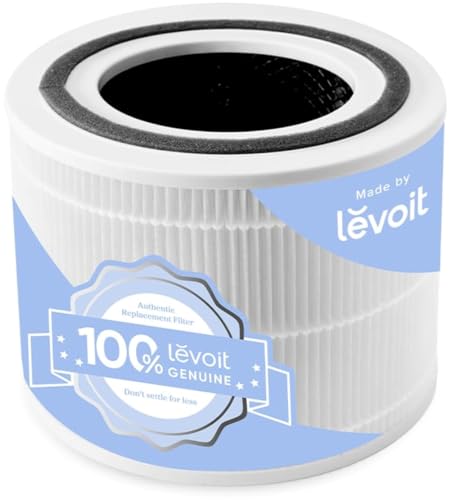
Best for owners of the Levoit Core 300 and 300S
- Genuine Levoit filter for the Core 300 and Core 300S
- 3-in-1: pre-filter, True HEPA and activated carbon
- Guaranteed fit and rated airflow for the unit
- Typical replacement every 6 to 12 months
Why buy it: The consensus favors the genuine filter for one of the most popular purifiers sold, because owners consistently report aftermarket versions that fit loosely or restrict airflow. A common complaint elsewhere is a weak seal, which the genuine part avoids.

Best for owners of the Honeywell HPA100, HPA200 and HPA300
- Genuine Honeywell Filter R (HRF-R) HEPA media
- Fits the HPA100, HPA200 and HPA300 tower series
- Three filters for a lower cost per replacement
- True HEPA capture for the Honeywell line
Why buy it: Owners consistently report buying the multipack is the cheapest honest way to keep a Honeywell tower running, since these units use several filters at once. A common complaint is forgetting the separate carbon pre-filter, which wears out faster.

Best for owners of the Coway Airmega AP-1512HH and 200M
- Replacement set for the Airmega AP-1512HH and 200M
- Includes True HEPA plus a carbon deodorization layer
- Sized precisely for the Airmega housing
- Typical life of 6 to 12 months
Why buy it: Owners report the correct Airmega set restores airflow and odor control the moment a clogged filter is swapped out. A common complaint with generic alternatives is a poor fit against the Airmega seal, so matching the exact model set matters here.

Best for owners of the Winix C545 PlasmaWave
- Filter S replacement for the Winix C545 PlasmaWave
- True HEPA with an activated-carbon layer
- Designed to seat correctly in the C545 tray
- Washable pre-filter is separate on this model
Why buy it: Owners consistently report the model-specific Filter S drops in cleanly and brings back the C545 rated performance. A common complaint is people buying the wrong Winix filter number, so confirm your purifier uses Filter S before ordering.
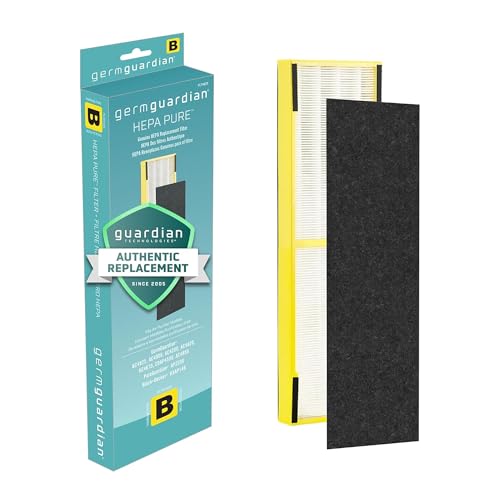
Best for owners of the GermGuardian AC4825 and related towers
- Genuine GermGuardian Filter B HEPA media
- Fits AC4825, AC4300, AC4850 and related models
- Combined HEPA and charcoal in one cartridge
- Typical replacement every 6 to 8 months
Why buy it: Owners report the genuine Filter B restores both particle capture and odor control on these common towers, and its combined design keeps replacement simple. A common complaint with cheap copies is charcoal that saturates quickly, so odor returns sooner.
How we picked
We did not buy or test these filters ourselves. Energy Efficient HVAC System ranks products from aggregated owner reviews, manufacturer documentation and the recurring complaint patterns that surface once a filter is installed: fit, seal, genuine HEPA grade and honest filter life. We prioritized genuine OEM or verified-compatible filters for the most common purifier lines, because fit and airflow are exactly where cheap alternatives fail. Compare the wider field on the replacement HEPA filters hub, browse the air purification section for the whole-home picture, and read How We Rank for the method.