


Affiliate Disclosure
Some links on this page are affiliate links. As an Amazon Associate, we earn from qualifying purchases — at no extra cost to you. We do not buy, test, or physically handle the products we cover; our rankings come from aggregated owner reviews, ratings and expert consensus. Commissions never change our verdicts. How we rank & full disclosure.
Filters are where the true cost of an air purifier lives, and where most of its performance quietly disappears. A machine with an excellent CADR rating and a loaded filter is not an excellent machine any more — it is a noisy fan. This category is about keeping a purifier you already own performing the way it did in its first week, and about the buying decision most people only think about a year too late.
How often should a HEPA filter actually be replaced?
Manufacturers typically specify a filter life of six to twelve months for HEPA media and three to six for carbon, but those figures assume average conditions. Homes with pets, smokers, heavy dust or a wildfire season run through filters considerably faster than the schedule on the box.
Filter life, particulates and airflow resistance
The useful signal is airflow, not the calendar. As a filter loads with particulates, resistance rises, the fan works harder for less clean-air delivery, and the unit gets louder at the same speed setting. If a purifier that used to feel effective on a middle setting now needs to run high to do the same job, the filter is telling you something regardless of what the schedule says.
It is worth knowing that filter-change indicators on most consumer purifiers are hour counters, not sensors. They measure how long the fan has run, not how loaded the media is — which means they can be optimistic in a dusty home and pessimistic in a clean one. Treat the indicator as a reminder to inspect, not as a measurement of true filter life remaining.
Can you clean a HEPA filter instead of replacing it?
No — not a true HEPA filter. Washing or vacuuming the pleated media damages the fine fiber structure that gives it its efficiency, and moisture can promote microbial growth inside the filter. Only pre-filters are designed to be cleaned and reused.
Pre-filter maintenance vs true HEPA washing
This is one of the most common and most costly pieces of bad advice circulating about air purifiers. HEPA media captures particles partly through a delicate arrangement of fibers, and in many designs through an electrostatic charge applied during manufacture. Water strips that charge and physically disturbs the fibers, so a washed filter can look perfectly clean and perform far worse than it did before. A handful of specifically marketed washable filters exist, but they are not true HEPA and should not be treated as equivalent.
The pre-filter is the opposite case and the best maintenance habit available. It is usually a washable mesh or foam screen that catches hair and large debris, and vacuuming or rinsing it monthly meaningfully extends the life of the expensive HEPA filter behind it. In pet or high-dust homes it deserves attention every couple of weeks.
If you do rinse a pre-filter, let it dry completely before reinstalling it. Putting a damp screen back into a machine that is about to run continuously creates exactly the warm, humid conditions that encourage microbial growth inside the housing — and a musty smell coming out of a purifier is a problem no filter behind it can fix.
Are third-party filter replacement options worth buying?
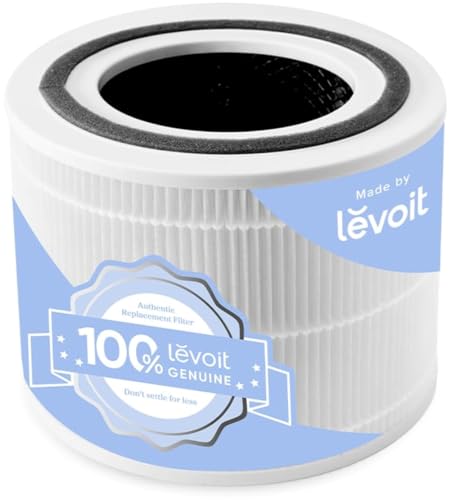
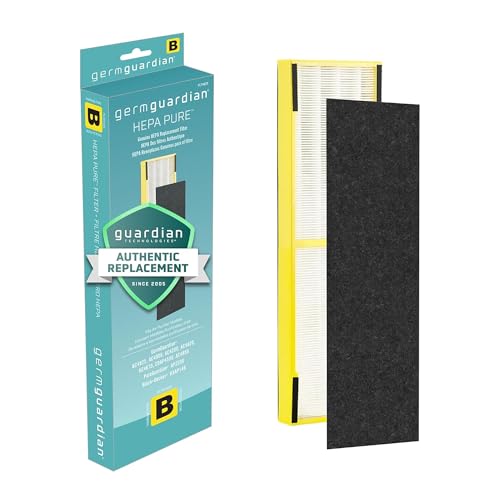
Sometimes, with care. Genuine filters guarantee fit and certified media; compatible third-party filters can cost far less and many perform well. The risks are poor sealing around the frame and media that is described as "HEPA" without actually being certified.
Genuine, compatible and OEM fit
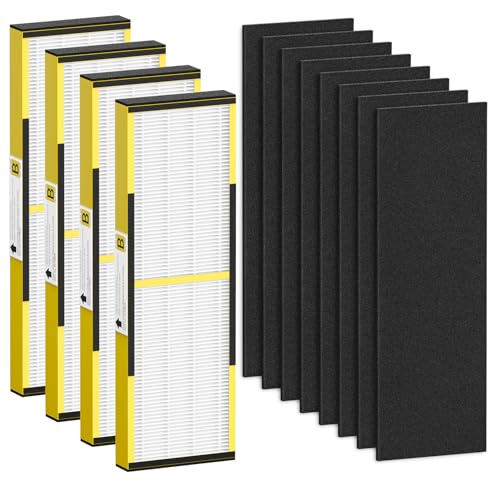
Fit matters more than most buyers expect. A filter that does not seal properly against its OEM housing lets air bypass the media entirely — and bypassed air is unfiltered air, no matter how good the material it went around. Recurring owner complaints about compatible third-party filters cluster around frames a few millimetres off, gaskets that do not compress, and filter doors that will not quite close.
The media claim is the second thing to check. "True HEPA" and "H13" are specific, meaningful designations; "HEPA-type", "HEPA-style" and "99% efficient" are not, and the difference is exactly the one covered in our true HEPA filter explainer. A cheap third-party filter that is genuinely certified and fits correctly is good value; one that is neither is a downgrade you paid for.
Why does filter cost decide which purifier to buy?
Because it usually exceeds the purchase price over a few years. A modestly priced unit with expensive proprietary filters can cost more to own across three years than a pricier machine with affordable, widely available replacements — so the sensible comparison is machine plus filters, not machine alone.
CADR capacity and carbon filter cost
Working this out takes about two minutes and prevents the most common long-term regret in air purification. Look up the replacement filter price, multiply by how many sets a year the schedule calls for, multiply by three, and add the purchase price. A higher CADR rating often means a physically larger, pricier carbon filter with more activated carbon inside it, so two units with similar CADR numbers can still land far apart on ownership cost. Do that math for each model you are comparing and the ranking frequently changes — sometimes dramatically.
Availability is the other half of the calculation. Filters for discontinued models get scarce and expensive, which can strand an otherwise good machine. Widely sold, long-running models from LEVOIT, Coway, Winix and Honeywell tend to have healthier replacement markets, and that alone is a legitimate reason to prefer them. This is a point worth weighing before you buy anything from the air purifiers hub, not after.
What happens if you just never change the filter?
Clean-air delivery falls steadily, the fan strains and gets louder, and energy use rises for less benefit. A badly loaded filter can also restrict airflow enough that the purifier is doing almost nothing while appearing to run normally.
The failure is gradual and easy to miss, which is precisely why it is so common. Nothing breaks, no warning appears, and the room simply stops feeling as fresh as it used to. Owners describe the same realization repeatedly — that a purifier they assumed was working had been effectively idling for months behind a grey, clogged filter, no longer trapping allergens the way it did when new.
VOC, odor and air quality decline
There is a second reason not to let it go indefinitely. A saturated activated carbon stage stops adsorbing odor and VOC molecules entirely once its surface area is full, and heavily loaded media in a humid environment is not somewhere you want air passing through continuously. Replacing on time is cheaper than replacing the machine, and far cheaper than running one that is no longer contributing to your home's indoor air quality at all.
How do you find the right replacement HEPA filter for your purifier?
Work from the model number on the unit itself, not from the name on the box or the listing you originally bought from. Manufacturers frequently sell visually identical machines under several model codes, and a filter that is a few millimetres off will not seal.
Allergens and model number lookup
Getting the model number right matters most for allergens: a filter that seals correctly is the only kind that actually stops pollen and dander from bypassing the media, whatever its box claims.
The model number is usually on a sticker on the base or the back panel, and it is worth photographing it before you go looking. Filter part numbers are often printed on the frame of the filter currently installed, which is the most reliable identifier of all — one glance inside the machine settles what would otherwise be a guess across a page of near-identical listings.
Be particularly careful with combined filter assemblies. Some purifiers use a single cartridge that bundles pre-filter, HEPA and carbon into one replaceable unit, while others separate them so each can be changed on its own schedule. They are not interchangeable, and ordering the wrong type is one of the most common returns in this category. Checking which arrangement your machine uses before ordering saves both the cost and the weeks of degraded performance while you wait for the right part.
Every recommendation in this category is built from aggregated real owner reviews and published manufacturer filtration specifications, never from buying and running filters ourselves — see How We Rank for the full methodology.