
Affiliate Disclosure
Some links on this page are affiliate links. As an Amazon Associate, we earn from qualifying purchases — at no extra cost to you. We do not buy, test, or physically handle the products we cover; our rankings come from aggregated owner reviews, ratings and expert consensus. Commissions never change our verdicts. How we rank & full disclosure.
Some links below are affiliate links. As an Amazon Associate we earn from qualifying purchases at no extra cost to you. We do not buy, test or physically handle these units — our rankings come from aggregated owner reviews and manufacturer documentation, and a commission never changes them.
UV and ozone devices are the specialist end of your indoor climate options. They are not interchangeable. UV-C uses light to reduce microbes and can be built completely ozone-free. Ozone generators oxidize odor but produce ozone, a respiratory irritant, so they're for unoccupied rooms only.
This roundup suits people who want germicidal UV-C added to real HEPA filtration, or an occasional ozone tool for empty-room odor jobs. If your goal is simply cleaner air for allergies, dust or everyday odor, a straightforward HEPA-and-carbon purifier is cheaper and simpler. UV and ozone are add-ons for specific jobs, not upgrades everyone needs.
What is photocatalytic and ionizer technology, and how do they compare to HEPA?
Photocatalytic oxidation pairs UV-C light with a catalyst-coated surface to break down VOCs and odors at a molecular level. That goes further than a plain carbon filter. An ionizer releases charged particles that make dust, mold spores and other airborne debris clump together and fall faster. It works alongside HEPA filtration, not instead of it.
None of these substitute for HEPA when the goal is trapping physical particles. Think of photocatalytic and ionizer stages as extra air treatment layers, aimed at what a filter alone misses — gaseous VOCs, lingering odor, and airborne bacteria or virus particles too fine for a mesh filter to catch reliably.
A germicidal UV-C light stage adds a third layer, aimed specifically at inactivating microbes as they pass through. That's why the strongest all-round units combine HEPA, carbon and UV-C, rather than leaning on any single technology to sanitize a room alone.
VOCs, mold spores and airborne bacteria
Photocatalytic oxidation breaks down VOCs at a molecular level. An ionizer clumps mold spores and dust so they fall out of the air faster. Neither replaces HEPA for trapping bacteria-sized particles directly.
How big a space can a UV or ozone purifier treat, and what does odor removal actually do?
Match the unit's rated square footage to the room, same as any air purifier. Undersizing is why a UV air purifier seems to do nothing in a large open room. Odor removal from an ozone generator works by oxidizing odor molecules directly. That's more aggressive than carbon filtration, but it requires an unoccupied room to use safely.
The EPA and California's CARB both publish guidance around ozone-generating devices. CARB specifically restricts the sale of air cleaning devices that produce ozone above a set limit in California, so check that if you live there.
For everyday occupied-room air quality, stick to the ozone-free UV-C and HEPA combination. Reserve an ozone generator strictly for the empty-room, timer-controlled odor removal job it's actually built for.
Square footage and unoccupied room sizing
Match rated square footage to the room, same as any air purifier. An oversized ozone job in an unoccupied room clears odor faster than an undersized one struggling to keep up.
What is the difference between UV and ozone purifiers?
UV-C uses ultraviolet light to inactivate microbes and can be made ozone-free, safe for occupied rooms. Ozone generators create ozone to oxidize odor, which works but is only safe in an empty room. They solve different problems.
The confusion is understandable — both get marketed as "purifiers." But the safe everyday tool is a HEPA unit with an ozone-free UV-C stage, like the GermGuardian pick here. Ozone generators are a periodic remediation tool for smells nothing else clears, used strictly in vacated spaces.
Knowing which one you actually need is the whole decision. For most homes, the answer leans toward the UV-plus-HEPA side, not the ozone side.
UV-C light vs ozone: germicidal or oxidizing?
UV-C light works by germicidal action — it disrupts microbes' DNA as they pass through. Ozone works by oxidizing odor molecules directly. One sanitizes air passing through a chamber; the other treats a whole empty room.
Are UV air purifiers safe?
A HEPA purifier with an enclosed, ozone-free UV-C stage is safe for continuous use. The light is sealed inside, and the unit is verified not to produce ozone. Ozone generators are a separate category, safe only in unoccupied rooms.
The key phrase to look for is "ozone-free" or "Zero Ozone Verified." Some cheaper UV gadgets emit ozone as a byproduct, and you don't want that in a room you occupy. The units featured here keep the UV-C enclosed and ozone-free, precisely so they can run around people.
Direct UV-C exposure to skin and eyes should always be avoided. That's why reputable units enclose the lamp inside the airflow path.
Virus, bacteria and sanitize claims
Marketing often claims a UV stage will sanitize away virus and bacteria particles. Real germicidal effect depends on exposure time and lamp strength, not just having a UV bulb inside.
Do you actually need UV or ozone?
Most homes do not. For allergies, dust and everyday odor, a HEPA-and-carbon purifier handles the job. UV-C is a modest add-on for germ reduction; ozone is reserved for deep, one-off odor remediation in empty rooms.
The honest read from owner reviews: people are happiest when they match the tool to a real need, rather than buying UV or ozone for its own sake. If you want particle and allergen filtering, a plain HEPA unit is simpler and cheaper.
Choose UV-C when germicidal light genuinely matters to you. Choose an ozone generator only when you have a specific, severe odor to treat in a space you can vacate.
Air treatment and air quality expectations
UV and ozone are add-on air treatment layers, not a replacement for filtration. Most everyday air quality problems are solved by HEPA and carbon alone, before UV or ozone enter the picture.
What do owners complain about most?
That the UV benefit is hard to perceive, that some cheap "UV" units emit ozone, and that ozone generators get misused in occupied rooms. Matching the right device to the right job resolves nearly all of it.
The recurring theme is expectation and safety. UV-C is a quiet add-on, not a dramatic upgrade. Ozone-free labeling matters, and ozone generators demand discipline — empty room, timer, ventilate before returning.
Owners who understand those boundaries report good results. Those who blur them do not. For safe, everyday air quality built on filtration and ventilation, see our guide to improving indoor air quality.
How do you safely run an ozone generator's odor removal cycle?
Clear the room of people, pets and plants. Set the timer for the manufacturer's recommended duration, leave, and ventilate the space thoroughly before anyone returns. Never run an ozone generator continuously in a lived-in room. Never rely on a fan or open door to make it "safe enough" to stay while it runs.
The timer is the safety feature that matters most here. Every ozone unit in this roundup ships with one, specifically so you can't accidentally leave it running unattended in an occupied space.
After the cycle finishes, give the room time to air out. Ozone breaks down on its own over roughly 30 minutes to a few hours, depending on ventilation, so don't walk straight back in the moment the timer clicks off. This routine is what separates safe, effective odor removal from the misuse that gives ozone generators a bad reputation.

Best for safe everyday UV-C plus real HEPA filtration
- True HEPA filtration rated up to roughly 1,760 sq ft
- UV-C stage that is Zero Ozone Verified
- Activated-carbon layer for everyday odor
- Safe for continuous use in an occupied room
Why buy it: The consensus favors this one as the sensible way to add UV-C without the ozone worry, because it pairs germicidal light with genuine HEPA in a unit you can run all day. Owners report it as a set-and-forget purifier. A common complaint is that the UV benefit is hard to perceive next to the HEPA.

Best for surface and coil disinfection without producing ozone
- High-output UV-C that is specified ozone-free
- Remote control with three timer settings
- Aimed at surface and room disinfection
- Use per instructions, away from direct exposure
Why buy it: Owners report it is a straightforward UV-C tool for disinfecting a room or coil without the ozone smell that cheaper UV gadgets produce. A common complaint is that UV-C is a line-of-sight tool, so it treats what the light reaches rather than continuously cleaning circulating air.
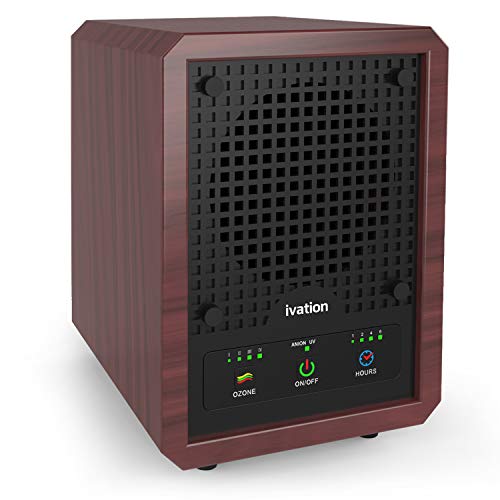
Best for everyday filtering plus optional empty-room ozone
- UV and activated-carbon stages for daily use
- Switchable ozone mode for unoccupied rooms
- Timer so ozone runs with no one present
- Ozone mode is for empty spaces only
Why buy it: Owners report the appeal is flexibility: filter and freshen while you are there, then switch to ozone for a deep treatment when the room is empty. A common complaint is people leaving ozone on while occupied — it should not be; the mode is strictly for a vacated room.

Best for a large space wanting HEPA, UV-C and an ozone option
- Six-stage system rated for up to roughly 3,000 sq ft
- True HEPA and UV-C for occupied everyday use
- Separate, switchable ozone mode for empty rooms
- High coverage for a basement or great room
Why buy it: The consensus favors this one for a large space that wants everything in a single cabinet, using HEPA and UV-C day to day and ozone only when vacated. Owners value the flexibility. A common complaint is the size and price for what is a specialized combination unit.

Best for occasional UV and empty-room ozone on a budget
- UV lamp with a switchable ozone mode
- Three-gear timer and remote control
- For unoccupied rooms during ozone use
- Low price for infrequent jobs
Why buy it: Owners report it is a cheap way to occasionally disinfect or deodorize a spare room, closet or basement, with the timer making empty-room use simple. A common complaint is that budget UV and ozone units are less durable, so treat it as an occasional tool, not a daily purifier.

Best for heavy odor remediation in empty rooms and vehicles
- High ozone output for deep odor oxidation
- For unoccupied spaces only — no people, pets or plants
- Timer for hands-off, room-empty operation
- Not a continuous or occupied-room air cleaner
Why buy it: Owners doing serious remediation report high-output ozone clears odors nothing else touched, used strictly in empty rooms and ventilated afterward. A common complaint is misuse: this is a periodic treatment tool, never something to run where people are present.
How we picked
We did not buy or run these units ourselves. Energy Efficient HVAC System ranks products from aggregated owner reviews, manufacturer documentation and the recurring complaint patterns that surface in real use — genuine HEPA grade, ozone-free verification for occupied-room UV, and honest, timer-controlled ozone for empty-room jobs.
Beyond the picks above, other names that turn up often in this category include Germ Guardian, Enerzen, Airthereal and AiroDoctor. They span both the everyday HEPA-plus-UV-C side and the dedicated empty-room ozone side. We led with the safest everyday options and clearly separated the ozone tools meant only for vacated spaces.
Compare the wider field on the UV and ozone purifiers hub, or browse the air purification section for the whole-home picture. Read How We Rank for the method.