

Affiliate Disclosure
Some links on this page are affiliate links. As an Amazon Associate, we earn from qualifying purchases — at no extra cost to you. We do not buy, test, or physically handle the products we cover; our rankings come from aggregated owner reviews, ratings and expert consensus. Commissions never change our verdicts. How we rank & full disclosure.
Some links below are affiliate links. If you buy through one, Energy Efficient HVAC System may earn a commission at no extra cost to you. It never changes which products we recommend or where they rank.
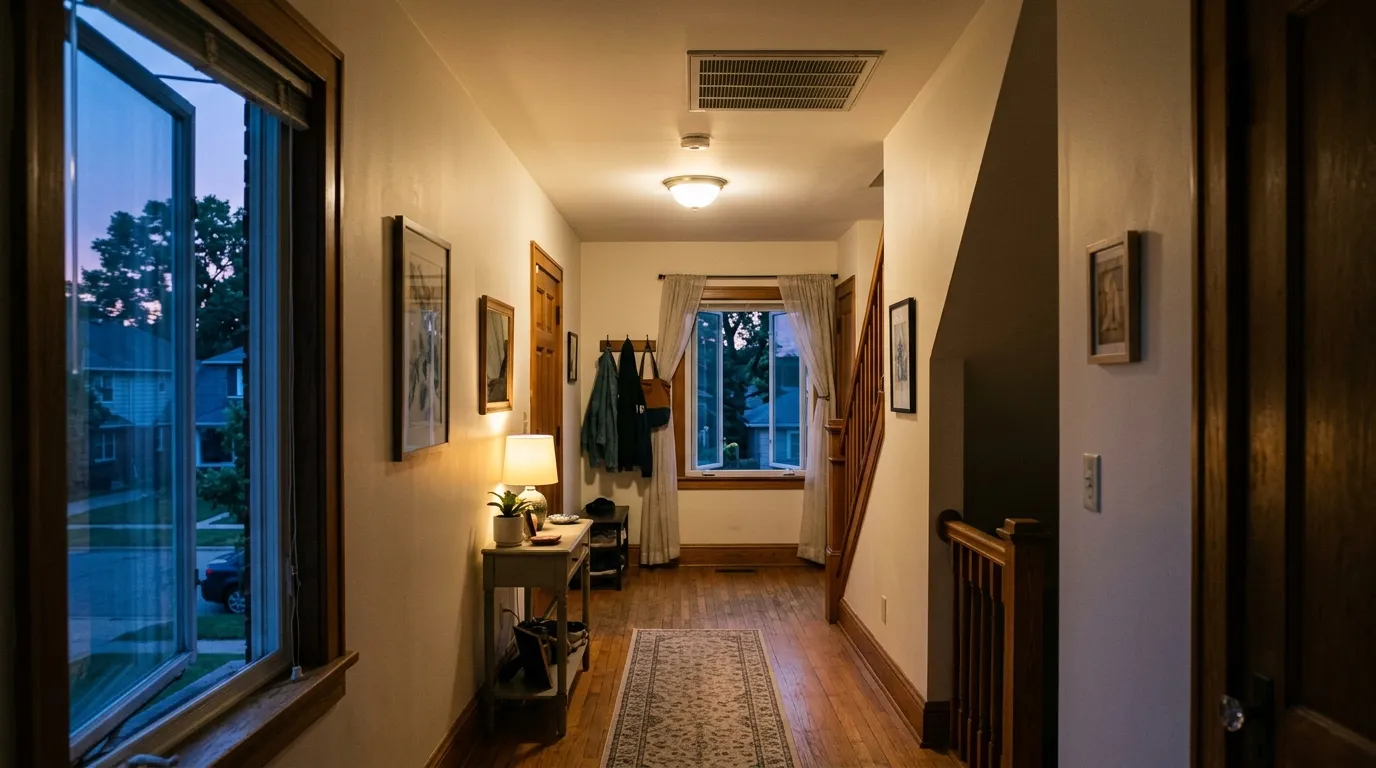
A whole house fan is the most powerful lever most homeowners can pull on their indoor climate, without running air conditioning. With ceiling mount installation in the hallway, it pulls a cool-air intake through open windows. It pushes the day's built-up heat out through the attic, flushing the whole house in minutes during a hot summer. It only works when the outside air is cooler than the inside. That makes it a genuine game-changer in dry climates with cool nights, and close to useless in a hot, humid region where the night air never drops. If your summer evenings cool off, a whole house fan can replace hours of AC for a fraction of the electricity and running cost. If they don't, buy air conditioning instead. Below are the models owners rate most consistently, sized by home.
The concept is simple enough that people are sometimes surprised it works as well as it does. Open a few windows on the cool side of the house, run the fan, and it depressurizes the living space. That's just enough that outdoor air gets pulled in as intake through every gap and open window, while the hot attic air gets pushed out through the roof or gable vents. A central AC system cools the same air over and over, fighting the heat that's already trapped inside. A whole house fan just replaces that trapped hot air with fresh, already-cooler air from outside — a fundamentally cheaper problem to solve on the right night. It won't dehumidify like an AC does, though, so a muggy climate blunts the effect even when the temperature has dropped.
What size whole house fan do you need, and how does attic ventilation factor in?
Match airflow in CFM (cubic feet per minute) to your home's square footage. The common rule is enough CFM for two to three full air exchanges an hour. Undersizing leaves rooms stuffy. Oversizing overwhelms your attic ventilation and gets loud.
CFM, cubic feet and square footage
Manufacturers publish a coverage figure in square feet for each model, which is the simplest way to size. The mistake owners regret most is buying the biggest fan they can afford. A fan moving more cubic feet of air than your attic vents can exhaust becomes loud and inefficient.
As a rule of thumb, take your home's square footage and multiply by 3 to 4. That gives a target CFM for a fan completing roughly two air exchanges an hour. A 2,000 sq ft single-story home lands around 6,000 to 8,000 CFM for fast, aggressive flushing, or closer to 4,000 to 5,000 CFM for a gentler two-speed unit run mostly on low. Two-story homes, and homes with unusually leaky or unusually tight envelopes, shift that number in either direction. That's why the product-specific square footage rating from the manufacturer, not a generic formula, should be the final word.
Attic ventilation: gable and intake vents
Attic ventilation is the other half of the equation. Gable vents, ridge vents, and soffit intake vents all need enough combined net free area to match the fan's CFM, or the air has nowhere to go. Size the fan to the home first, then confirm your attic's gable and soffit venting can keep up.
How much does a whole house fan actually save, and is it energy efficient?
In a climate with cool summer nights, owners routinely report running the fan instead of AC on most evenings. An energy efficient whole house fan draws a fraction of the wattage of central air. The exact running cost saving depends on your electricity rate and how cool your nights get.
Running cost across a summer
We won't invent a dollar figure that won't hold across different homes and utility rates. The pattern in owner reports is consistent, though. A fan pulling 75 to 250 watts, versus a central AC pulling several thousand, is not a close contest on the nights the outside air cooperates.
Two-speed models and air exchange
The Energy Saver models above lean hardest into that running cost saving. Both run two-speed operation and are certified through HVI (Home Ventilating Institute) airflow testing — the independent body that verifies a manufacturer's CFM and air exchange claims, rather than taking them at face value.
How loud are they, and does ducted design matter?
Traditional attic-mounted fans are notoriously loud. Modern ducted designs that isolate the motor from the ceiling grille run much quieter. If noise is a concern, the ducted, insulated damper style is the one owners recommend.
Cooling season exhaust airflow
The single biggest driver of satisfaction in reviews is noise, and it tracks the design more than the brand. Ducted fans hang the motor in the attic on flexible duct, so the grille at the ceiling mount stays quiet. Older direct-mount box fans vibrate the ceiling itself as they exhaust hot air. Nearly every quiet-fan recommendation from owners points back to that ducted layout — the same reason QuietCool built its name in the cooling category.
What do installers and owners warn about?
The two recurring warnings are inadequate attic ventilation, which chokes airflow and adds noise, and winter heat loss through an uninsulated damper. Buy a model with an insulated damper that seals, and confirm your attic can exhaust the air it moves.
Insulated damper and ceiling mount installation
A whole house fan is only as good as the attic it exhausts into. Without enough vent area, even a strong fan underperforms and gets loud. The second issue is off-season: a fan without a properly insulated damper leaks conditioned air all winter, undoing any energy efficient gains from summer. The models above use insulated, self-sealing dampers to close off the ceiling mount opening completely once installation is done and the fan shuts down for the season.
How does QuietCool compare to Air Vent, Cool Attic, and Tamarack?
QuietCool built its reputation on the quiet, ducted, insulated-damper design that dominates this list; Air Vent and Cool Attic are longer-established names in traditional direct-mount attic fans, while Tamarack focuses on whole-home fresh-air ventilation systems adjacent to the category.
If louder, direct-mount operation and a lower price matter more than noise, Air Vent and Cool Attic remain common choices. They suit a garage or workshop-adjacent install, where the ceiling-mount grille isn't sitting over a living space. Tamarack's whole-home ventilation line solves a related but different problem: controlled fresh-air intake year-round, rather than a fast summer-evening flush. It's worth a look if your interest is broader indoor air exchange rather than just cooling. Whichever brand you land on, confirm the specific model is rated for your climate zone and ceiling height. A fan sized correctly for square footage can still underperform in a home with unusually high ceilings, since it's really moving a volume of air, not just covering a floor plan.

Best for the typical single-story or medium home
- Up to about 4,415 CFM across two speeds
- Rated for roughly 2,200 square feet of home
- Insulated, self-contained ducted damper design
- Wireless remote control and timer
Why buy it: Owners consistently report QuietCool lives up to the name — the ducted, motor-isolated design is far quieter than a traditional attic fan, and this mid-size model fits the most common home footprint.

Best for cutting running cost on nightly use
- Draws as little as ~75 watts on low
- Up to about 4,195 CFM on high
- Two-speed operation with wireless control
- Energy Saver motor tuned for efficiency
Why buy it: A recurring theme in reviews is shock at the electricity savings versus air conditioning; owners who run the fan most nights point to the Energy Saver line as the one that pays for itself fastest.

Best for large or two-story homes
- Up to about 6,924 CFM for high air changes
- Rated for roughly 3,460 square feet
- Two-speed ducted design with remote
- Moves whole-home air over faster
Why buy it: The consensus favors sizing up for larger homes; owners with two-story or open layouts report this high-capacity model clears the day heat and pulls cool evening air through the whole house quickly.

Best for a lower-cost entry into whole-house cooling
- Two-speed operation with a wall switch and timer
- Sized for larger single-story homes
- Energy-efficient motor at a lower price point
- Straightforward ceiling-mount installation
Why buy it: Owners on a budget report it delivers the core whole-house effect — flushing hot air and drawing in cool night air — for meaningfully less than premium ducted systems, at the cost of a bit more noise.
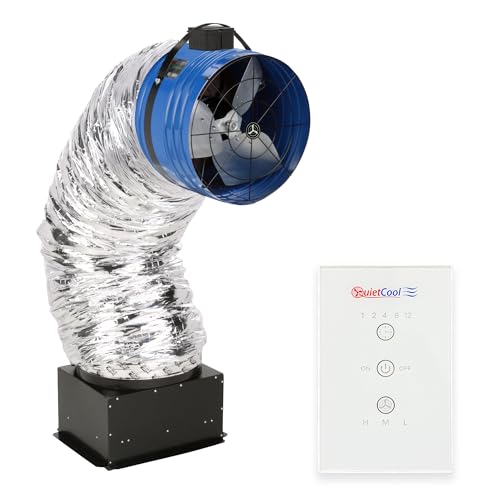
Best for apartments, cottages and small footprints
- Up to about 2,465 CFM for compact homes
- Rated for roughly 1,230 square feet
- Same quiet ducted design, scaled down
- Two speeds with wireless remote
Why buy it: A common mistake owners describe is oversizing; for a small home this right-sized model gives the same quiet whole-house effect without moving more air than the space and attic venting can handle.

Best for large homes that also want low running cost
- Up to about 6,878 CFM on high
- Draws as little as ~164 watts
- Big-home airflow with efficiency tuning
- Two-speed operation with wireless control
Why buy it: Owners of large homes who balked at the running cost of moving that much air report this model gives high-capacity airflow while keeping the wattage a fraction of central air conditioning.
How we picked
Energy Efficient HVAC System does not buy, install or physically run the fans we cover. We rank from aggregated owner reviews, manufacturer specifications, HVI-certified CFM ratings where published, and the installation and long-term complaint patterns that surface once a model is in thousands of homes. We weighted CFM output relative to advertised square footage, ducted versus direct-mount noise design, insulated damper quality, and ceiling mount installation difficulty. We also weighted running cost at the wattage each model actually draws on high and low speed. A fan that moves plenty of air, but leaves owners fighting a loud grille or a leaky winter damper, loses points here regardless of its CFM number. See How We Rank for the full methodology, the whole-house fans hub for what is already published, or the cooling section to weigh whole-house fans against air conditioning for your climate.