

Affiliate Disclosure
Some links on this page are affiliate links. As an Amazon Associate, we earn from qualifying purchases — at no extra cost to you. We do not buy, test, or physically handle the products we cover; our rankings come from aggregated owner reviews, ratings and expert consensus. Commissions never change our verdicts. How we rank & full disclosure.
Some links below are affiliate links. If you buy through one, Energy Efficient HVAC System may earn a commission at no extra cost to you. It never changes which products we recommend or where they rank.
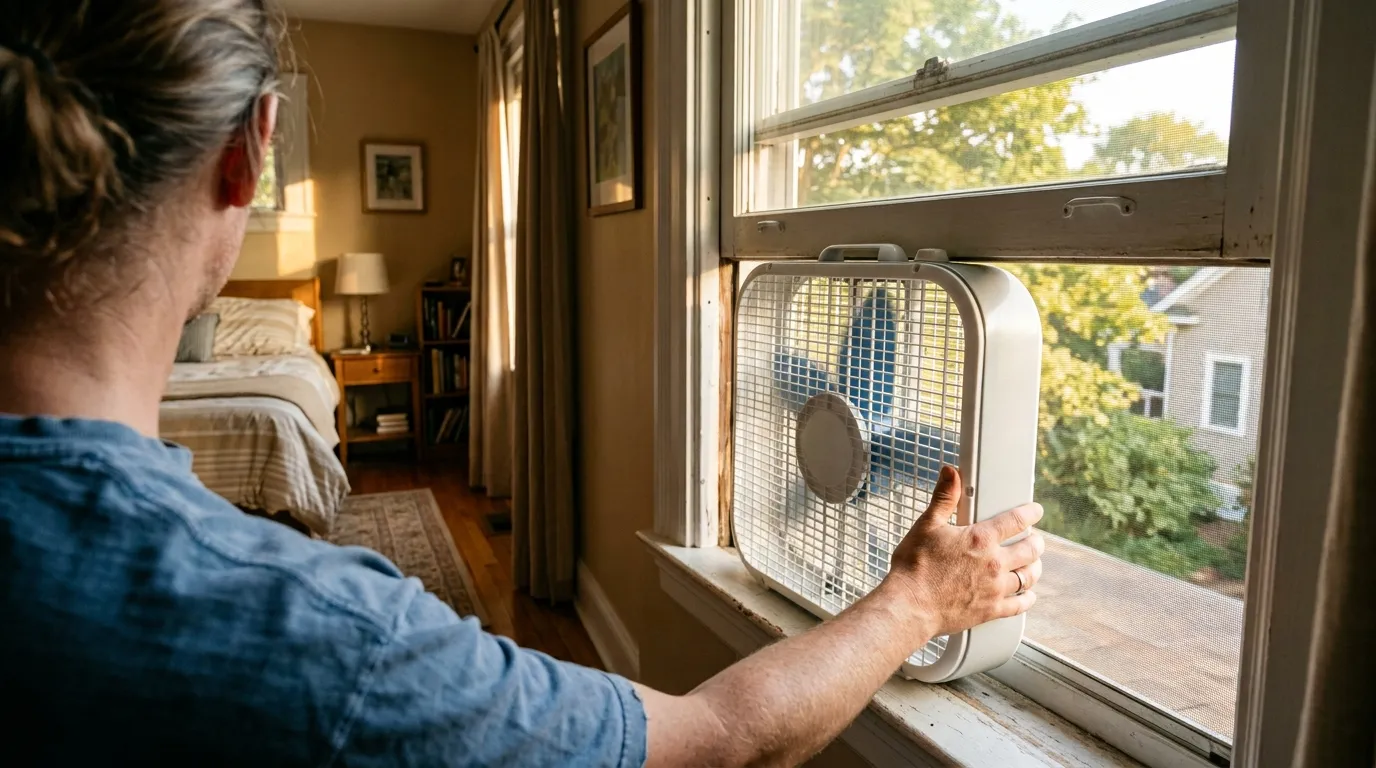
A window fan does something a regular fan cannot: instead of just stirring the warm air already in the room, it exchanges it — pulling cool outside air in through one side and pushing stale, hot inside air out the other. That makes it one of the most effective tools for your home's indoor climate on evenings when the air outside is cooler than in, at a fraction of the cost of air conditioning. It shines for overnight cooling, clearing cooking or bathroom odors, and cross-ventilating a stuffy room. Its limit is the same as any fan: it cannot cool air below the outdoor temperature, so on a hot, still day with no breeze and warm outside air, a window fan has little to work with. Below are the models owners rate most consistently, and how to choose.
What types of window fans are there — twin, dual blade and single-fan reversible?
Most window fans sold today are twin or dual blade units — two separate fan blades side by side, each independently reversible, so one side can run on intake while the other runs on exhaust at the same time. A single-fan window fan is simpler but can only push air one direction at once.
Running a twin unit split between intake and exhaust creates a genuine cross breeze right at the window, cycling stale air out one side while pulling fresh air in the other — a real air exchange rather than just stirring the room. A single dual blade fan set to reversible still lets you switch the whole unit between drawing air in and pushing it out, just not both directions at once. For most bedrooms and living rooms, the twin, independently reversible design is worth the small price difference over a single-fan unit.
Do you want a reversible window fan?
Almost always yes. A reversible fan can draw cool air in, exhaust hot air out, or on twin models do both at once — which is far more useful than a fan that only blows one direction. It is the single most worthwhile window-fan feature.
The whole point of a window fan is controlling which way the air moves, and that changes through the day: exhaust the day's heat in the evening, then switch to intake once the outside air turns cool. Twin and triple-fan models let you run some blades in each direction to set up a through-draft. A single fixed-direction fan gives up most of that flexibility.
How do you get a good fit in the window?
Measure your window's open width first and match it to the fan's expandable range. Extender panels seal the gaps so air is pulled through the fan, not around it; a poor fit is the top cause of a window fan underperforming.
Window fans use sliding side panels to bridge the opening, and the seal they create matters more than owners expect. Air always takes the easy path, so any gap around the fan lets outside air leak back without passing through the blades. Check the fan's minimum and maximum width against your window, and make sure the panels actually close the space.
Does a thermostat or automatic mode matter?
For overnight use it is genuinely useful. A built-in thermostat cycles the fan off once the room hits your target temperature and back on as it warms, so you are not woken by a fan running cold or a room heating back up.
Without a thermostat you set a speed and live with it all night, which often means waking up chilled at 3am or too warm by dawn. A thermostat-equipped fan manages that for you, and owners who have used one consistently list it as the upgrade they would not skip again. It is the main thing separating the premium picks above from the basic ones.
How much airflow do window fans move, and what's the running cost?
Window fan airflow is rated in CFM, and most twin models offer two or three speed settings so you can trade quiet running for maximum ventilation. A window fan's motor draws far less power than any cooling appliance, so running cost is close to negligible even overnight.
Because the wattage is so low, a window fan is inherently energy efficient compared with air conditioning — it just cannot lower air temperature the way cooling with a compressor does, only move existing air faster. There is no ENERGY STAR certification for window fans the way there is for air conditioners, but the low wattage of every model here means the honest comparison is against running an air conditioner, not against each other. Look for a model described as weather resistant if you plan to leave it in the window through a season of variable weather; a housing that is not rated for it can warp or short out if rain gets past the sash. Higher speed settings move more CFM but add noise, so match the setting to whether you are actively cooling a hot room or just keeping quiet background ventilation running overnight.
What do window-fan owners complain about?
The common complaints are rain getting in when a fan is left in an open window during a storm, insects entering around an imperfect seal, and motor noise or rattle on the highest speed. None are dealbreakers, but all are worth planning for.
A window fan sits in an open window, so weather and bugs are part of the deal — bring it in or switch to exhaust before a storm, and seal the panels well to keep insects out. Noise rises with speed on every model, so if quiet matters, favor a fan owners praise on its low and medium settings rather than one that is only tolerable on high.

Best for most double-hung windows, day and night
- Twin reversible blades to draw in or exhaust air
- Programmable thermostat cycles the fan on and off
- Three speeds with an LED display and remote
- Expander panels fit 24 to 36 inch windows
Why buy it: Owners consistently rank the Bionaire as the complete window fan — the thermostat that switches it on and off automatically is the feature people say they cannot go back to being without.

Best for a straightforward intake-or-exhaust fan
- Reversible twin fans for intake or exhaust
- Three speeds for day and night use
- Expandable side panels to fit the window width
- Simple, low-cost design that just works
Why buy it: A common thread in reviews is that it covers the essentials — reversible airflow and a snug window fit — for very little money, which is exactly what most people want from a window fan.

Best for buyers who want digital control and a cleaner intake
- Twin reversible blades with digital controls
- Adjustable thermostat and remote control
- CleanBreeze intake design to reduce debris
- Fits standard double-hung windows
Why buy it: Owners who want more than bare mechanical dials report the digital thermostat and remote make it easy to set and forget, earning it the premium spot for a comfort-focused window fan.

Best for narrower windows and tighter openings
- 9-inch twin blades with reversible airflow
- Dedicated exhaust mode to push hot air out
- Expandable side panels, width adjustable
- Two speeds in a compact, budget frame
Why buy it: A recurring point in reviews is that its compact 9-inch frame fits windows where larger fans will not, making it the pick for smaller or awkwardly sized openings.
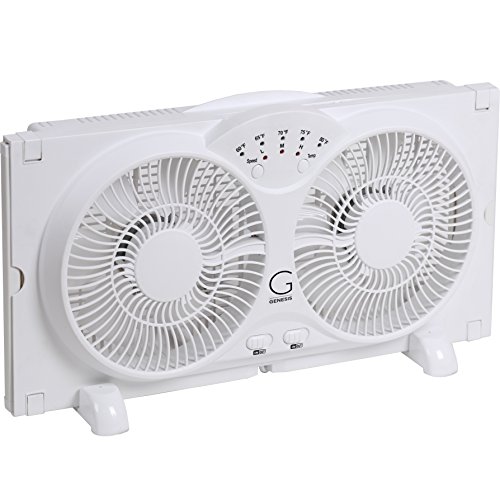
Best for moving the most air through the window
- High-velocity twin fans with reversible airflow
- Adjustable thermostat and Max Cool setting
- LED indicator lights and ETL certification
- Expandable panels for a secure fit
Why buy it: Owners who found ordinary window fans too gentle report the high-velocity motor and Max Cool mode move noticeably more air, which is what larger or hotter rooms need at the window.

Best for a quiet, low-cost second window fan
- 9-inch twin blades tuned for low noise
- Reversible airflow for intake or exhaust
- Adjustable width from about 23.8 to 37 inches
- ETL certified at a budget price
Why buy it: A steady note in reviews is that it runs quietly for the money, making it the value pick for a bedroom or a second window where a low hum matters more than maximum airflow.
How we picked
Energy Efficient HVAC System does not buy, run or physically handle the fans we cover. We rank from aggregated owner reviews, manufacturer specifications and the fit, noise and long-term complaint patterns that surface once a model has been in thousands of windows for a season. Across brands like Bionaire, Comfort Zone, Holmes and Genesis, the pattern repeats: owners consistently favor whichever model actually seals the window opening and holds up to a season of weather over one with extra digital features but a flimsy frame. See How We Rank for the full methodology, the window fans hub for what is already published, or the cooling section to compare window fans with tower fans and air conditioning for your climate.
One more practical note: pair a window fan with a box fan in another window for a stronger cross breeze through the whole house, not just one room. Running an exhaust fan upstairs while a window fan intakes downstairs uses the stack effect — warm air naturally rising — to move more total air exchange than either fan manages alone.