
Affiliate Disclosure
Some links on this page are affiliate links. As an Amazon Associate, we earn from qualifying purchases — at no extra cost to you. We do not buy, test, or physically handle the products we cover; our rankings come from aggregated owner reviews, ratings and expert consensus. Commissions never change our verdicts. How we rank & full disclosure.
Disclosure: Some links below are affiliate links. As an Amazon Associate we earn from qualifying purchases at no extra cost to you — and a commission never changes which products we recommend.
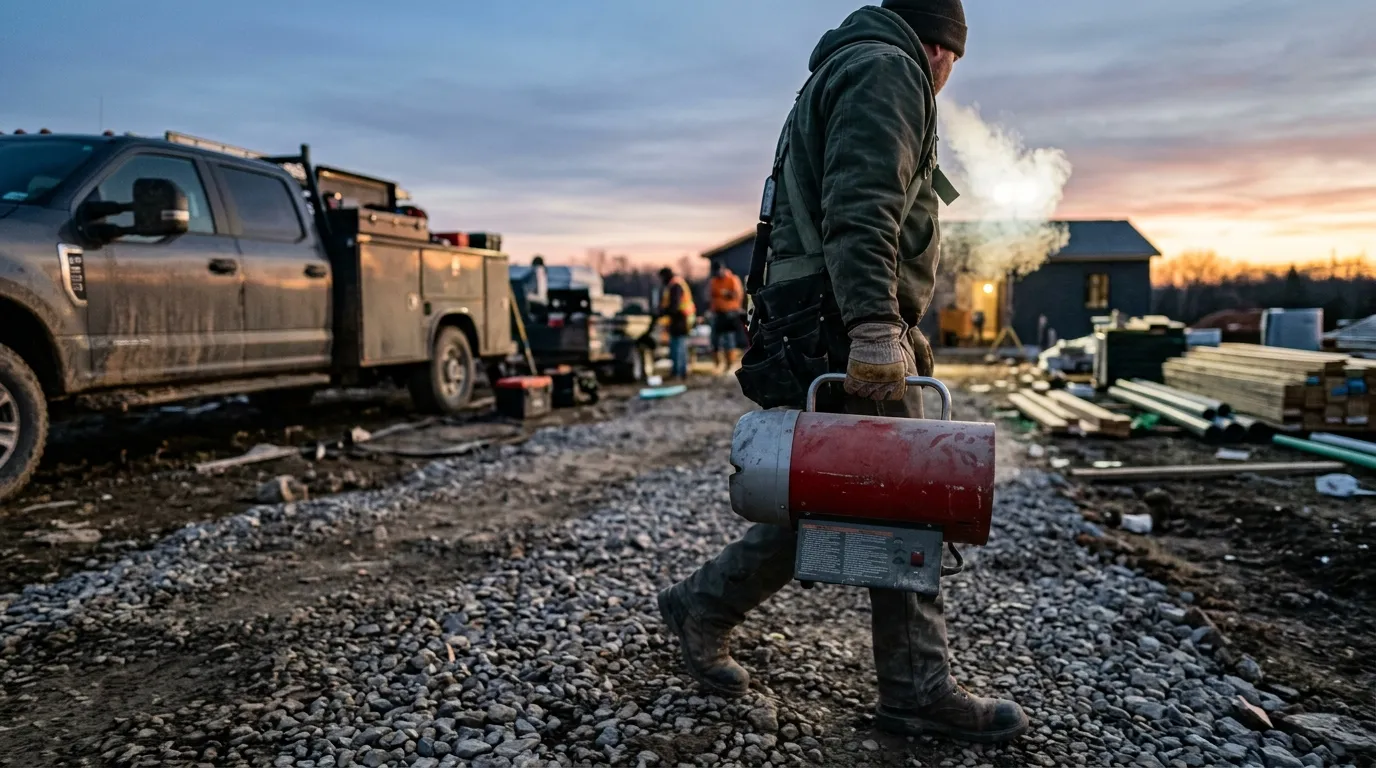
Camping and job sites are exactly where propane earns its keep — heat with no outlet in sight. When your indoor climate is a tent, a hunting blind, a trailer, or a half-built structure, a portable propane heater is the practical answer. The honest bottom line: for camping, prioritize portability and a low-oxygen shut-off you can trust in an enclosed tent; for a job site, lean toward higher output and longer run-time. Above all, ventilate and run a carbon-monoxide alarm — every year people are harmed by sleeping in a sealed space with propane heat. Used with respect, the picks below are the ones owners rely on in the field. A gas heater with a genuine ODS sensor, a stable base for uneven ground, and the right BTU output for your space beats a bigger, cheaper unit almost every time — fuel logistics and safety features matter more out here than raw heat output on a spec sheet.
Is it safe to run a propane heater in a tent?
Only with an indoor safe heater that carries an ODS sensor, active ventilation, and a carbon monoxide alarm — and never while sleeping. Propane consumes oxygen and produces carbon monoxide, so a sealed tent with a running heater is genuinely dangerous.
This is the most important thing on the page. The Buddy line and the other indoor-rated picks include an ODS sensor — an oxygen depletion sensor — that cuts the gas supply if oxygen falls too low, but that is a backstop, not permission to seal the tent. Keep a vent cracked open, use the heater to warm the tent before bed rather than through the night, and carry a battery carbon monoxide alarm regardless of what the heater's rating claims. Our home heating safety guidance reinforces the habits that keep propane heat safe.
Propane or electric: what's the better garage heater for a job site?
Propane wins where there is no outlet — a job site, a tent, a trailer with no shore power. Electric forced air wins where power is already run, because it needs no fuel logistics and no ventilation planning.
A propane garage heater burns liquid propane from the tank and produces genuine heat output fast, with no cord to run across a work area. That is the whole appeal on a site without power. The trade-off is efficiency and safety overhead: propane combustion consumes oxygen and needs ventilation that an electric forced air heater simply does not. For zone heating one bay of a garage or shop where an outlet already exists, electric is usually the simpler, safer choice. For an open framing job, a hunting camp, or anywhere gas is the only practical fuel on hand, propane is the only realistic option — and the picks here are built for exactly that gap.
How long does a propane cylinder last on a job site?
A 1-lb cylinder runs a small radiant heater roughly two to six hours depending on the setting; a full-size 20 lb tank lasts far longer. High output drains fuel fast, so a cold full-day shift needs either a big tank or several cylinders.
Fuel logistics are the practical difference between camping and job-site use. For a weekend camp, disposable 1-lb cylinders of liquid propane are convenient and easy to pack. For a job site you return to daily, running the heater off a hose to a refillable 20 lb tank of gas is cheaper and means fewer swaps mid-shift — the cabinet heater and Big Buddy both support that hookup. Owners consistently report that planning the fuel supply matters more than a few thousand extra BTU on the spec sheet.
What size heater do you need out in the field?
A 9,000 BTU portable suits a small tent or blind; 18,000 BTU handles a larger wall tent or an open work bay; 30,000 BTU is for big, drafty structures. Outdoor and uninsulated spaces need far more heat output than a sealed indoor room of the same size.
Camping and job sites are almost never insulated, so heat escapes fast and the BTU requirement climbs. Owners consistently report that a small heater in a big cold space just cannot keep up, no matter how efficient the burner is rated. Match the output to the actual volume and draftiness of the space, and lean larger for an open outdoor-adjacent job site than you would for a snug tent.
What do owners complain about most?
The recurring field complaints are fuel burn on high, ignition trouble in the cold, and heaters tipping on uneven ground. The cold-start issue is common when a cylinder is low or freezing, and stability matters on rough terrain.
None are unique to one model. A full, relatively warm cylinder ignites more reliably in the cold, keeping spares avoids a dead heater mid-shift, and choosing a unit with a wide base or tip-over shut-off handles uneven ground. Mr. Heater's Buddy line dominates owner recommendations for portability, while Dyna-Glo and ProCom units come up most often for fixed cabinet-style job-site heat. OSHA guidance and CSA safety certification are worth checking before a heater goes anywhere near an enclosed job trailer. Owners who prepare for the conditions rate these heaters highly; those who expect indoor-grade convenience outdoors are the disappointed ones. See the propane heaters hub for the full category picture.
Radiant or forced air propane heat — which suits your site?
Radiant propane heat warms people and surfaces directly in its line of sight, which is efficient in an open bay or a tent. Forced air propane heat pushes warm air across a larger, enclosed area more evenly, which suits a bigger structure with obstructions in the way.
The Buddy-style heaters on this list are radiant: point one at your work area and it warms what it can see, with very little wasted heat output beyond that zone. That makes radiant heat genuinely efficient for zone heating a single bay, bench, or sleeping area rather than an entire building. A forced-air unit, more common in bigger construction heaters, instead blows hot air through ductwork or a wide nozzle to fill a larger enclosed volume — better for a big garage or warehouse floor where line-of-sight radiant heat cannot reach every corner. For camping and most job-site tasks covered here, radiant heat's efficiency and simplicity is why it dominates the category: no ducting, no fan to power, just gas and a reflector.
What safety certifications should a propane heater actually carry?
Look for CSA certification on the unit itself, and follow OSHA guidance on ventilation and clearance if the heater is going anywhere near an enclosed job trailer or work area. Neither guarantees safe use on its own — both assume the heater is operated as intended.
CSA testing confirms the heater meets a baseline build-quality and ODS-sensor standard before it ever reaches a job site. OSHA's role is different: it governs how propane heat should be used around workers, covering clearance from combustibles, ventilation minimums in an enclosed structure, and fuel storage. A heater with a CSA listing but zero ventilation on site is still a hazard — the certification and the setup both have to hold up together. Crews that treat both as non-negotiable, rather than picking one, are the ones who avoid the carbon monoxide incidents that show up every winter in job-site safety reports.
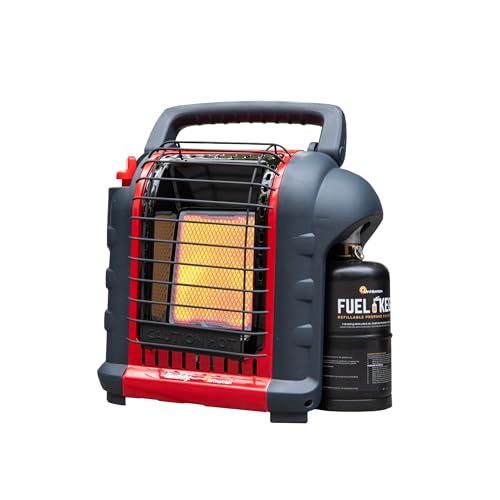
Best for tents, blinds, and small job sites
- 4,000 to 9,000 BTU radiant heat
- Low-oxygen and tip-over shut-off
- Runs off a 1-lb cylinder
- Compact, grab-and-go build
Why buy it: The Portable Buddy is the heater campers and tradespeople name most — the consensus favors it for the mix of genuinely portable size, indoor-rated safety cut-offs, and enough radiant heat to warm a tent or a corner of a site.

Best for larger tents and open work areas
- Up to 18,000 BTU across settings
- Low-oxygen shut-off for enclosed use
- Runs off portable cylinders or a hose to a tank
- Radiant heat over a wider area
Why buy it: When one Buddy is not enough, owners step up to the Big Buddy — a recurring note on job sites is that the higher output and dual-cylinder capacity keep a larger space or wall tent workable through a cold shift.

Best for a shed, trailer, or enclosed work area
- 6,000 to 18,000 BTU, three settings
- Freestanding cabinet with tip-over shut-off
- Runs off a standard propane tank
- Stable footprint for uneven ground
Why buy it: For a fixed enclosed site like a shed or trailer, owners favor a cabinet heater for its stable stance and longer run-time from a full-size tank rather than swapping little cylinders.

Best for big, open, drafty work areas
- Up to 30,000 BTU output
- Vent-free radiant design
- Wall-mountable or floor-standing
- Oxygen depletion safety sensor
Why buy it: For a large, drafty site where smaller heaters get swallowed, owners reach for the 30,000 BTU radiant unit — a common note is that it finally makes a big open space workable in cold weather.
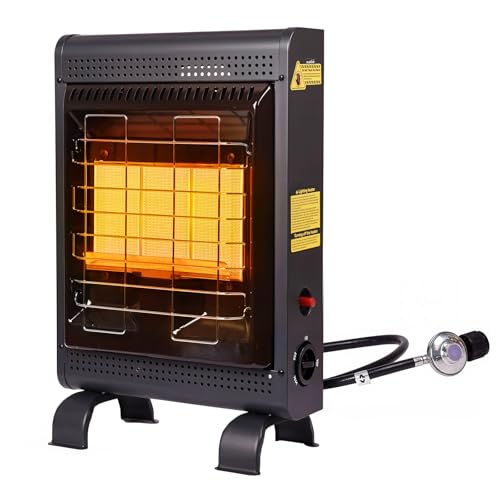
Best for an affordable portable backup
- 18,000 BTU output
- Oxygen depletion sensor and tip-over shut-off
- Includes gas regulator and hose
- Indoor or outdoor rated use
Why buy it: The consensus favors this as the value portable pick — owners describe it as a straightforward heater with the essential ODS and tip-over safety cut-offs, at a lower price than the name brands.
How we picked
These rankings come from aggregated owner reviews, manufacturer specifications, and the recurring complaint patterns across hundreds of listings — never from us buying and running the heaters ourselves. For camping and job sites we weighted portability, the ODS sensor and tip-over safety cut-offs that enclosed use demands, heat output matched to drafty spaces, and fuel flexibility, because those are what separate a field heater owners trust from one that fails when it is coldest. Read our full How We Rank methodology for the complete process.