
Affiliate Disclosure
Some links on this page are affiliate links. As an Amazon Associate, we earn from qualifying purchases — at no extra cost to you. We do not buy, test, or physically handle the products we cover; our rankings come from aggregated owner reviews, ratings and expert consensus. Commissions never change our verdicts. How we rank & full disclosure.
Disclosure: Some links below are affiliate links. As an Amazon Associate we earn from qualifying purchases at no extra cost to you — and a commission never changes which products we recommend.
Propane heaters solve the one problem electric heaters cannot: heat output where there is no outlet. If your indoor climate challenge is a garage, workshop, cabin, tent, or job site off the grid, a gas-fired propane heater is the right tool. The honest bottom line: choose a unit that's genuinely indoor safe with a low-oxygen shut-off for any enclosed use. Match the BTU output to the space, and always provide ventilation. Propane heat is powerful and portable, but it demands respect. If you're heating a normal insulated room with power available, an electric heater is safer and simpler. A propane heater earns its place for zone heating a garage or off-grid space where electricity isn't an option. Outdoor use is the other big category. Patio heaters and forced-air job-site units aren't required to carry an ODS sensor, because open air handles ventilation for you — but that also means they're never safe to bring indoors, even briefly.
What types of propane heaters are there?
The category splits three ways: radiant heaters that warm people and objects directly, blue-flame (convection) heaters that warm the air in a whole room, and forced-air propane heaters that use a fan to push heated air across a job site fast. Each solves a different job.
Radiant propane heaters
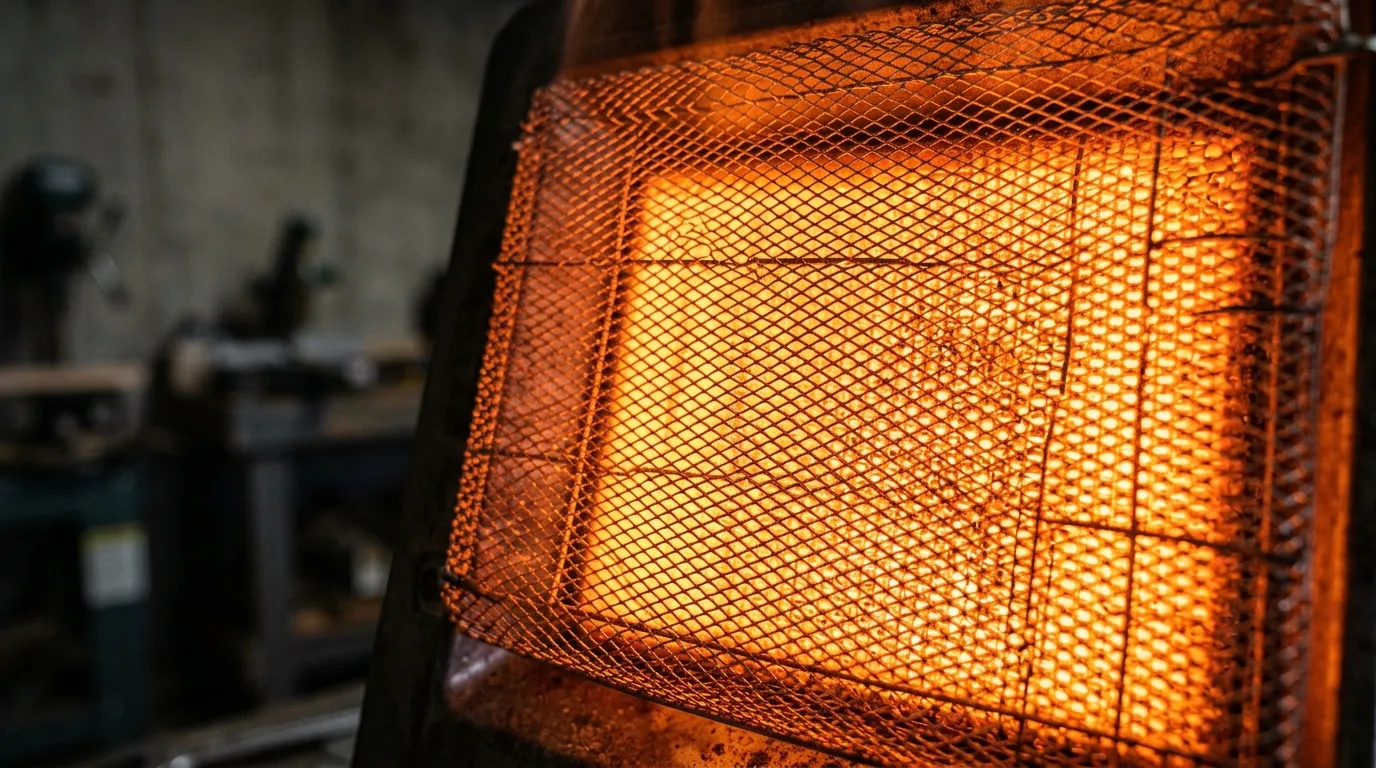
Radiant propane heaters feel fastest. Stand in front of one and you feel warmth immediately, which suits a workshop bench or a tent where you're stationary.
Blue-flame convection heaters
Blue-flame convection units spread heat output evenly through an enclosed room over time. That's better for a cabin living space or an off-grid bedroom you want evenly warm, rather than warm in one spot.
Forced air propane heaters
Forced air propane heaters, common on job sites, use a fan to move a large volume of heated air quickly across an open garage or construction area. They're loud but unmatched for raw heat output over a big footprint.
Liquid propane and 20 lb tanks
Fuel-wise, portable radiant and blue-flame units typically run on a 1-lb disposable cylinder, or hook up via hose to a full-size 20 lb tank for longer runtime. Forced-air units almost always run off a 20 lb tank or larger liquid propane supply. None of the three is inherently safer — indoor-rated models across all three styles carry an oxygen depletion sensor, and all of them need ventilation.
Cold weather adds a wrinkle regardless of type. Liquid propane draws heat from its own tank as it vaporizes to gas, so a cylinder can frost over and lose pressure on a long burn in freezing temperatures. Owners running a heater outdoors overnight, or at a winter job site, report better performance keeping the 20 lb tank slightly warmer than ambient. Try an insulated sleeve, or swap in a fresh one partway through, rather than assuming a full tank means full heat output the whole time. This matters more for radiant and blue-flame units running for hours than for a forced-air heater cycling on and off through a workday.
Are propane heaters safe to use indoors?
Only models specifically rated indoor safe, and only with ventilation. Indoor-safe propane heaters include a low-oxygen (ODS) shut-off that cuts the gas if oxygen drops, plus tip-over protection that kills the flame if the unit is knocked over. Never run an outdoor-only patio heater inside.
ODS sensors and carbon monoxide
This is the single most important safety point in the category. Propane combustion consumes oxygen and produces carbon monoxide. An indoor-rated heater with an ODS sensor is non-negotiable for a garage heater, cabin, or tent — every indoor pick above has one.
Tip-over protection and ventilation
Along with the ODS sensor, tip-over shut-off is a baseline safety feature on every indoor pick here. Pair it with a battery carbon monoxide alarm, keep the space ventilated, and never sleep in a small enclosed space with any propane heater running, indoor-rated or not. Our home heating safety guidance covers the habits that matter most.
How many BTU do you need, and what does a tank actually run?
Roughly 20 to 30 BTU of heat output per square foot for a drafty space like a garage. A 9,000 BTU portable suits a tent or small workshop; 18,000 to 30,000 BTU handles a one- or two-car garage. A standard 20 lb tank of liquid propane holds around 430,000 BTU of fuel.
Heat output for garage heaters
Propane spaces are usually uninsulated, so they need more BTU per square foot than a sealed, forced-air-heated room would. Owners consistently report undersizing as the common mistake — a small portable in a big cold garage never catches up regardless of runtime.
Portable, outdoor gas efficiency
Run the numbers on efficiency before buying. A 30,000 BTU heater running flat-out on a 20 lb tank of liquid propane burns through it in roughly 14 hours. A 9,000 BTU unit on the same tank stretches past 45 hours. That's exactly why the picks above span the BTU range deliberately — pick the Buddy line for portable, tent-sized jobs outdoors, and step up to the 30,000 BTU units for a full garage or shop.
Zone heating cost versus electric
Compared with running the same square footage on grid electricity, propane gas is usually the cheaper fuel per BTU of heat output, but the more expensive equipment up front once you factor in the tank and hose. A 1500-watt electric space heater delivers about 5,100 BTU per hour at typical residential electricity rates. A 9,000 BTU propane unit puts out nearly double the heat, for a broadly comparable per-hour fuel cost once you spread a tank refill across a typical 40-plus-hour burn. The real advantage isn't cost for everyday zone heating — it's that propane keeps working when the power is out, which is the scenario most buyers in this category are actually planning for.
What do owners complain about most?
The recurring complaints are propane running down quickly on high output, a faint gas smell at startup, and pilot or ignition fussiness in cold weather. Fuel burn is the big one — a high heat-output heater empties a tank faster than buyers expect.
These come with propane as a fuel rather than any one brand. Keeping a spare 20 lb tank avoids running out mid-job. The brief startup odor is normal combustion, not a leak — though a persistent gas smell means shut it off and check the connection. Cold-weather ignition improves with a full, warm tank of liquid propane. Owners who plan for the fuel logistics and confirm tip-over protection before buying report far fewer frustrations. See the propane heaters hub for how these fit the rest of the heating lineup.

Best for versatile portable heat, indoors or out
- Up to 18,000 BTU across settings
- Low-oxygen shut-off for indoor safety
- Radiant heat for fast, felt warmth
- Runs off portable propane cylinders
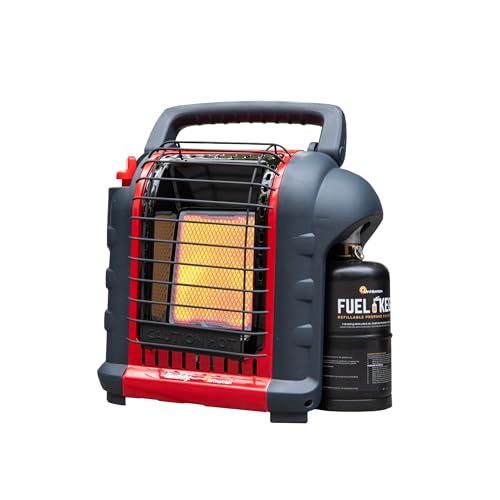
Why buy it: The Big Buddy is the name owners reach for most in portable propane — the consensus favors it for the balance of real output, the low-oxygen safety shut-off, and the flexibility to use it in a garage, tent, or job site.
Best for the everyday portable propane heater
- 4,000 to 9,000 BTU radiant heat
- Low-oxygen and tip-over shut-off
- Connects to a 1-lb cylinder
- Compact, grab-and-go size
Why buy it: The original Portable Buddy is the best-selling propane heater for good reason — owners consistently describe it as the reliable default for a workshop, tent, or ice-fishing shack, with the safety cut-offs indoor-rated use needs.

Best for heating a bigger garage or workshop
- Up to 30,000 BTU output
- Vent-free radiant design
- Wall-mountable or floor-standing
- Built-in oxygen depletion sensor
Why buy it: For a larger space, owners step up to the 30,000 BTU radiant unit — a recurring note is that it heats a two-car garage or big shop where the portable Buddy line runs out of power.

Best for quiet convection warmth for a room
- 30,000 BTU vent-free blue flame
- Convection heat spreads through a room
- Wall-mount or base-foot install
- Oxygen depletion safety sensor
Why buy it: Owners heating a room off-grid or as backup favor the blue-flame convection style — a common note is that it warms the whole room evenly and quietly rather than radiating heat at one spot.

Best for a freestanding heater for a garage or shed
- 6,000 to 18,000 BTU, three settings
- Cabinet style with tip-over protection
- Runs off a standard propane tank
- Portable freestanding design
Why buy it: For a garage or workshop, owners like a cabinet heater like the VEVOR for its three-stage output and stable freestanding body — a frequent note is that it takes the edge off a cold shop quickly.

Best for a small room or supplemental heat for less
- 10,000 BTU vent-free blue flame
- Thermostat control
- Wall-mount or base-foot install
- Oxygen depletion safety sensor
Why buy it: The consensus favors the smaller ProCom as the affordable entry to blue-flame heat — owners describe it as a quiet, thermostat-controlled way to warm a small room without the cost of a larger unit.
How does Mr. Heater compare to other propane heater brands?
Mr. Heater's Buddy line dominates portable propane because of its ODS sensor and tip-over shut-off, but ProCom and Dyna-Glo both make competitive vent-free blue-flame units, and Dyna-Glo forced-air heaters are common on job sites for their raw heat output.
Owners comparing brands generally land on Mr. Heater for portability and safety-sensor reliability. ProCom is the pick for affordable indoor blue-flame convection. Dyna-Glo wins out when a forced-air unit with higher BTU output is the priority. All three publish safety certifications — look for CSA or OSHA-recognized testing marks on the box before buying anything rated for indoor or job-site use. That certification confirms the ODS sensor and tip-over protection were independently verified, not self-reported.
How we picked
These rankings come from aggregated owner reviews, manufacturer specifications, and the recurring complaint patterns across hundreds of listings — never from us buying and running the heaters ourselves. We weighted safety features, especially the oxygen depletion shut-off and tip-over protection for indoor use. We also weighted BTU output matched to real spaces, portability, CSA/OSHA-recognized safety certification, and fuel efficiency on a standard 20 lb tank. Those are what separate a propane heater owners trust from one that's a liability. Read our full How We Rank methodology for the complete process.