

Affiliate Disclosure
Some links on this page are affiliate links. As an Amazon Associate, we earn from qualifying purchases — at no extra cost to you. We do not buy, test, or physically handle the products we cover; our rankings come from aggregated owner reviews, ratings and expert consensus. Commissions never change our verdicts. How we rank & full disclosure.
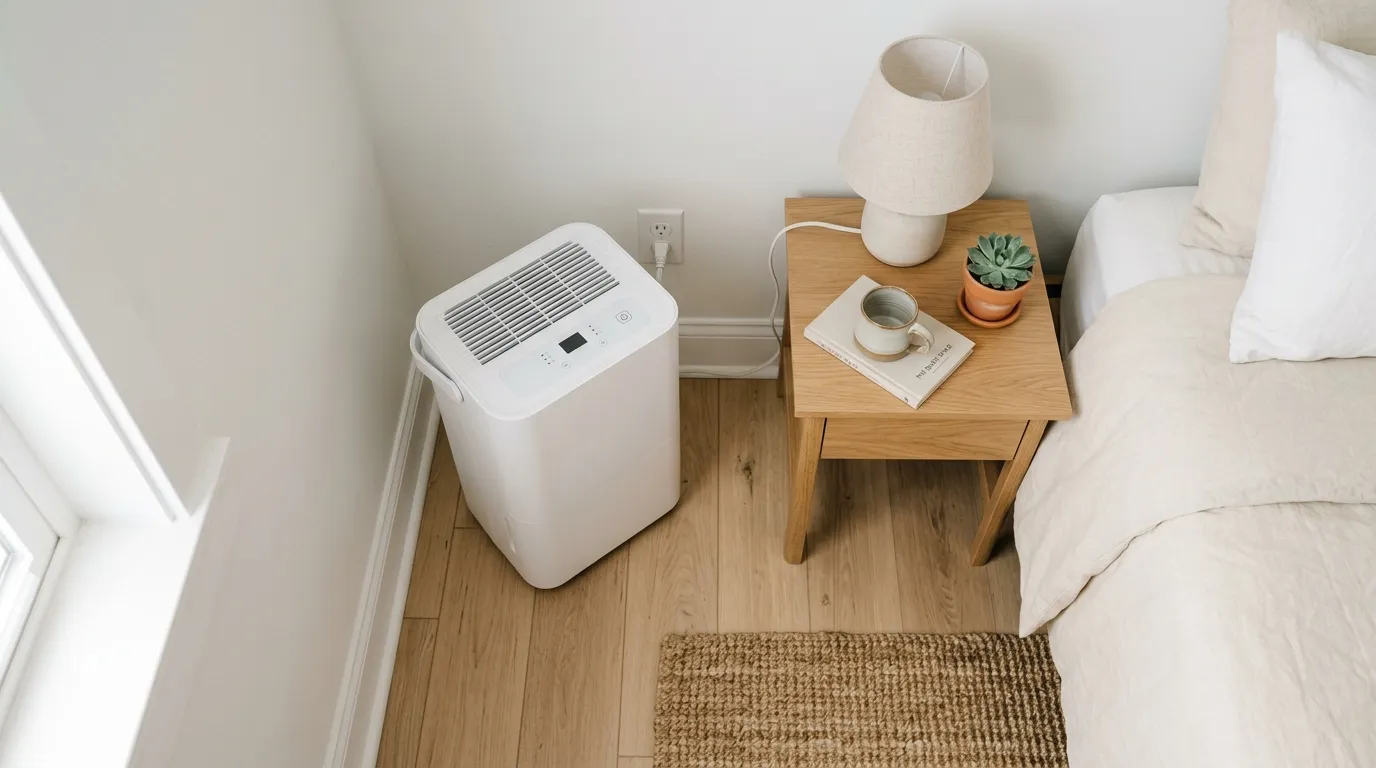
In a small bedroom the whole point of a dehumidifier is to fix the indoor climate — the stuffiness, the condensation on the window, the faint musty edge — without becoming a noisy, bulky nuisance beside the bed. That flips the usual priorities: you want quiet and small over raw capacity. Most of these are compact tank-style (thermo-electric) units, which is exactly right for a small, mild room. The one caveat: if your "small" bedroom is actually cold and genuinely wet, a tiny unit won't cope, and you're better served by a larger model.
Signs your bedroom actually needs a dehumidifier rather than just better ventilation: condensation beading on the inside of the window each morning, a faint musty odor that returns no matter how often you air the room out, sheets or clothes in the closet feeling faintly damp, or a hygrometer reading consistently above 55% relative humidity. Any one of those on its own might just mean opening a window more often; two or three together, especially in a room with poor airflow or one facing a damp exterior wall, is the pattern that points to a dedicated unit rather than a habit fix.
What specs actually matter — capacity, square footage, and relative humidity?
Compressor dehumidifiers are rated in pints per day of moisture removal and square footage; the compact Peltier units common in a bedroom are rated by tank size in ounces instead, since their pull is much lower. Either way, target keeping the bedroom around 30-50% relative humidity, the range that discourages mold and dust mites without drying out skin and sinuses.
A small tank-style unit pulling under a pint a day is fine for taking the mustiness out of a closed, mildly damp bedroom, but it isn't the same class of machine as a 20-30 pints per day compressor unit built for a genuinely wet basement. Neither spec sheet number tells the whole story without square footage attached — a 95 oz tank rated for 1,000 sq ft is doing real work in a small bedroom, while the same tank in an open, damp basement would need emptying constantly. A built-in humidistat, on the higher-capacity models, lets the unit cycle on and off automatically once relative humidity hits target rather than running continuously.
How small a dehumidifier can a bedroom get away with?
For a small, mildly damp bedroom, a compact 25–60 oz tank unit is usually enough. These quietly pull moisture from a closed room overnight; you just empty a small reservoir every day or two rather than running a hose.
The trade-off is capacity: these small units remove far less water per day than a compressor dehumidifier, so they suit condensation and stuffiness, not a flooding or seriously damp room. Match the tank to how often you're willing to empty it — a bigger tank means fewer trips to the sink, and a model with a continuous drainage hose option skips the sink altogether for a room with persistent dampness.
Will it be quiet enough to sleep next to?
Compact thermo-electric (Peltier) units are the quiet choice — no compressor, just a small fan — which is why they dominate this list. Look for a sleep mode or an explicitly "ultra-quiet" noise level rating if you're a light sleeper.
The consensus favors these small units in a bedroom precisely because a full-size compressor dehumidifier can be too loud beside a bed. A sleep mode that also dims the display is worth prioritising; the glow of an LED panel is a surprisingly common complaint in bedroom reviews. A published noise level in decibels, when the maker bothers to list one, is worth comparing across models the same way you'd compare a fan.
Peltier or compressor for a small bedroom?
Peltier (thermo-electric) for a small, warmish, mildly damp room; compressor only if the room is genuinely wet or cold. Peltier units are quieter, more energy efficient at low pull rates, and smaller but remove less water and lose effectiveness below about 60°F.
This is the single most common mismatch in the category: buying a tiny Peltier unit for a cold, wet room and being disappointed. For a normal, heated bedroom with condensation or mild dampness, though, they're ideal — quiet, compact, energy efficient, and cheap to run continuously overnight.
What do owners complain about most, and does it actually stop mold?
Tank size and cold-room performance. A small tank fills fast in a damp room, meaning frequent emptying; and thermo-electric units slow down noticeably in the cold. A right-sized unit does meaningfully reduce mold risk and musty odor by keeping relative humidity below the level mold needs to establish.
A common complaint is a 25 oz unit needing emptying twice a day in a wet room — that's a sizing issue, and the fix is a bigger tank or a compressor unit. For the small, mild bedrooms these are built for, owners are largely happy once they match the unit to the room. Musty odor is usually the first symptom to clear once relative humidity comes down, often before visible mold or condensation improves, which is a useful early sign the unit is keeping up.
How do these budget brands compare to Pro Breeze, hOmeLabs, Frigidaire, and Vremi?
Pro Breeze and hOmeLabs are the established names in compact Peltier dehumidifiers that owners compare against TABYIK and SANVINDER above, while Frigidaire and Vremi lead the compressor tier for a genuinely wet room, both offering ENERGY STAR certified models.
For a mild, small bedroom, the budget picks above hold their own against Pro Breeze and hOmeLabs on noise level and tank capacity for meaningfully less money. If your room turns out to be wetter than expected, Frigidaire and Vremi both make ENERGY STAR certified compressor units rated in pints per day that outperform any Peltier unit regardless of brand — that's the point to step up categories entirely rather than buying a bigger tank in the same technology. Reputable brand or not, check for continuous drainage compatibility on any compressor unit you're considering for a persistently damp room — a hose that runs to a floor drain or out a window removes the daily emptying chore entirely, which matters far more once you're dealing with several pints per day rather than a few ounces.
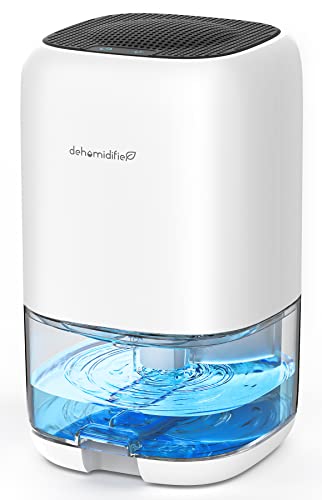
Best for a small bedroom, RV or dorm room
- 35 oz water tank
- Quiet, near-silent operation
- Auto shut-off when full
- Compact footprint
Why buy it: Owners consistently report it is quiet enough to sleep beside and just the right size for a small room — the auto shut-off is the feature people mention leaving them worry-free overnight.

Best for a closet, wardrobe or very small bedroom
- 25 oz water tank
- Ultra-quiet operation
- Auto shut-off
- Energy-saving design
Why buy it: For the smallest spaces, reviewers pick this for how little noise and power it uses — enough to keep a closet or nook from going musty without any real presence.

Best for a small room where you want timers and a night light
- 1.3 L (44 oz) tank
- 3 operating modes
- Timer settings
- Colour night light
Why buy it: A common note is that it packs modes, timers and a night light into a budget unit — extras owners appreciate in a bedroom without paying a premium.

Best for the larger end of a small bedroom
- 1.65 L (58 oz) tank
- Rated to about 230 sq ft
- 3 mode settings
- Auto shut-off
Why buy it: Owners who found the tiniest units ran out of tank too fast point here — a bit more capacity for a small room that is genuinely damp rather than just stuffy.

Best for a small bedroom that turns out to be dampier than expected
- 95 oz water tank
- Rated to 1,000 sq ft
- Auto shut-off
- Quiet operation
Why buy it: When a truly compact unit can’t keep up, owners reach for this larger tank — still quiet, but far fewer emptying trips in a room with a real moisture problem.

Best for light sleepers who want it running all night
- 95 oz water tank
- Dedicated sleep mode
- Auto shut-off
- Rated to 1,000 sq ft
Why buy it: The sleep mode is why owners buy this for a bedroom — it dims the display and quiets the unit so it fades into the background overnight.
How we picked
These rankings come from aggregated owner reviews, manufacturer specifications and recurring complaint patterns — not first-hand testing. We don't buy, run or physically handle the units; we read where the consensus lands across large numbers of verified-purchase reviews and weigh it against each maker's stated specs, including tank capacity, square footage rating, noise level, and auto shut-off reliability.
That favors units owners actually keep using over ones that only look good on a spec sheet. See How We Rank for the full methodology, and browse the bedroom dehumidifiers hub or the wider humidity control section for related guides.