

Affiliate Disclosure
Some links on this page are affiliate links. As an Amazon Associate, we earn from qualifying purchases — at no extra cost to you. We do not buy, test, or physically handle the products we cover; our rankings come from aggregated owner reviews, ratings and expert consensus. Commissions never change our verdicts. How we rank & full disclosure.
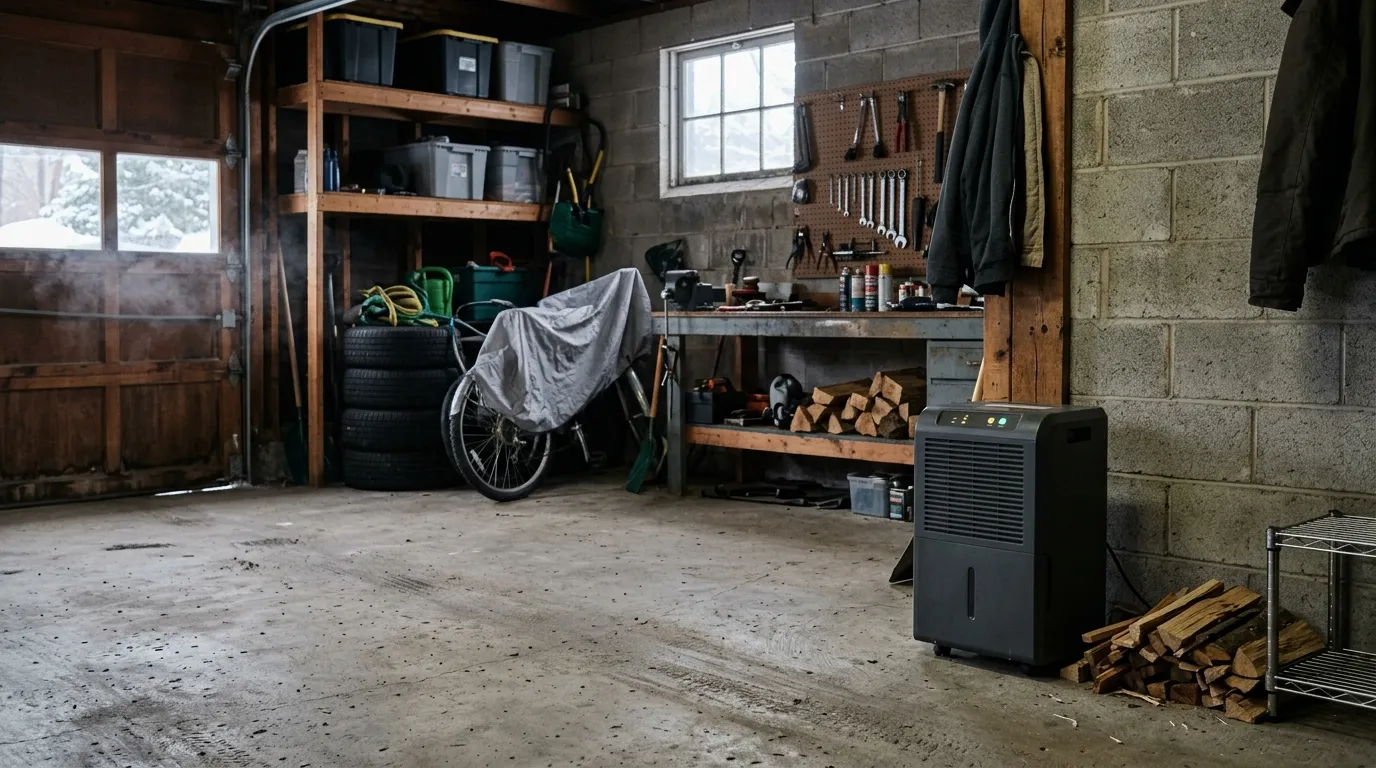
An unheated garage is the toughest place to control humidity, and the reason is physics: standard compressor dehumidifiers lose efficiency in cold air and can frost up entirely once the temperature drops toward the low-40s Fahrenheit. That single fact drives every pick here. The honest bottom line — a high-capacity compressor unit with automatic defrost is the right tool for a cool garage that stays above freezing; if your garage regularly drops below about 40°F, no consumer dehumidifier on this list will work well, and you'd control moisture better through ventilation and insulation. For everyone in between, capacity and a defrost cycle are what matter, and the units below deliver both.
What temperature is too cold for a garage dehumidifier?
Most consumer compressor dehumidifiers are rated to work down to roughly 41°F (5°C), and performance drops well before that as the coils get closer to icing over. Below freezing, even an auto defrost model struggles, and at that point ventilation and insulation do more than any dehumidifier can.
This is worth checking against your actual garage before you shop: an attached garage that stays in the 50s through winter is a straightforward case for any of the high-capacity compressor units here. A detached, unheated garage that regularly drops toward freezing is a harder case — auto defrost buys you a wider working range, but there is a real floor below which no compressor-based dehumidifier keeps up, no matter the pints-per-day rating on the box. In that scenario, sealing the space better and adding a small amount of heat to keep it above the low 40s is often more effective than buying the biggest dehumidifier available.
Why do most dehumidifiers struggle in an unheated garage?
Compressor (refrigerant) dehumidifiers condense moisture on cold coils, so as garage air gets colder those coils frost over and extraction drops sharply. Below roughly the low-50s Fahrenheit, effective output falls; near freezing, most units simply can't keep up.
This is why the cheap, tiny thermo-electric (Peltier) units sold for closets are almost useless in a cold garage — they need warmth to work at all. The practical answer is a larger compressor unit with an automatic defrost cycle, which periodically melts frost off the coils so it can keep running in the cold.
What capacity should an unheated garage have?
Size up. Because cold air cuts real-world output, buy a unit rated well beyond your garage's floor area — an 80-pint-class, 4,500–5,500 sq ft model for a standard-to-large garage, even if the square footage suggests you could go smaller.
Oversizing is the standard workaround for cold-weather inefficiency: the extra capacity compensates for the output you lose to low temperatures. Owners who buy to the square-footage rating and no more are the ones who complain the unit "can't keep up" in winter.
Do you need a drain hose in a garage?
Strongly recommended. A busy compressor unit fills its tank fast, and a garage often has a floor drain or a spot to run a hose outside. Continuous drainage means it keeps working instead of shutting off full — important when you're not out there to empty it.
Most of the high-capacity units here include or support a hose. Owners who set up continuous drainage describe the unit as genuinely set-and-forget; those relying on the tank describe frequent emptying, especially in a damp season.
Does a damp garage cause rust, and how does condensation factor in?
Yes — a garage above roughly 60% relative humidity is exactly the environment that accelerates rust on tools, exposed metal shelving and a parked car's undercarriage. Condensation forms fastest when warm, moist air meets a cold surface, which is common in an unheated garage during temperature swings between day and night.
Keeping relative humidity down with a dehumidifier is one of the more effective ways to slow rust on stored tools and equipment, alongside basic steps like not parking a wet car indoors overnight and keeping the garage door sealed. Condensation on a cold concrete floor or on windows is often the first visible sign that humidity is high enough to worry about — if you are seeing beads of moisture regularly, that is a garage that would benefit from continuous dehumidifier operation, rated in pints per day, rather than running it occasionally.
How efficient are garage dehumidifiers to run — ENERGY STAR and low temperature performance?
Look for an ENERGY STAR label and a humidistat, since together they keep the unit from running at full draw around the clock. In genuinely low temperature conditions, even an ENERGY STAR-rated compressor loses efficiency, which is exactly why auto defrost and oversized capacity matter more in a garage than the label alone.
An energy efficient unit paired with a humidistat set to your target relative humidity cycles on and off rather than running continuously, which both saves power and reduces wear on the compressor. Coverage ratings on the box assume a fairly standard indoor temperature range, so treat the square footage number as optimistic for a cold garage and lean toward the larger capacity option whenever you are between two sizes.
What do owners complain about most?
Cold-weather performance and noise. A unit without auto-defrost frosts up and stops extracting in the cold; and a hard-working compressor is audible. Both are inherent to the technology, and the fix is buying a defrost-equipped model and accepting some hum in a garage.
A common complaint is expecting any dehumidifier to dry a near-freezing garage — that's a limit of the technology, not a defective unit. Choose a high-capacity compressor with defrost, run a drain hose, and for a garage that gets truly cold, lean on ventilation too.
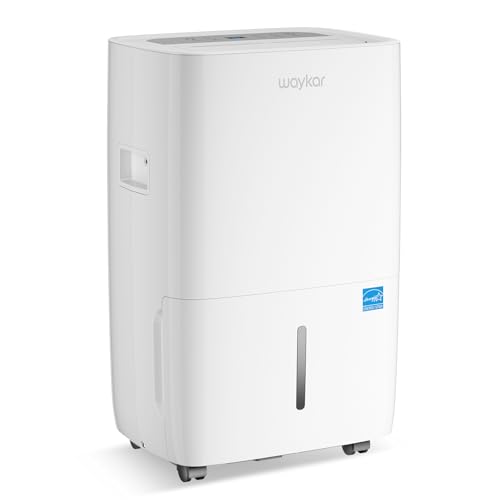
Best for a cool, unheated garage that needs real extraction
- 80-pint-class capacity
- Rated to 5,000 sq ft
- Energy Star certified
- Continuous drain option
Why buy it: Owners consistently report high-capacity compressor units like this are the ones that actually cope in a cool garage — the extra capacity offsets the efficiency you lose in colder air.
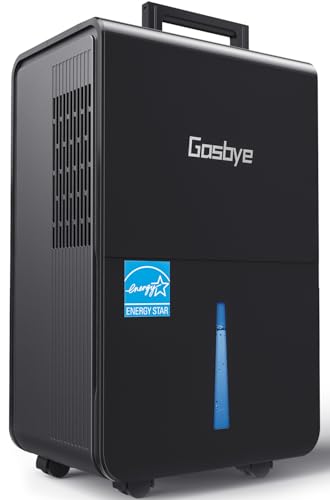
Best for a wet garage you want running unattended
- Up to 115 pints/day peak
- Rated to 4,500 sq ft
- Around 45 dB quiet compressor
- Includes drain hose
Why buy it: Reviewers dealing with a genuinely damp garage cite the high peak extraction and included hose — set it to drain and it keeps working without anyone emptying a tank.
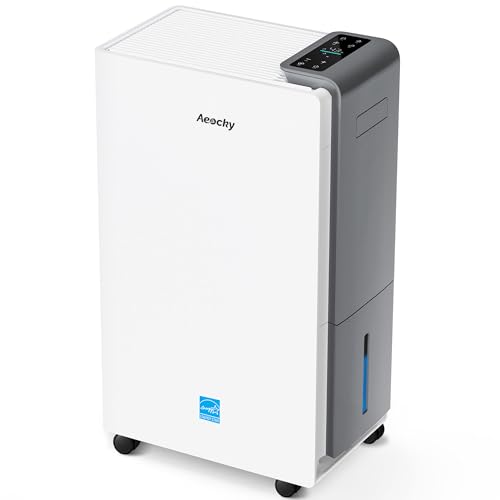
Best for a double garage or workshop
- Up to 80 pints/day
- Rated to 5,500 sq ft
- Energy Star certified
- Continuous drain option
Why buy it: The consensus favors it for the biggest spaces — owners with two-car garages and workshops point to its coverage rating as the reason it keeps up where smaller units stall.

Best for high capacity without a premium price
- Rated to 4,500 sq ft
- Includes drain hose
- Compressor operation
- Automatic humidity control
Why buy it: A common note is that it delivers large-space capacity and a drain hose without the top-tier price — a practical pick for a garage where looks don’t matter.

Best for a smaller single-car garage or shop
- 34-pint-class capacity
- Rated to 2,000 sq ft
- Energy Star certified
- Continuous drain option
Why buy it: Owners of one-car garages say the 80-pint units are overkill; this draws less power while still being a proper compressor unit that copes with cool conditions better than a tiny tank model.

Best for an attached or mild-climate garage with light dampness
- 95 oz water tank
- Rated to 1,000 sq ft
- Auto shut-off
- Quiet operation
Why buy it: For an attached garage that stays above the cold threshold, owners like this smaller tank unit for light dampness — just note it slows in a truly cold, unheated space.
How we picked
These rankings come from aggregated owner reviews, manufacturer specifications and recurring complaint patterns — not first-hand testing. We don't buy, run or physically handle the units; we read where the consensus lands across large numbers of verified-purchase reviews and weigh it against each maker's stated specs.
That favors units owners keep running through real garage conditions over ones that only look strong on paper. Beyond the picks above, Frigidaire, hOmeLabs, BaseAire and Aprilaire are names that come up often in the wider dehumidifier market, and the EPA's general guidance on indoor moisture control is a useful independent reference point for the relative humidity range worth targeting. A garage that stays persistently damp, with musty odor lingering even after weeks of dehumidifier use, usually has an active moisture source worth investigating — a slab crack, poor grading outside, or a roof or door seal letting rain in — rather than needing an even bigger unit.
See How We Rank for the full methodology, and browse the garage dehumidifiers hub or the wider humidity control section for related guides.