

Affiliate Disclosure
Some links on this page are affiliate links. As an Amazon Associate, we earn from qualifying purchases — at no extra cost to you. We do not buy, test, or physically handle the products we cover; our rankings come from aggregated owner reviews, ratings and expert consensus. Commissions never change our verdicts. How we rank & full disclosure.
A garage's indoor climate quietly decides whether your tools stay rust-free and your stored belongings stay dry — and garages are damp for a reason, with concrete floors, poor sealing and cars dragging in moisture. The right dehumidifier depends on size, how wet the space is, and crucially how cold it gets. For most garages the answer is a high-capacity compressor unit with a drain hose; only a warm, attached garage with light dampness is a job for a smaller tank model. This page ranks both. If your garage is genuinely unheated and cold, that's a harder case worth treating on its own — capacity and auto defrost matter far more there than any other spec on the box.
What size dehumidifier does a garage need?
Bigger than the floor area suggests. Garages are cooler and leakier than living rooms, so buy up: an 80 pints per day, 4,500–5,500 square footage unit for a two-car garage or workshop, and a 30-pint-class unit for a small single-car garage.
Manufacturer coverage ratings assume warm, sealed rooms; a garage is neither, so effective output runs lower than the box claims. Oversizing means the unit reaches your target relative humidity, set on the humidistat, and idles, instead of running constantly and never quite catching up.
Does the cold change what you should buy?
Yes — a lot. Compressor dehumidifiers lose efficiency at low temperature and can frost up near the low-40s Fahrenheit. In a cold garage you need a high-capacity compressor with auto defrost; small thermo-electric units barely work in the cold at all.
For a heated or attached garage that stays comfortable, a simple tank unit is fine and stays energy efficient at normal room temperature. For an unheated garage exposed to winter, capacity and an auto defrost cycle are non-negotiable — the single most common cause of a disappointed garage review is a unit too small or without defrost trying to work in the cold. A unit without defrost protection will ice up its coils in a low temperature garage and simply stop pulling water until it thaws — and a garage that swings from a cold morning to a warmer afternoon is exactly the scenario where an auto defrost cycle earns its keep, since the compressor is working through temperature swings that a living-room unit never sees.
How important is a drain hose, and what about rust and condensation?
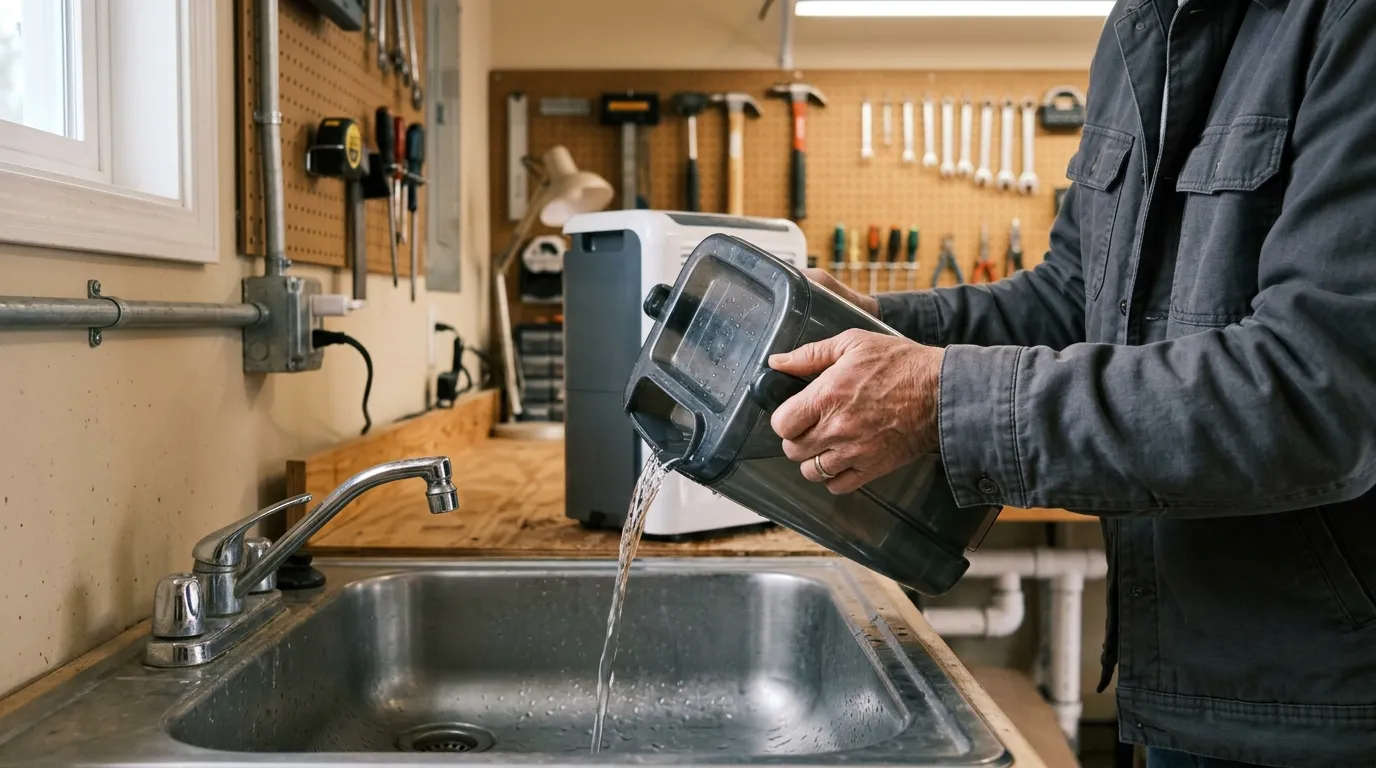
Very. A hard-working garage unit fills its tank fast, and garages usually have a floor drain or a way to run a hose outside. Continuous drainage keeps it working instead of shutting off full — essential when you're not out there to empty it, and essential for stopping the rust and condensation that damp garage air causes on tools and car bodywork.
Most high-capacity units here include or support a hose. Owners who set up drainage call it set-and-forget; those relying on the tank describe constant emptying in damp weather. Condensation on cold metal surfaces and the rust that follows is the actual damage a garage dehumidifier prevents — the musty odor is just the symptom you notice first. Tools left on an open shelf, a car parked overnight, and any exposed steel are all vulnerable the moment relative humidity climbs, which is why a garage dehumidifier earns its keep even in a space you don't spend much time in day to day. If you can drain it, do.
What do owners complain about most?
Undersizing, cold-weather slowdown and noise. A too-small unit never wins against a damp garage; compressors slow at low temperature and hum while running. Correct sizing, a defrost-equipped model and realistic cold-weather expectations resolve nearly all of it.
A common complaint is buying a small tank unit for a big, cold garage and blaming the product — that's a sizing and temperature mismatch, not a fault. Match capacity to the space, set relative humidity around 50% on the humidistat, and use a drain hose, and garage-unit satisfaction is high. An ENERGY STAR certified compressor also keeps the unit energy efficient enough to run continuously through a humid season without a painful power bill.
What humidity level should you target in a garage?
Aim for roughly 50% relative humidity, checked with a cheap hygrometer or the dehumidifier's own humidistat readout. Below that, rust and condensation on tools and car bodywork drop off sharply; much lower and you're spending extra electricity for no real benefit.
A garage doesn't need to be as dry as a wine cellar — 50% is the practical target where most rust and mold risk disappears without running the compressor harder than necessary. Setting the humidistat to that number and letting the unit cycle on its own is more energy efficient than running continuously on the highest setting, and it's gentler on the compressor over years of garage duty. If you store anything humidity-sensitive — tools, electronics, seasonal gear — checking that the number actually holds at 50% during the most humid part of summer is worth the five minutes it takes with a hygrometer.
Can you run a garage dehumidifier all year, or just in summer?
Most owners run it seasonally — spring through fall — and switch it off or unplug it once the garage cools into winter, especially without auto defrost. A unit with genuine low temperature performance and defrost can run closer to year-round in a moderate climate.
The seasonal pattern makes sense for most garages: humidity and the mold and rust risk that comes with it peak in warm, humid months, and a non-defrost compressor loses effectiveness once temperatures drop anyway. In a mild winter climate, or an attached garage that stays above the low 40s year-round, there's less reason to shut it down. In a genuinely cold climate, unplugging a non-defrost unit for winter and focusing seasonal effort on the months it actually helps is both the safer and more energy efficient choice.
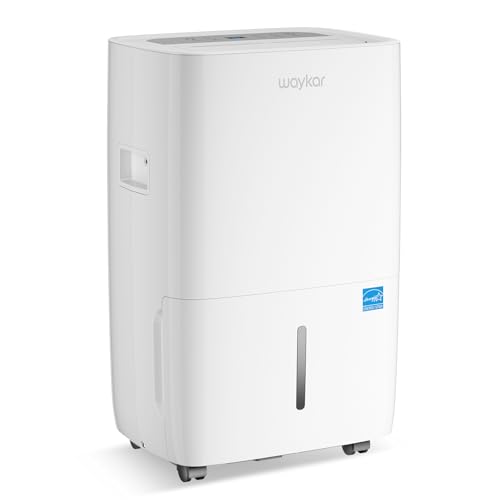
Best for most two-car garages and workshops
- 80-pint-class capacity
- Rated to 5,000 sq ft
- Energy Star certified
- Continuous drain option
Why buy it: Owners consistently report it has the capacity a garage really needs and the drainage to run unattended — the combination that keeps tools, cars and stored gear from rusting or growing mould.
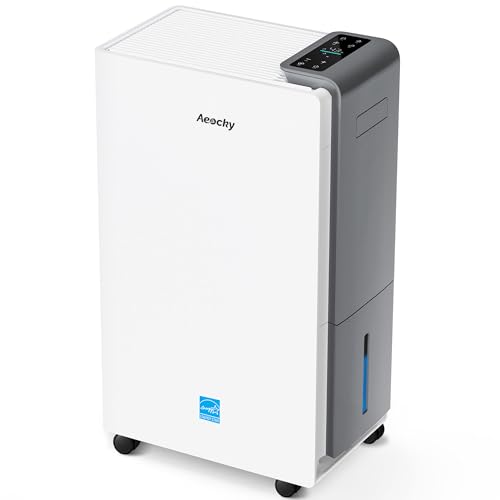
Best for oversized or workshop-style garages
- Up to 80 pints/day
- Rated to 5,500 sq ft
- Energy Star certified
- Continuous drain option
Why buy it: The consensus favors it for the biggest spaces — reviewers with large or workshop garages point to its coverage as the reason it stays ahead of the moisture.

Best for a single-car garage or small shop
- 34-pint-class capacity
- Rated to 2,000 sq ft
- Energy Star certified
- Continuous drain option
Why buy it: A common note is that a one-car garage doesn’t need an 80-pint unit; this draws less power for the same result and is the sensible-money pick for a smaller space.
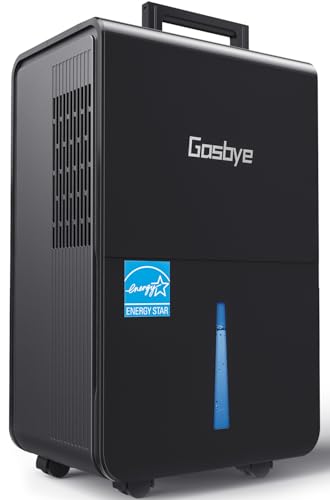
Best for a garage with a serious, ongoing moisture problem
- Up to 115 pints/day peak
- Rated to 4,500 sq ft
- Around 45 dB quiet compressor
- Includes drain hose
Why buy it: For chronically damp garages, reviewers highlight the high peak extraction and included hose — it pulls a lot of water fast and drains it away without babysitting.

Best for a garage with a floor drain or outside run
- Rated to 4,500 sq ft
- Includes drain hose
- Compressor operation
- Automatic humidity control
Why buy it: Owners who plumb it to a drain describe it as truly set-and-forget — the automatic humidity control cycles it without anyone touching a tank.

Best for an attached or heated garage with light dampness
- 95 oz water tank
- Rated to 1,000 sq ft
- Auto shut-off
- Quiet operation
Why buy it: For a warmer attached garage with only mild moisture, owners like this quieter tank unit — just note it slows down in a cold, unheated space, where a compressor unit is the better call.
How we picked
These rankings come from aggregated owner reviews, manufacturer specifications and recurring complaint patterns — not first-hand testing. We don't buy, run or physically handle the units; we read where the consensus lands across large numbers of verified-purchase reviews and weigh it against each maker's stated specs. The EPA's guidance on moisture and mold prevention informs how we weigh coverage against a garage's real conditions, and ENERGY STAR certification is one of the specs we check for every pick.
That favors units owners keep running through real garage conditions over ones that only look strong on paper. Beyond the brands featured above, Frigidaire, hOmeLabs, BaseAire, and Aprilaire are other established names worth comparing for garage and whole-building dehumidification if none of these fit your space. See How We Rank for the full methodology, and browse the garage dehumidifiers hub or the wider humidity control section for related guides.