

Affiliate Disclosure
Some links on this page are affiliate links. As an Amazon Associate, we earn from qualifying purchases — at no extra cost to you. We do not buy, test, or physically handle the products we cover; our rankings come from aggregated owner reviews, ratings and expert consensus. Commissions never change our verdicts. How we rank & full disclosure.
Some of the links below are affiliate links. If you buy through them we may earn a commission at no extra cost to you. It never changes which products we recommend or how they rank.
In a nursery, a humidifier is a small but real lever on your baby's indoor climate — the moisture in the air that eases a stuffy nose, calms a dry cough, and stops winter heating from drying out delicate skin. For almost every family the right choice is a cool-mist unit: pediatric guidance favors cool mist because there is no hot water and no scalding surface within a curious child's reach. Every pick here is cool mist for that reason. If your only concern is a large open-plan space, you may want more capacity than a nursery unit provides — but for a single baby's room, quiet running and easy cleaning matter far more than raw mist output.
Ultrasonic or evaporative — what type of humidifier belongs in a nursery?
Ultrasonic cool-mist humidifiers dominate nurseries because they run near-silently and have no fan noise. Evaporative humidifiers use a wicking filter and a fan to pull moisture into the air — effective, but noisier, and the filter needs regular replacement, which is why they're less common by a crib.
Every pick above is ultrasonic: a vibrating plate turns water into a fine mist without boiling it or blowing it through a filter, which is both why they're so quiet and why tank capacity and mist output are the specs worth comparing model to model rather than filter cost. An evaporative unit self-regulates somewhat as the air dries the wick, but it also needs a fresh filter every one to two months, an ongoing running cost most nursery buyers skip in favor of the simpler, filter-free ultrasonic design.
Cool mist or warm mist for a baby's room?
Cool mist, in almost every case. Warm-mist units boil water, creating a hot surface and hot vapor that pose a burn risk in a room a toddler can reach. Cool-mist models deliver the same humidity benefit without that hazard, which is why every recommendation here is cool mist.
The humidity itself — not the temperature of the mist — is what soothes dry airways, a stuffy sinus, and dry skin from winter heating. Since cool mist removes the main safety concern with no loss of benefit, it's the standard advice for nurseries. If a room runs cold, warm the room with heating and let a cool-mist humidifier handle the moisture separately.
What tank capacity, runtime, and relative humidity should you target?
A 1.5 to 2.5L tank capacity suits a standard nursery for 12 to 24 hours of runtime; a 3.5 to 4.2L tank stretches past 30 hours for a larger room or a shared kids' space with more square footage. Aim to keep the room around 40-50% relative humidity — a basic hygrometer confirms it, since few of these units include a built-in humidistat.
Bigger isn't automatically better: a large tank in a small nursery can push relative humidity too high, which encourages mold on windowsills and walls just as reliably as air that's too dry irritates a baby's sinus and skin. Match tank capacity roughly to room size and runtime to how often you're willing to refill overnight — a 4L tank offering around 36 hours per fill is a little over a gallon of water, enough to skip a midnight refill through even a long winter night. Auto shut-off, standard on every pick here, cuts the unit off cleanly once the tank runs dry rather than running the motor on empty.
How quiet does a nursery humidifier really need to be, and is it energy efficient?
Quiet enough to disappear under a sleeping baby's breathing — roughly 28 dB or lower, about the level of a soft whisper. Most ultrasonic cool-mist units clear that bar easily and are inherently energy efficient, drawing just a few watts since there's no heating element or fan motor to run.
A steady, low hum can even act as gentle white noise, but a rattly or high-pitched unit will do the opposite. A common complaint across humidifiers is a gurgle or click at low fill levels, so a model with a genuinely quiet reputation matters more in a nursery than anywhere else in the house. The low running cost is a side benefit worth knowing about too — an ultrasonic unit running all night draws a small fraction of what even a fan-based evaporative humidifier or a space heater would.
What about cleaning, mold, and white dust?
Clean the tank every few days and empty it when not in use — standing water is where mold and bacteria grow, and a humidifier will spray whatever is in the tank into the air your baby breathes. Using distilled or filtered water also prevents the fine "white dust" that mineral-heavy tap water leaves behind.
This is the single most important habit and the source of the most recurring complaints: parents who skip regular cleaning report musty smells or a dusty film on furniture. Top-fill designs, which several picks here use, make the routine far easier because you can reach inside to wipe the tank. Distilled water and a weekly vinegar rinse handle the rest.
Should a nursery humidifier have an essential-oil diffuser?
No — skip it for infants. Essential oils are not recommended around babies and young children, so a combined humidifier-diffuser is the wrong tool for a nursery even though it is popular elsewhere. Every unit here is a plain humidifier for that reason.
Diffusing essential oil near an infant can irritate developing airways, and the benefit you want — relative humidity — has nothing to do with fragrance. If you love aromatherapy elsewhere in the home, keep it out of the baby's room and choose a straightforward cool-mist humidifier here.
How does Levoit compare to Honeywell, Pure Enrichment, and Vicks?
Levoit and DREO lead this list on tank capacity, top-fill convenience, and quiet ultrasonic operation; Honeywell and Pure Enrichment are the established nursery names owners compare them against, and Vicks remains the familiar drugstore brand many parents already trust.
Honeywell's cool-mist nursery line has a long track record and wide retail availability if you need a replacement fast. Pure Enrichment competes closely with Levoit on tank capacity and quiet ultrasonic mist output at a similar price. Vicks humidifiers are widely available and simple to use, though owners more often reach for Levoit or DREO when quiet running and top-fill cleaning are the priority. None of these brands differ meaningfully in the core safety picture — an EPA-referenced approach to indoor humidity and mold prevention applies regardless of which one sits in the nursery, so cleaning habits matter more than brand choice.

Best for most nurseries, from newborn up
- Cool mist — no hot water or burn risk
- 2.5L tank sized for a large bedroom
- Rated around 28 dB for quiet running
- Top-fill design for easy, spill-free cleaning
Why buy it: The safe default for a baby’s room: cool mist means no scalding surfaces, and the wide top-fill opening makes the weekly clean actually doable. Owners consistently report it runs quietly enough not to wake a light sleeper.

Best for long winter nights without a refill
- Cool-mist output
- 4L tank with up to ~36 hours per fill
- Rated around 28 dB
- Adjustable mist level
Why buy it: The bigger tank means you can skip a midnight refill. The consensus favors it for parents who want to set it at bedtime and not think about it again until morning.
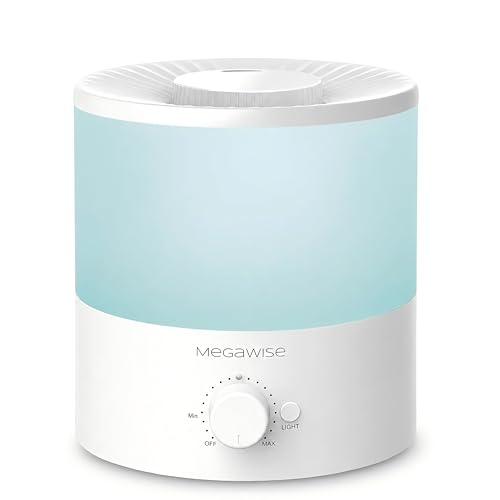
Best for a small nursery on a budget
- Quiet cool mist rated around 25 dB
- Compact 1.5L tank
- Simple dial control
- Portable footprint for a small room
Why buy it: An inexpensive, genuinely quiet option for a smaller room. A common note from owners is that the tank is small, so it suits a nursery you refill daily rather than a large space.
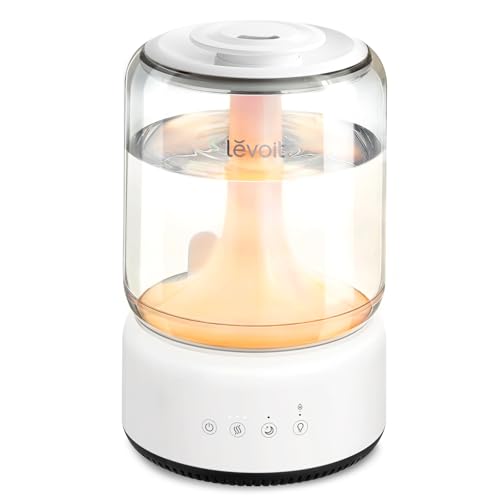
Best for bigger rooms or a shared kids’ room
- Cool mist with a 4.2L top-fill tank
- Rated for a large room
- Top-fill for easy cleaning
- Adjustable output
Why buy it: Steps up the coverage for a larger or shared room. Owners consistently report the top-fill design and roomy tank make it low-maintenance despite the extra capacity.

Best for the lightest sleepers
- Rated around 26 dB — among the quietest here
- 3L tank with up to ~30 hours per fill
- Cool-mist output
- Adjustable mist and night mode
Why buy it: When any hum is too much hum. The consensus favors it for nurseries where even a faint fan noise risks a wake-up, and the 3L tank still covers a full night.

Best for parents who hate fiddly refills
- 3.6L top-fill tank
- Cool-mist output
- Pour water straight in from the top
- Adjustable mist level
Why buy it: Built around the easy pour-from-the-top refill. Owners consistently report the wide opening makes both filling and cleaning far simpler than the twist-off bottle designs.
How we picked
We do not buy, test, or physically handle these units. Each pick is chosen by reading aggregated owner reviews, manufacturer specifications, and the complaint patterns that surface once a product is in thousands of homes — then filtering hard for the things a nursery actually needs: cool-mist safety, tank capacity matched to realistic runtime, auto shut-off, and quiet, easy-clean operation. See our full method on How We Rank.
For sizing, placement, and what relative humidity level to aim for, start with the humidifiers hub and our guide to the ideal indoor humidity level, or step up to the humidity control pillar for the wider picture.