


Affiliate Disclosure
Some links on this page are affiliate links. As an Amazon Associate, we earn from qualifying purchases — at no extra cost to you. We do not buy, test, or physically handle the products we cover; our rankings come from aggregated owner reviews, ratings and expert consensus. Commissions never change our verdicts. How we rank & full disclosure.
Some of the links below are affiliate links. If you buy through them we may earn a commission at no extra cost to you. It never changes which products we recommend or how they rank.
A humidifier is the appliance that manages the dry side of your home's indoor climate — the moisture that eases a scratchy throat, calms static and cracked skin, and takes the harshness out of a heated winter room. If your air feels dry, your lips crack, or wood furniture and instruments are splitting, a cool-mist humidifier sized to the room is worth buying. If you live somewhere already humid, or your problem is a whole house rather than one room, this category is not your fix — you want whole-house humidifiers or, in the opposite case, a dehumidifier instead.
How do you size a humidifier to your room?
Match tank capacity and rated coverage to the space. A 1.5–2.5L unit suits a single bedroom; a 4L tank covers a large bedroom or small living room for a full day; an 8L unit is for open-plan spaces up to several hundred square feet. Buy too small and you refill constantly; too big and you risk over-humidifying.
Manufacturer coverage figures assume closed doors and average ceilings, so treat them as a best case. The more useful number is tank size relative to how long you want it to run: a bigger tank simply means fewer refills. Aim to keep a room between roughly 40% and 60% relative humidity — a cheap hygrometer takes the guesswork out and stops you pushing moisture too high.
Cool mist or warm mist?
Cool mist for most homes — it is safer, uses less power, and every pick here is cool mist. Warm-mist units boil water, which can feel cozier in winter and kills some waterborne bacteria, but they run hotter, cost more to run, and pose a burn risk around children and pets.
The humidity benefit is the same either way; the mist temperature is a comfort and safety choice, not a health one. Ultrasonic cool-mist units are also the quietest option, which is why they dominate bedroom recommendations. If a room feels cold, it is more efficient to heat the room and humidify separately than to rely on a warm-mist unit for both.
Which features actually matter?
A top-fill design, a genuinely quiet motor, and an adjustable mist level are the three owners use every day. A built-in humidistat that holds a target is a real bonus; an essential oil tray, app control and mood lighting rarely change how useful a unit is.
Top-fill matters more than it sounds: the old twist-off-bottle designs are the source of endless spill-and-leak complaints, while pouring water in from the top makes both filling and cleaning far easier. A recurring complaint across brands is "white dust" — fine mineral particles from hard tap water — which distilled or filtered water eliminates entirely.
How do you stop a humidifier growing mold?
Empty the tank when it is not in use, clean it every few days, and use distilled water. Standing water grows mold and bacteria, and an ultrasonic unit will mist whatever is in the tank straight into the room — so tank hygiene is not optional.
This is the single most common source of humidifier complaints, and it is entirely preventable. A weekly rinse with a little vinegar clears mineral scale, and drying the tank between uses stops biofilm forming. Top-fill units make the routine easier because you can reach inside to wipe the reservoir.
Ultrasonic, evaporative or warm mist — which humidifier type is right?
Ultrasonic cool-mist humidifiers use a vibrating plate to turn water into a fine mist and dominate this list because they run silently and cheaply. Evaporative humidifiers instead blow air through a wet wick, which self-regulates output as the air dries and never sprays mineral dust — a good alternative if hard water is an issue, though the wick needs periodic replacing and evaporative units run a bit louder. Warm-mist humidifiers boil water before releasing it, which adds a small germ-killing benefit but costs more to run and carries a burn risk.
Every pick above is ultrasonic cool mist because it is the format that suits the widest range of homes, but if you battle constant white dust from hard tap water, an evaporative unit from a brand like Honeywell or Pure Enrichment is worth the trade-off. Whichever type you choose, treating dry air is the shared goal: easing a scratchy throat, calming sinus irritation, and stopping skin and wood from cracking through a heated winter.
What do tank capacity, mist output and auto shut-off actually get you?
Tank capacity (measured in liters or gallons) determines runtime — how many hours a humidifier runs before you refill it — while mist output determines how quickly it raises humidity across a given square footage. A 1.5-gallon tank might run eight to twelve hours; an 8-gallon console can run well over a day, which matters most for anyone who does not want to think about it overnight.
Auto shut-off is a feature worth insisting on: it stops the unit the moment the tank runs dry, protecting the motor and preventing the faint burning smell a dry ultrasonic plate can produce. It also makes an energy efficient humidifier genuinely hands-off, since it will not keep drawing power once there is nothing left to mist. The EPA notes that keeping indoor relative humidity in a moderate range reduces both the dry-air irritation of winter and the mold risk of over-humidifying — which is exactly the balance a humidistat and auto shut-off work together to hold.
What do first-time humidifier buyers get wrong?
The most common mistake is buying purely on tank capacity and ignoring mist output, then finding the unit either can't keep a large room humid or floods a small one. A big tank simply means fewer refills; it is mist output, matched to your square footage, that determines whether the room actually reaches a comfortable relative humidity.
The second mistake is skipping tank hygiene, assuming "it's just water." Standing water in any humidifier — ultrasonic or evaporative — grows mold and bacteria within days if left unattended, and an ultrasonic unit mists whatever is in that water straight into the room you breathe. Rinse weekly and use distilled water if your tap water is hard, or the "white dust" complaint that dominates negative reviews will happen to you too.
The third regret is buying warm mist for a household with young kids or pets, where a knocked-over unit of boiling water is a real burn risk, or buying cool mist expecting the same disinfecting benefit warm mist offers — the two are not interchangeable. Match mist type to the household, not just to whichever was marginally cheaper at checkout.
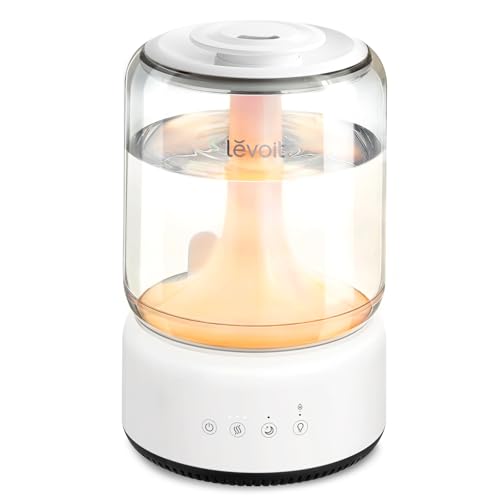
Best for a living room or large bedroom
- Cool mist with a 4.2L top-fill tank
- Rated for a large room
- Top-fill design for spill-free refills
- Adjustable mist output
Why buy it: A well-balanced large-room unit from the brand owners trust most in this class. The consensus favors it for the roomy tank and the top-fill design that makes cleaning painless.

Best for a standard bedroom overnight
- Cool-mist output
- 2.5L tank sized for a bedroom
- Rated around 28 dB for quiet running
- Top-fill for easy cleaning
Why buy it: The right size for a single bedroom, quiet enough to leave running all night. Owners consistently report it holds comfortable humidity without a fill mid-sleep.

Best for set-and-forget long runs
- 4L tank with up to ~36 hours per fill
- Cool-mist output
- Rated around 28 dB
- Adjustable mist level
Why buy it: The long-runtime pick: a big tank that goes a day and a half between refills. The consensus favors it for anyone who wants to fill it and forget it.
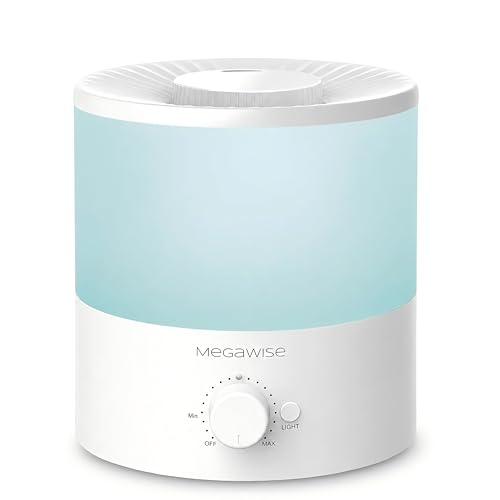
Best for a small room on a budget
- Quiet cool mist rated around 25 dB
- Compact 1.5L tank
- Simple dial control
- Portable footprint
Why buy it: An inexpensive, genuinely quiet unit for a small room. A common note from owners is that the modest tank suits a space you refill daily rather than a large area.

Best for open-plan spaces up to ~800 sq ft
- Large 8L tank
- Rated for rooms up to about 800 sq ft
- High mist output for big spaces
- Long runtime between refills
Why buy it: Built for spaces the smaller tanks cannot keep up with. Owners consistently report it maintains humidity across an open-plan area, though the size makes it a poor fit for a small bedroom.

Best for adults who want optional essential oils
- 3L cool-mist tank
- Built-in essential-oil tray
- Quiet operation
- Adjustable mist level
Why buy it: Adds an optional aroma tray for adults who want it. The consensus favors it as a two-in-one for living spaces — though we would skip the oils in a child or infant room.
How we picked
We do not buy, test, or physically handle these units. Every pick is chosen by reading aggregated owner reviews, manufacturer specifications, and the recurring complaint patterns that emerge once a product has been in thousands of homes — then weighing that consensus against the job each room actually needs done. See the full method on How We Rank.
For target humidity levels and placement, see the humidifiers hub and our guide to the ideal indoor humidity level, or step up to the humidity control pillar for how moisture fits into the rest of your indoor climate.