
Affiliate Disclosure
Some links on this page are affiliate links. As an Amazon Associate, we earn from qualifying purchases — at no extra cost to you. We do not buy, test, or physically handle the products we cover; our rankings come from aggregated owner reviews, ratings and expert consensus. Commissions never change our verdicts. How we rank & full disclosure.
Some links below are affiliate links. As an Amazon Associate we earn a commission from qualifying purchases at no extra cost to you — and it never changes which products we recommend or where they rank.
Electric fireplace heaters buy you two things at once: a real fireplace look and genuine supplemental warmth. There's no chimney, gas line, or installation, so they're the right choice when you want a room to feel cozy, not just warm. Treat them as supplemental heat for the room you actually sit in, not a whole-house furnace. Buy a freestanding stove like the Duraflame below for a plug-in statement piece. Buy a wall-mounted model if floor space is tight. Buy a log-set insert if you already have a fireplace opening to fill. Or look at a TV stand or mantel console if you want the fireplace built into furniture you already need. If dry winter air bothers you, the humidifier-equipped Dr. Infrared handles heat and dryness together in one unit.
What separates a good electric fireplace from a disappointing one usually comes down to three things. Does the heat output actually match the room? Does the flame effect look realistic enough to justify buying a "fireplace" instead of a plain space heater? And do the controls — thermostat, remote control, timer — make day-to-day use easy? Every pick below runs on a standard 120V household outlet, so none require an electrician or gas line. Every one also separates the heat element from the flame effect, so you can run the ambiance alone in mild weather.
What types of electric fireplace heaters are there?
Four main styles: freestanding stoves you plug in anywhere, wall-mounted units that hang like a flat-screen, TV stand or mantel consoles that double as furniture, and log-set inserts that drop into an existing masonry fireplace. Each suits a different room and installation situation.
Freestanding electric fireplace stoves
Freestanding stoves are the flexible default. They need no fireplace opening and can move between rooms, which is why the Duraflame stove leads this list. Installation needs nothing beyond an outlet and a level floor — unbox it, plug it in, done.
Wall-mounted electric fireplaces
Wall-mounted electric fireplaces sit flush against the wall like a piece of art, freeing floor space in a smaller room. Most need a stud-friendly bracket and a nearby outlet, and ideally a hidden or surface-run power cord — a bigger job in a rental or a room without power close by.
TV stand and mantel consoles
A TV stand or mantel-style console combines the fireplace with a media cabinet or shelf. It's a popular choice for a living room that wants one piece of furniture doing two jobs.
Log-set inserts
Inserts and log sets look the most built-in, but they must fit an existing firebox. Measure the opening before you buy — a recurring complaint is people ordering an insert without checking their fireplace's dimensions first. Mechanically they're the simplest of the four styles, since the existing hearth does the framing.
None of the four styles change the heat output meaningfully at the same wattage. A 1500-watt wall-mounted unit and a 1500-watt freestanding stove warm a room about the same amount. The style decision is really about your room's layout and how much floor space you can give up.
Do electric fireplaces actually heat a room, and what does it cost to run one?
Yes — a 1500 watts electric fireplace provides real supplemental heat. It typically takes the chill off a room up to around 1,000 square feet, at a running cost comparable to any other 1500W space heater on your utility rate. It will not replace central heating for a whole house.
The honest framing owners settle on is "supplemental." An electric fireplace is excellent at making one living space warm and cozy while the rest of the house runs cooler. That's the same zone heating logic that makes any space heater worthwhile.
Running cost and energy efficient use
On running cost, the math is simple: watts ÷ 1000 × your kWh rate × hours used. A 1500-watt unit costs the same per hour on the heat setting as any other 1500-watt appliance at your local electricity rate. It costs nothing extra to run the flame effect alone, since most LED flame lighting draws under 15 watts. Look for a built-in thermostat if you want the unit to hold a target temperature automatically, instead of running on high all evening — it's the single feature that does the most for energy efficient overnight use.
BTU and heat output
In BTU terms, 1500 watts converts to roughly 5,100 BTU of heat output — comparable to a mid-size ceramic space heater, just dressed up as a fireplace. Our full explainer on whether electric fireplaces heat a room goes deeper.
Are the flame effects any good, or do they look fake?
Modern LED flame technology is noticeably more convincing than older units. Most run independently of the heat via remote control, so you can enjoy a realistic flame year-round. Quality varies — the better-known brands generally draw fewer complaints about a flat or repetitive flame than the cheapest models.
LED flame and realistic flame quality
This is where paying a little more tends to show. Owners of budget units are happy with the warmth but occasionally mention the flame looks less realistic up close. The Duraflame stoves and premium brands like Dimplex and Touchstone draw consistent praise for a genuinely realistic flame effect layered over LED lighting, rather than a flat projected image.
Remote control and thermostat features
A remote control is close to standard now, letting you dial in flame brightness and heat level separately without getting up. If ambiance is the main reason you're buying, weight the flame quality and remote functionality over raw heat output.

Best for a living room or den that wants real warmth plus the fireplace look
- 3D flame effect that runs with or without heat
- Supplemental heat rated for about 1,000 sq ft
- Freestanding stove — no installation needed
- Overheat safety shut-off
Why buy it: Duraflame is the brand owners name most for electric fireplace stoves, and this is the model that comes up first — a convincing flame, genuine supplemental warmth, and plug-in simplicity. A common note is that, like all electric fireplaces, it is supplemental heat rather than a furnace replacement.
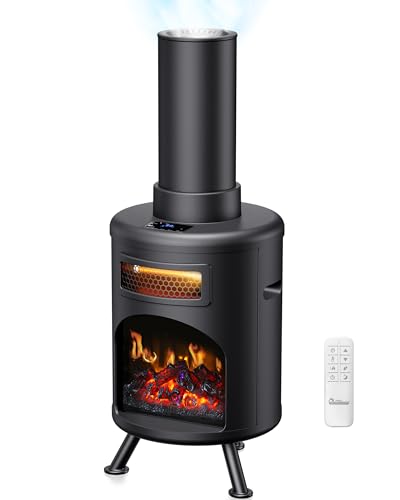
Best for a room where dry winter air is as much the problem as the cold
- Infrared heat, up to 1,500W
- Built-in humidifier to offset dry heat
- 3D flame effect with remote and timer
- Overheat and tip-over protection
Why buy it: The built-in humidifier is why owners pay the premium — heating dries a room out, and this unit tackles both sides of the indoor climate at once. A common complaint is that the humidifier tank needs regular refilling, which is the trade-off for addressing dryness directly.

Best for dropping into a masonry fireplace you no longer burn wood in
- Faux log insert for an existing fireplace opening
- Infrared supplemental heat, about 1,000 sq ft
- Remote control included
- Realistic ember and flame effect
Why buy it: If you already have a fireplace opening you never use, owners consistently report this log set is the tidiest way to bring it back to life without burning wood. A common note is to measure the opening first, since a log set has to fit the existing hearth.

Best for a bedroom or smaller room on a budget
- 26-inch freestanding cabinet
- 3D flame effect with adjustable brightness
- Energy-saving supplemental heat
- Overheat safety design
Why buy it: The consensus favors Sweetcrispy when you want the fireplace look and some real warmth without the name-brand price. Owners report it does both jobs for a smaller room; a common complaint is that the flame effect is less refined up close than the pricier stoves.
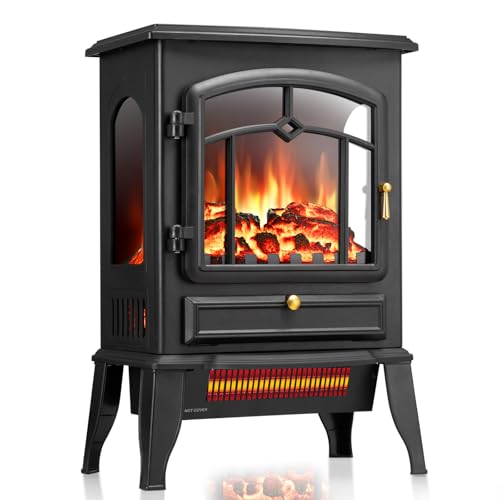
Best for year-round ambiance, with heat only when you want it
- 3D flame effect with a heat-free flame mode
- Two heat levels: 1000W and 1500W
- Freestanding stove design
- Overheat protection
Why buy it: The flame-only mode is the appeal here — owners run the fire for atmosphere in summer and add heat in winter from the same unit. It is a straightforward stove; a common note is that its strength is versatility rather than premium build.

Best for a room where a warmer metal finish suits the decor
- Same trusted Duraflame stove in a bronze finish
- 3D flame effect with or without heat
- Supplemental heat for about 1,000 sq ft
- Freestanding, no installation required
Why buy it: This is the overall pick in a bronze finish for owners whose room calls for warmer tones than black. It heats identically; the only reason to choose it over the black model is how it looks in the room.
How does Duraflame compare to other electric fireplace brands?
Duraflame dominates the freestanding-stove segment on consistency and flame quality. Touchstone and R.W.FLAME are the names owners reach for in wall-mounted units. Dimplex is the recognized name in higher-end mantel and insert-style fireplaces.
Across brands, the safety baseline to check is UL certification. It confirms the overheat protection and electrical design were independently tested, not self-reported. It's worth confirming on the listing before buying any electric fireplace, regardless of brand or price tier.
Owners weighing Touchstone against R.W.FLAME for a wall-mounted unit generally report both deliver a comparably realistic flame effect at similar wattage. The differences show up more in mounting hardware, remote control range, and how loud the internal fan runs on the heat setting, than in raw warmth. Dimplex tends to command a premium for cabinetry-grade mantel consoles and furniture-quality finishes, rather than for heat output that differs meaningfully from a cheaper freestanding stove. You're paying for the piece of furniture as much as the fireplace inside it.
How we picked
We do not buy, test, or physically handle the units we cover. These rankings come from aggregated owner reviews, manufacturer specifications, and the recurring complaint patterns across electric-fireplace listings — the consensus view, not one reviewer's opinion. We weighted supplemental heat output relative to the advertised square footage, flame realism and LED flame quality, thermostat and remote control features, energy efficient running cost, mounting and installation effort by style, and UL safety certification — the same framework we apply across every heating category on this site. Each model links to its live Amazon listing so you can confirm the current price and read the reviews yourself. See How We Rank for the methodology, the electric fireplace heaters hub for buying context, and the heating pillar for how this fits your wider indoor climate.