


Affiliate Disclosure
Some links on this page are affiliate links. As an Amazon Associate, we earn from qualifying purchases — at no extra cost to you. We do not buy, test, or physically handle the products we cover; our rankings come from aggregated owner reviews, ratings and expert consensus. Commissions never change our verdicts. How we rank & full disclosure.
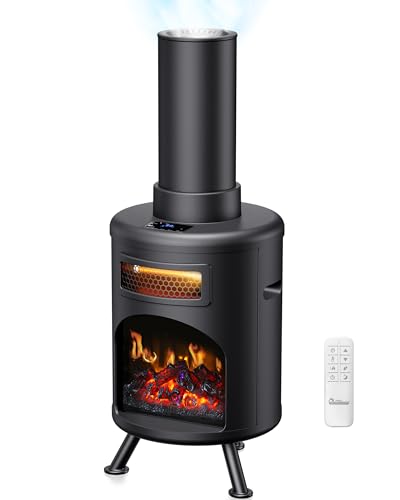
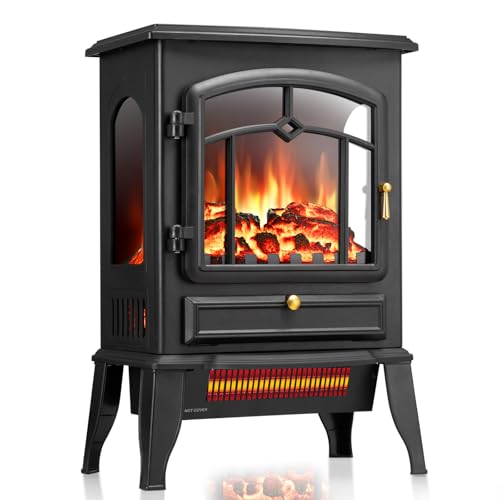
An electric fireplace is two products sharing one cabinet: a decorative flame effect and an ordinary electric heater. They are independent of each other, they can be used separately, and almost every disappointed owner turns out to have judged one by the standards of the other. Understand what each half actually does and this becomes one of the easier categories to buy well in.
Do electric fireplaces actually put out real heat?
Yes, but no more than a good space heater. Nearly every plug-in electric fireplace tops out at 1,500 watts — around 5,100 BTU per hour — because that is the ceiling for a standard household outlet. It is genuine supplemental heat, not a replacement for central heating.
The mechanism behind the decorative front is usually a coil element with a fan, or in some models a quartz infrared emitter. Either way, it is electric resistance heating and it obeys the same limits as everything else you plug into a wall. A unit that looks like a substantial hearth is producing exactly as much heat as a plain plastic box producing 1,500 watts, and any listing implying otherwise is selling the cabinet rather than the output.
Where they differ meaningfully from a fireplace is what they do not do. There is no combustion, so no chimney, no smoke, no ash, no particulate emissions into the room and no carbon monoxide risk. That is a real indoor air quality advantage over burning wood indoors, and it is one of the strongest honest arguments for the category — the broader picture is covered in our guide to improving indoor air quality.
How big a room will an electric fireplace warm?
Plan on 150 to 300 square feet of supplemental heat in an averagely insulated room, the same as any other 1,500-watt appliance. Listings quoting 400 square feet or more describe an ideal, well-sealed, already-warm space rather than a cold living room in January.
Living rooms are where the sizing mismatch bites hardest, because that is exactly where these units are sold and living rooms are often the largest, most open room in the house. A 1,500-watt unit in a 400-square-foot open-plan space connected to a hallway will make the seating area pleasant and will not change the temperature of the room as a whole. Treated as a zone heater for the sofa, it works well; treated as the heat source for the floor, it does not.
Placement makes more difference here than in most categories, because the heat outlet is usually a narrow slot at the top or bottom of a decorative cabinet. Media-console models frequently get pushed under a mounted television with a soundbar in front of the vent, which starves the outlet and trips the overheat cutoff. Keep the discharge path clear, and check where the outlet actually is before you build the unit into a wall of cabinetry.
Can you run the flame effect without the heat?
On virtually every current model, yes — flame-only mode is standard, and it draws a very small amount of power because the effect is produced by LEDs and a small motor rather than by anything hot. That is why people run them year-round.
This is the feature that makes the category make sense. The ambience is the part most owners actually wanted, and being able to have it in October and July without heating the room is why electric fireplaces survive in climates where a heater is useless nine months of the year. Most models also offer adjustable flame brightness, speed and colour, and adjustable brightness is worth more than the number of colour options.
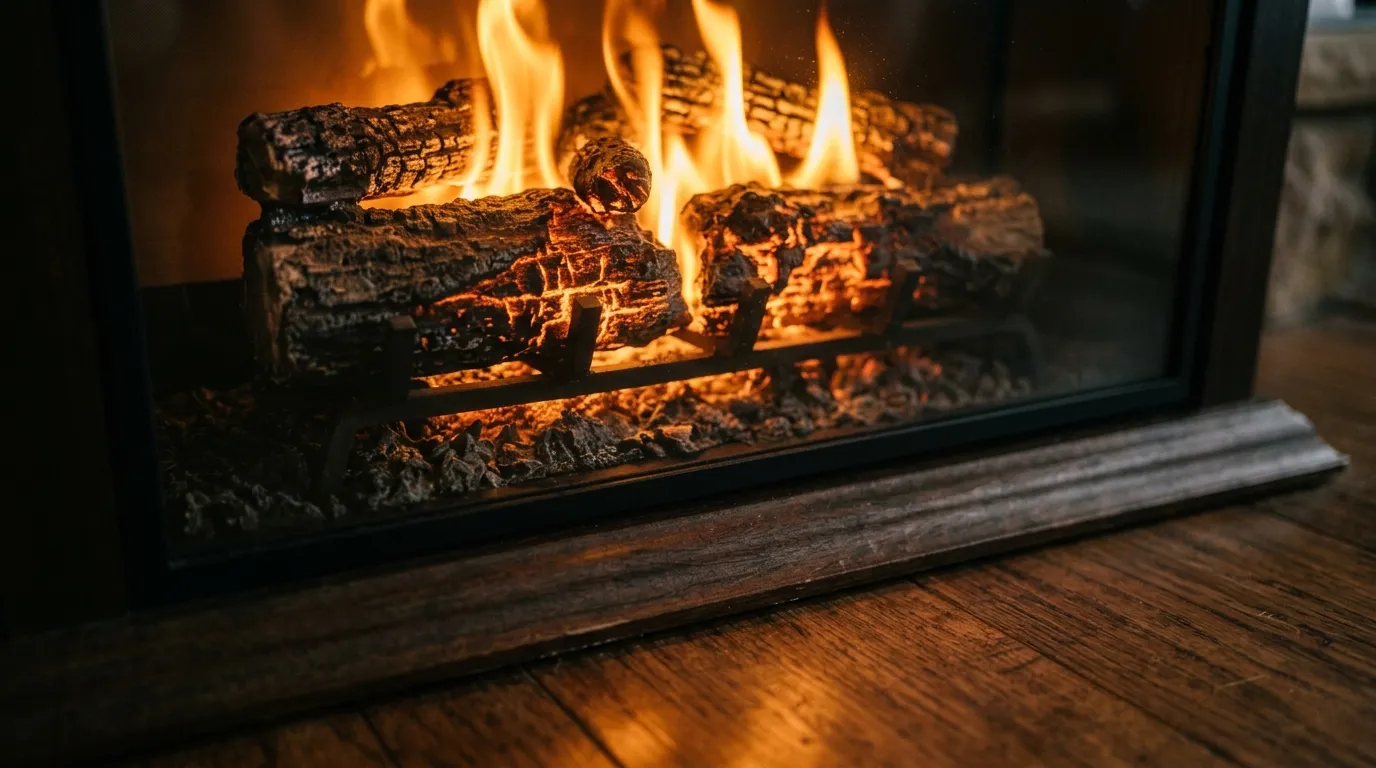
Judge the flame effect in the light you will actually use it in. Nearly all of them look convincing in a dim room at night and noticeably artificial in bright daylight, which is a physical limit of projecting light onto a screen rather than a quality problem with a particular unit. Owners who describe the effect as cheap-looking are very often describing a sunlit room, and owners who describe it as convincing are usually describing an evening.
What does installing an electric fireplace actually involve?
For freestanding, mantel and media-console models: unpack it and plug it into a standard grounded outlet. Wall-mounted and insert models need mounting into structure and a nearby dedicated outlet. No venting, no chimney, no gas line and no permit in most cases.
The plug-in simplicity is genuine and is the main reason renters and apartment dwellers choose this category. It is not a licence to improvise on the electrical side, though: a 1,500-watt unit draws around 12.5 amps continuously, so manufacturers universally specify a wall outlet on its own circuit and prohibit extension cords and power strips. Sharing a circuit with a television, a computer and a couple of lamps is how people end up tripping breakers all winter.
Inserts that fit into an existing masonry firebox are the one variant with real installation considerations, since the opening dimensions have to match and the cord has to reach an outlet without running across a hearth. And if the goal is permanent, controlled room heat rather than a decorative centrepiece, a hardwired unit from the wall and baseboard heaters hub gives you more output and a proper wall thermostat for a similar overall spend.
What do owners like and dislike after a season?
Praise concentrates on ambience, safety around children and pets, and having zero maintenance. Complaints concentrate on fan noise, modest heat output, remotes that fail before the unit does, and a flame effect that disappoints in daylight.
The safety point is a legitimate advantage and gets less attention than it deserves. Many models keep the front glass cool to the touch because the heat exits through a separate vent, which makes them one of the more child-friendly ways to add supplemental heat to a family room. Confirm it for the specific model rather than assuming, but the design intent across the category runs that way.
Fan noise is the most common recurring complaint and the one to check before buying, particularly on media-console units sitting under a television where a whoosh competes directly with dialogue. Infrared quartz models tend to run quieter than coil-and-fan designs. And if the ambience matters less than the warmth, the honest advice is simple: you will get the same heat for less money from a plain unit in the space heaters hub. You are paying for the cabinet and the flame, and there is nothing wrong with that as long as you know it.
What does an electric fireplace cost to run?
With the heater on, 1.5 kilowatt-hours for every hour at full output — the same as any 1,500-watt appliance, priced at your electricity rate. With the flame effect alone, the draw falls to a small fraction of that, because LEDs and a tiny motor use very little power.
That split is the genuinely useful thing to know. Running the ambience all evening costs very little and can be done in any season, which is why so many owners use these units year-round. Running the heater all evening costs what a space heater costs, and the same zone-heating logic applies: it saves money only if the central thermostat comes down at the same time. Most current models let you set a target temperature and cycle the element, which keeps the average draw well below the maximum.
The other cost worth naming is the one that does not appear. Electric fireplaces have no chimney to sweep, no fuel to buy, no flue inspection and no ash to clear, and installation is a fraction of what a vented appliance costs. Against a wood-burning fireplace that is a meaningful ongoing saving, and it is the honest counterweight to the two things this category cannot offer: large heat output and real flames.
What styles and formats do electric fireplaces come in?
Format decides how much installation is involved, and how much of a centrepiece the unit becomes.
Freestanding electric fireplaces
Freestanding electric fireplaces stand on their own base like a piece of furniture, with no mounting or install required. Duraflame and Touchstone both build well-reviewed freestanding cabinet models. They're the easiest format for renters, since nothing attaches to a wall.
Wall-mounted electric fireplaces
Wall-mounted electric fireplaces hang flush against a wall like a flat-screen TV, saving floor space. Touchstone's wall-mounted line is one of the more popular picks in this format. They need a nearby outlet and secure wall anchors rated for the unit's weight.
Fireplace inserts for existing openings
An insert fits into an existing masonry firebox, turning a wood-burning fireplace into an electric one. R.W.FLAME makes inserts sized for common opening widths. Measure the opening carefully — inserts are the one format where dimensions genuinely make or break the fit.
Mantel and TV stand electric fireplaces
A mantel unit pairs the fireplace with a full surround, built to be the room's focal point. A TV stand version does double duty as media furniture with the fireplace built into the base. Dimplex sells both formats, often as matched sets.
What specs and features actually matter?
Past format, a short list of specs decides real heat output, flame quality and how much control you get.
1500 watts, BTU and heat output
Nearly every plug-in electric fireplace tops out at 1500 watts — about 5,100 BTU per hour of heat output. That's the ceiling for a standard household outlet, and it's genuine supplemental heat, not a central-heating replacement.
LED flame and realistic flame effect
The flame is produced by LED flame lighting projected onto a screen or through faux logs, not by anything hot. A realistic flame effect depends on brightness, speed and color adjustment; Touchstone and R.W.FLAME both let you tune all three independently of the heater.
Thermostat, remote control and zone heating
A built-in thermostat holds a target temperature instead of running flat-out, and most current models ship with a remote control for adjusting flame and heat from the couch. Used this way, an electric fireplace is zone heating for one room, not the whole house.
Running cost, energy efficient use and supplemental heat
Running cost with the heater on is about 1.5 kWh per hour at full output — the same as any 1500-watt appliance — priced at your electricity rate. UL-listed units are built to the same safety standard regardless of price, so an energy efficient choice comes down to how you use the supplemental heat, not the badge on the box.
Every guide below is ranked from aggregated real owner reviews and manufacturer documentation, never from us buying and running a heater ourselves — see How We Rank for the full methodology.