


Affiliate Disclosure
Some links on this page are affiliate links. As an Amazon Associate, we earn from qualifying purchases — at no extra cost to you. We do not buy, test, or physically handle the products we cover; our rankings come from aggregated owner reviews, ratings and expert consensus. Commissions never change our verdicts. How we rank & full disclosure.
Some links below are affiliate links. As an Amazon Associate we earn a commission from qualifying purchases at no extra cost to you — and it never changes which products we recommend or where they rank.
A garage is the case infrared heaters are built for. It's usually large, uninsulated, and cold, and you only need to be warm where you're actually working. Heating people and surfaces directly with radiant heat beats trying to warm all that draughty air the way a fan-forced space heater would.
For most home garages, a portable, electric 120V infrared heater is the right lever for the indoor climate around your bench. The Dr Infrared shop heater below is the pick that suits the widest range of them. If your garage is a two-car bay or bigger, jump to the higher-coverage EdenPURE, or consider a dedicated 240V hardwired garage heater from our garage heaters hub.
What types of infrared heaters work best in a garage?
Garage-ready infrared heaters split into quartz-element and carbon-element models, plus hybrid units that pair infrared with convection. Quartz gives near-instant heat and a visible glow. Carbon element runs a little more evenly and is often marketed as far infrared — some owners find that gentler on the eyes at close range.
Quartz-tube infrared heaters are the most common type in a garage bench setup. They hit full output within seconds, which matters when you're only warming up for a short session. Carbon-element and far-infrared panels trade a bit of that instant heat for steadier, more diffuse radiant heat — useful if the heater sits closer to eye level on a shelf.
Hybrid models, like a couple of the Dr Infrared units above, add a convection stage on top of the infrared element. The heater also raises the air temperature a little around it, rather than only warming what's directly in its path. None of these are true 240V garage heaters. They're all electric, portable, plug-into-a-wall-outlet units — the whole appeal for a weekend workshop rather than a heated shop you occupy all day.
Quartz element heaters
Quartz gives near-instant heat and a visible glow. It's the fastest way to feel warm at a garage bench, though the glow bothers some people at close range.
Carbon element and far infrared heaters
Carbon element models run more evenly and are often marketed as far infrared. Far infrared spreads radiant heat more diffusely, which some owners find gentler on the eyes.
Hybrid infrared and convection heaters
A hybrid heater pairs infrared with a convection stage. You get instant heat from the infrared side while the convection side slowly raises the air around it.
How many watts do I need — is 1500 watts enough to heat a garage?
A 1500 watts infrared heater on a standard 120V outlet warms the area around one or two people effectively. It won't raise the whole air temperature of a large, uninsulated garage. For that you need a hardwired 240V unit — infrared instead keeps you warm where you stand.
This is the key mindset shift for garage heating. Don't judge a portable infrared heater by whether the thermometer on the far wall moves. Judge it by whether you're warm at the workbench. Every model above tops out near 1500 watts, because that's the ceiling a standard 120V circuit and outlet can safely deliver. Beyond it, you're into the hardwired 240V category, not a bigger plug-in space heater.
Electric space heater output vs a hardwired 240V unit
A portable electric space heater tops out near 1500 watts on a standard outlet. That's plenty for one spot, but not enough to raise a whole large garage's air temperature.
What's the running cost of an infrared heater, and is it energy efficient?
A 1,500-watt infrared heater run on high draws about 1.5 kWh per hour, so the running cost at a typical residential electricity rate lands somewhere around 20–30 cents an hour — check your own utility rate for an exact figure. Infrared is considered energy efficient for spot heating because none of that output is wasted warming empty air you never stand in.
A 1,500-watt heater works out to roughly 5,120 BTU of heat output — a useful comparison if you're weighing infrared against a BTU-rated gas garage heater. That efficiency argument is really about zone heating, rather than a lower wattage. Every model here also pairs its heating element with a basic thermostat, so once the garage bench area reaches a comfortable temperature, the unit cycles down instead of running flat out the whole session.
Every electric resistance heater, whether it's quartz infrared or a plain ceramic space heater, converts close to 100% of its watts into heat. The EPA and most utility guidance treat that conversion rate as roughly equal across types. What changes the real-world running cost is how much of that heat you actually use.
A radiant heater aimed at your workbench wastes almost nothing on the rest of a cold garage. A fan-forced unit trying to warm the whole air volume burns the same wattage for a smaller felt benefit. If you want a rough monthly figure, multiply the wattage by your typical hours of use and your local per-kWh rate. A couple of hours a weekend adds up to only a few dollars a month for most garage users.
BTU output and zone heating math
A 1,500-watt heater works out to roughly 5,120 BTU of heat output. The real savings come from zone heating — warming just where you stand, not the whole garage.
Is it safe to run an infrared heater in a garage?
Yes, with the usual precautions: keep three feet of clearance from paint cans, fuel, rags, and cardboard, run it on a dedicated wall outlet rather than a light-duty extension cord, and never leave it running when you leave the garage. Confirm the unit has tip-over and overheat shut-off.
Garages are full of exactly the flammables that make heater safety non-negotiable, so clearance matters more here than in a living room. A recurring complaint about cheap shop heaters is an undersized cord melting under load. Plug an infrared heater straight into the wall, and add a timer, like the DR-123's, so it can't run unattended.
Silent operation is a nice bonus of infrared over a noisy fan-forced space heater. But don't let a quiet unit lull you into treating tip-over and overheat protection as optional. Both should trigger automatically the moment the heater is knocked over, or an internal sensor reads too hot.
Tip-over, overheat and silent operation
Confirm the unit has tip-over and overheat shut-off before you buy. Silent operation is a nice bonus of infrared, but it shouldn't make you skip checking those safety features.
Should I get infrared or a gas garage heater?
Infrared is best for a garage you heat in sessions and where you want warmth on demand at one spot; a gas forced-air unit is better for genuinely warming a large, cold garage's whole air volume. Infrared is cheaper to buy and needs only an outlet; gas needs fuel and ventilation.
If your goal is a comfortably warm two-car garage, rather than a warm bench, a forced-air gas unit is worth comparing. Our garage heaters hub covers both electric and gas options side by side.
Other well-known names in the space beyond Dr Infrared include Duraflame, Heat Storm and LifeSmart. All make quartz or carbon-element panels aimed at the same instant, silent, zone-heating use case. For most weekend and hobby use, a portable infrared heater is the simpler, safer starting point.
Thermostat control on an infrared or gas heater
Most infrared models here pair the element with a basic thermostat, cycling down once the bench area warms. A gas garage heater uses a similar thermostat to hold a whole-room temperature instead.
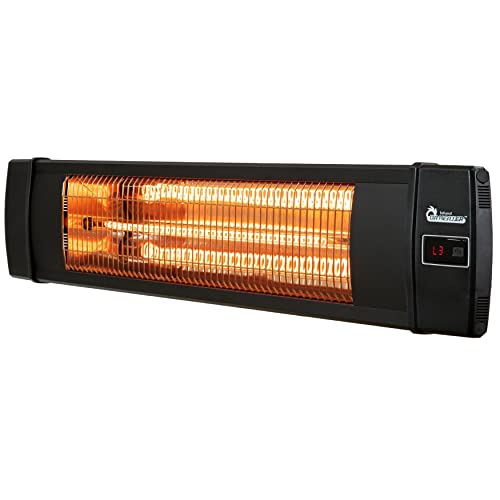
Best for a workshop or garage bench you want warm within minutes
- Built for garage, patio, and commercial spaces
- Infrared radiant heat, up to 1,500W on 120V
- Remote control and rugged housing
- Overheat and tip-over protection
Why buy it: Owners consistently report this is the Dr Infrared model they reach for in an unheated garage — it throws direct, felt heat at a work area rather than trying to warm all the cold air. A common note is that a garage still benefits from any insulation you can add, since infrared warms bodies and surfaces, not the whole draughty volume.

Best for a garage you use in short sessions and want hot quickly
- Dual infrared + convection hybrid heating
- Up to 1,500W with remote control
- Thermostat with energy-saving mode
- Tip-over and overheat auto shut-off
Why buy it: The hybrid design is why owners like it for stop-start garage use — infrared warms you immediately while the convection side works on the surrounding air. A common complaint is the weight, which is the trade-off for two heating modes in one cabinet.
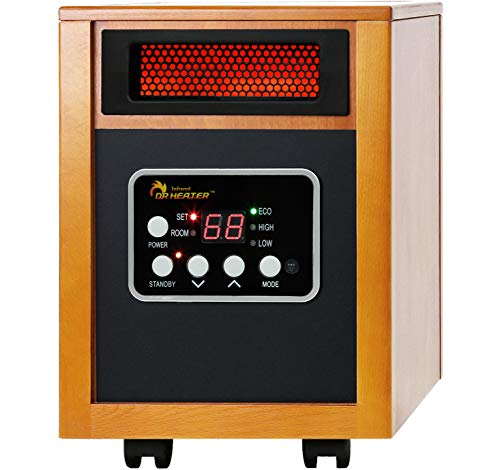
Best for a garage heater that does the job without extras
- Infrared quartz + PTC heating, up to 1,500W
- Auto energy-saving mode with thermostat
- Caster wheels for repositioning
- Overheat and tip-over protection
Why buy it: The DR-968 is the value pick because it delivers the core Dr Infrared warmth at a lower price than the hybrid models. Owners consistently report reliable, even radiant heat; it simply lacks the second heating mode of the pricier units.

Best for a two-car or oversized garage
- Rated for spaces up to about 1,000 sq ft
- Copper infrared heating elements
- Portable cabinet with safety cut-offs
- Even radiant warmth over a wide area
Why buy it: The consensus favors EdenPURE when the garage is simply too big for a standard portable unit. Owners report steady coverage across a large bay, with the usual caveat that an uninsulated, drafty garage will always lose heat faster than the square-footage rating assumes.

Best for rolling one heater between the bench, the car, and the door
- Dual heating, up to 1,500W
- Four caster wheels for easy rolling
- Programmable timer and remote
- Tip-over and overheat protection
Why buy it: The four wheels and timer make this the pick for a garage where the warm spot keeps moving. Owners report it is easy to roll to wherever they are working, then set a timer so it is not left running once they leave the shop.
How we picked
We do not buy, test, or physically handle the heaters we cover. These picks come from aggregated owner reviews, manufacturer specifications, and the complaint patterns that repeat across garage-use listings — the consensus view, rather than one reviewer's take. Each links to its live Amazon listing, so you can confirm the current price and read the reviews.
See the infrared heaters hub, our full best infrared heaters roundup, and How We Rank for the methodology.